Has the Arab Spring now spread to Sudan?
Protesters take to the streets of Khartoum to demand democracy and lower prices
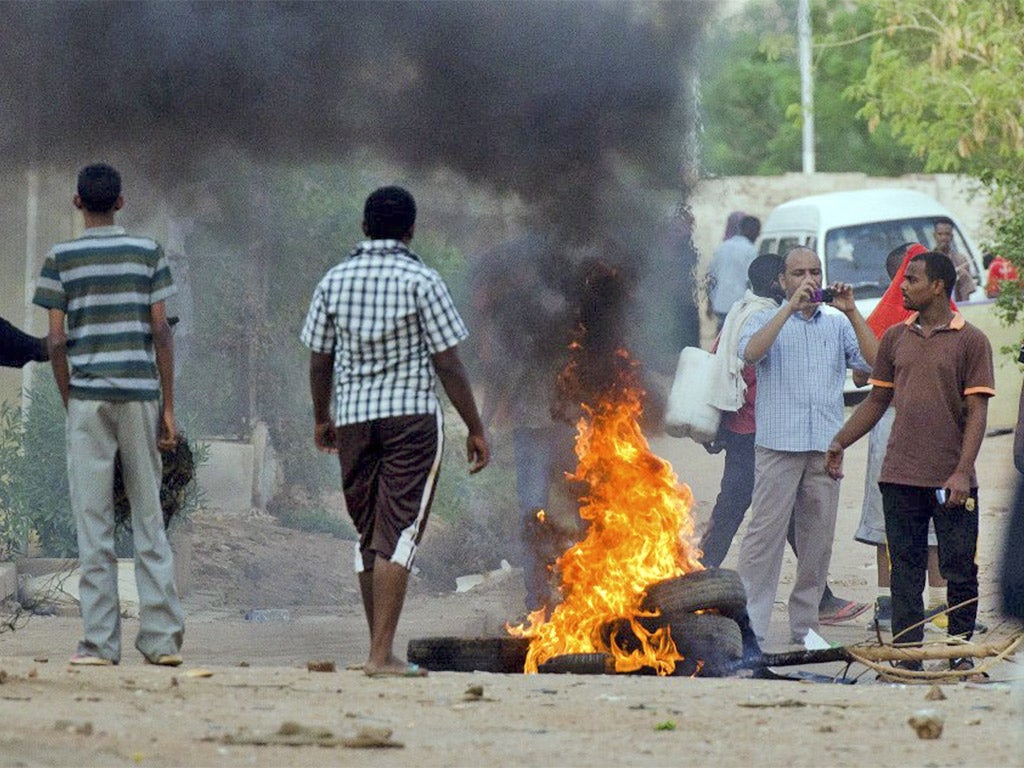
Khartoum is braced for a "make or break" day of demonstrations tomorrow, as anger at the rising cost of living spills over into Arab Spring-style protests on the streets of Sudan's capital.
Authorities have responded with a violent crackdown, which has drawn international condemnation but failed to quell public defiance.
Police have fired on demonstrators with rubber bullets and tear gas, university dormitories have been raided and students beaten, while hundreds of activists and opposition leaders have been jailed.
Bigger protests are due tomorrow and Saturday, which marks the regime's 23rd anniversary in power in Sudan, with organisers hoping to get thousands of people on to the streets. The planned rallies have been dubbed "lick your elbow" – a Sudanese saying, meaning "do something impossible", which President Omar al-Bashir has frequently used as a jibe against his opponents.
"A year ago Bashir was mocking us that protest was impossible, so this weekend we are going to show him that we can do the impossible," said Yusif Elmahdi, a youth activist in Khartoum.
While Sudan has previously witnessed sporadic protests against Mr Bashir and the ruling National Congress Party (NCP), it is the first time that marches and public acts of defiance – collectively involving up to 20,000 people according to some estimates – have been sustained for more than a week.
"The coming days will make or break this movement," said Mr Elmahdi, who added that people were breaking through the "fear barrier" to take action. "If we get a strong showing then there will be no turning back."
With oil income slashed by the partition of South Sudan and a border conflict with the newly independent country, the regime announced a range of unpopular spending cuts and tax rises last week.
Inflation is running at 30 per cent and food and fuel costs have risen by 35 per cent in a country where anger at the corruption of the ruling elite has been rising. The starting gun for what online activists are calling the "Sudan revolt" was fired when a group of female students at the University of Khartoum went to dinner on 16 June to find canteen prices had doubled.
Male students joined their female counterparts in a protest march to central Khartoum, where they were tear-gassed and beaten with batons. The police later occupied the university dormitories, witnesses said, where female students were harassed. Protests spread to four other universities in the capital and two provincial colleges, activists claimed.
Since then, the regime's opponents have fought a cat-and-mouse battle with authorities, staging small protests in neighbourhoods and side streets in an effort to stretch security forces. On "Sandstorm Friday" last week, protests were reported in some 30 locations around the country. On many occasions protesters say they have been attacked by pro-government gangs using metal rods, knives and petrol bombs, who openly communicate with security services and the hated secret police, the NISS.
Reem Abbas, a professional who is in hiding in Khartoum, gave The Independent her account of why she has taken part in the unrest: "I joined the protest because I was born in 1989, the same year the government came to power. I'm a professional right now and they are still in power and I see a bleak future for Sudan. I joined because I want change and I believe in non-violent resistance."
Ms Abbas, who has taken to social networks such as Twitter to publicise what is happening, said she wanted the regime ousted and for Sudan to have elections as soon as possible.
"So many people I know are currently in detention … My best friend was kidnapped from her house and is now being interrogated."
A group calling itself Girifna – it means "We are fed up" – issued a set of demands yesterday, including a transitional government, an end to emergency laws and the reversal of recent price rises for essential goods like food and fuel.
Sudan: A long and troubled history
From the violent overthrow of British rule in the 1950s to the turbulent 1980s and Bill Clinton's bombing of northern Khartoum in 1998, Sudan has rarely been a peaceful place. But the demonstrations this week are different in nature.
The 23-year-old Sudanese government has faced challenges before; militias from the southern states fought a long and bloody civil war before partition last year and the hosting of Osama bin Laden until the mid-1990s led to problems with Western countries. Until now, though, ordinary Sudanese have rarely dared to openly criticise the government, let alone protest on the streets against Omar al-Bashir's administration.
The government's arrogance in disproportionately inflating food prices will anger a people who have put up with much over recent years. President Bashir should watch out: the rises could prove to be the straw that breaks the camel's back.
Join our commenting forum
Join thought-provoking conversations, follow other Independent readers and see their replies
Comments
Bookmark popover
Removed from bookmarks