How do you get nine celebrities up Kilimanjaro? With difficulty
Comic Relief challenge required mobile catering team and 500kg of recording kit
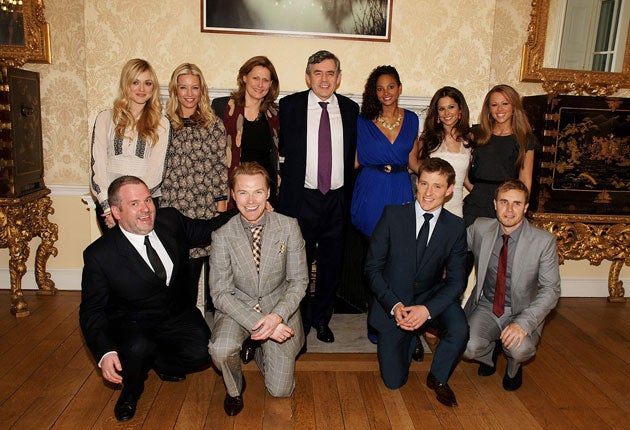
To millions of television viewers it looked like the heroic triumph of nine celebrities over Africa's highest mountain. In reality, Comic Relief's conquering of Mount Kilimanjaro required 33 climbers, half a tonne of broadcasting equipment, two doctors, 100 porters, two runners, open-air latrines and an awful lot of soup.
The scaling of the Tanzanian peak by a team of pop stars, DJs and television presenters has so far raised £1.6m for Red Nose Day and is on track to raise the highest-ever amount for a charity expedition with its step-by-step account of the travails of Cheryl Cole, Gary Barlow et al on their dogged eight-day ascent.
But while the celebrity mountaineers were last night being feted by Gordon Brown at a Downing Street reception and their ordeal with stomach upsets and altitude sickness was being shown on a BBC1 documentary, the story of their support team, including a detachment of security guards, and the operation to film the climb, has received little attention.
Seven months in the planning, the project involved a vast logistical effort to place camera crews, medical facilities and state-of-the-art film editing facilities in the foothills of Kilimanjaro, a 5,895m dormant volcano situated in the wilderness of north-east Tanzania. A total of 43 people, including the nine celebrities, travelled to Africa before setting up a series of camps under the instruction of two expert guides to allow BBC film crews to leapfrog the climbing celebrities and capture the agony and ecstasy of their ascent.
Simon Albert, one of the guides and the managing director of Charity Challenge, a London-based company which specialises in fundraising expeditions, said: "The artists had to work incredibly hard and they made it to the summit by pulling together extremely well. But behind them it was like a military operation in terms of getting everything prepared.
"We had to get 500kg of recording equipment up on to the mountain, including two editing suites to make the documentary. Every day, there was a runner who had to run down the mountain to deliver the footage ready for editing. We have to write a risk assessment for each expedition, which normally runs to 36 pages. This time it was more than 100 pages."
Weather conditions, which saw temperatures reach 30C by day and minus 15C by night, meant that as they neared the summit during a pre-dawn trek five days ago, each of the climbers was swathed in four pairs of trousers, six fleece tops and a balaclava.
Such were the physical demands – the final assault on the summit required 18 hours of continuous walking in oxygen levels half those at sea level – that the expedition required a mobile catering team to provide sufficient calories.
Mr Albert said: "The film crews had to be up before the celebrities, hike ahead and work while the others were resting. It was exceptionally hard work – I think the last two days were the toughest I've had in this work. We were dealing with 75mph winds and extreme cold. On the descent, we had to go past our first camp because the wind was destroying it, bending tents and blowing them away."
Join our commenting forum
Join thought-provoking conversations, follow other Independent readers and see their replies
Comments
Bookmark popover
Removed from bookmarks