Libya sees a violent return to democracy
The first elections since the fall of Gaddafi have revealed a Libya that is still bitterly divided
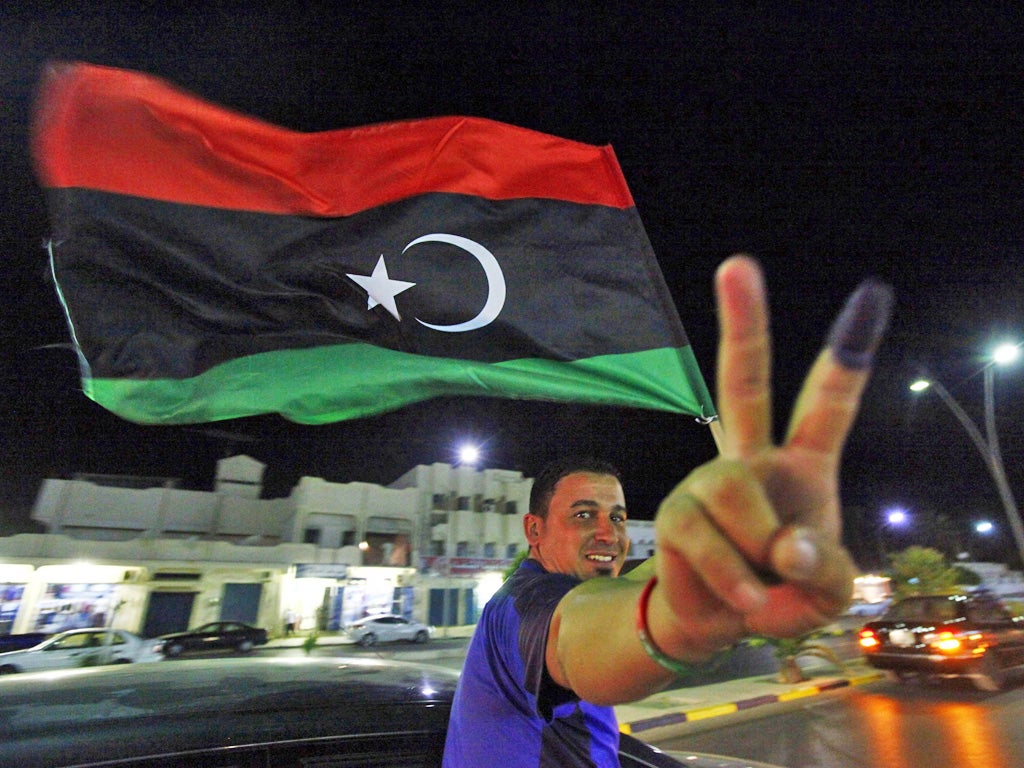
The call to tell Hussein Abdullah Barsi that his son had been killed came as he and his friends were debating how to vote. A helicopter carrying election material had been hit by a rocket propelled grenade; the pilot managed an emergency landing, but the 22 year old student did not survive his terrible injuries.
Abdullah Hussein died in the hands of those in eastern Libya who dispute the legitimacy of first elections in ‘Free Libya’ for half a century and have repeatedly declared that they would not recognize the official results.
“He worked getting aide to poor families during the fighting last year, my son. He had volunteered for election work because it was the right thing to do” said his father, as relatives and friends came up to him offer their condolences at his home in Benghazi. “We should be thankful many more weren’t killed in such an attack. Abdullah wanted to do something for the future, the people who murdered him are opposed to progress in our country.”
The opponents of the election, going by the collective term of ‘federalists’, showed on polling day that they were organized as well as armed. The Independent followed flatbed trucks and cars full of activists, some carrying placards, others Kalashnikovs, a few rocket propelled grenade launchers, as they stormed polling stations in the city, destroying ballot boxes and papers. There were running fights, a few people were shot, insults and vows of retribution traded.
The violent assaults in Benghazi, the “birthplace and heartbeat of the revolution” as the posters declared when it began last February, does not mean that the elections nationally were a failure. But it does illustrate the divisions in Libya as it struggles to go forward after the 42 years of Muammar Gaddafi’s dictatorship.
At Al Wiya Khadra, Zaituna and Tolitula three of the centres looted by the protestors, ballot boxes and papers were either torn or smashed or taken away to be ceremonially burned at a city centre roundabout where a rally has been held for the last two days. The administration in Tripoli, the National Transitional Council, claimed that only one location had come under threat and the attackers had been driven off by voters.
No election observers, who have deployed in the country in numbers, were present at any of the stations attacked. Security presence was light, with a rule that there should be weapon should be within 200 meters of a voting centre, checks were unobtrusive.
It was a laudable attempt to show democracy in action away from the shadow of the gun. It also meant, however, that the guards were caught by surprise and quickly overwhelmed when the federalists struck. At Zaituna, Ibrahim Saleh, with blood streaming from a cut on his head was beside himself with rage at how semi-automatic rifle had been grabbed from him and then, to add further insult, the raiders had shot up his home.
“We weren’t expecting this. They came suddenly and they were well prepared. We tried to fight back but they were pointing their guns at us and others came from behind and hit us. The worst is that a bunch of them went into my home and threatened my wife and family. I will kill them if I catch them.”
A woman who had come to vote with her two children was afraid and angry. “Where are the police, they are supposed to be protecting these places, protecting us.”
The police arrived belatedly at Tolitola. There was a confrontation with the federalists, both sides fired shots in the air and then at each other: a man fell and was dragged away. Murad Ali Fartusi, in his early teens, showed off his Glock pistol. “I used this in the revolution to fight Gaddafi, now I’ll use it against those who want to steal our revolution. Now watch, we’ll pretend to run away and the police will follow us. Then others will go and close other [polling] stations.”
For a while chasing convoys roared around the streets, sirens and horns blaring. It was like the heady days of the revolution all over again. There was something else from the days of the war, large groups of armed men on the streets, mostly supporters of the election forming roadblocks to stop the protestors.
“I had put this away six months ago, but now we must protect this election, there is no other way”, said Omar Mohammed Hussein, wiping a rag over his Kalashnikov. “We are the majority and when the federalists fight us, they will lose.”
By late afternoon Benghazi was full of police, soldiers and vigilantes. Tanks were deployed at the east gate of the city, supposedly to stop paramilitaries arriving for an onslaught on voting.
By the evening the federalists have been driven from their gathering place at Dubai Street. Anti-election pamphlets were being burned in the same drums used earlier to incinerate ballot papers. A rally was being held outside the city courthouse where the first demonstrations of the uprising had taken place.
At a sideroad we came across two carloads of federalists. They carried weapons and warned that this was not the end of the matter. “They will be shown to have manipulated the vote and then we’ll act” said Jaffar Ahmed Athadeen.
At the gathering for the fallen Abdullah Hussein, his uncle, Fawzi Barsi, vowed revenge. “We want the authorities to catch and punish those responsible. Otherwise we’ll take matters into our own hands, we Barsis are a clan 50,000 strong.”
Join our commenting forum
Join thought-provoking conversations, follow other Independent readers and see their replies
Comments
Bookmark popover
Removed from bookmarks