Pirates: the $80m Gulf connection
Crime syndicates laundering vast sums taken in ransom from ships and their crews hijacked in Horn of Africa
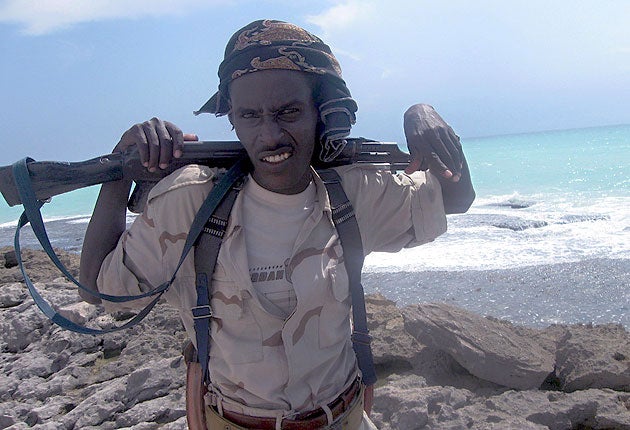
Organised piracy syndicates operating in Dubai and other Gulf states are laundering vast sums of money taken in ransom from vessels hijacked off the Horn of Africa.
Investigators hired by the shipping industry have told The Independent that around $80m (£56m) has been paid out in the past year alone – far more than has previously been admitted. But while some of this money has ended up in the pirate havens of Somalia, millions have been laundered through bank accounts in the United Arab Emirates and other parts of the Middle East.
The so-called "godfathers" of the illicit operations, according to investigators, include businessmen from Somalia and the Middle East, as well as other nationalities on the Indian sub-continent. There have also been reports that some of the money from piracy ransoms has gone to Islamist militants.
The security company Idarat Maritime, which specialises in maritime protection, is working with leading Lloyd's underwriters to formulate safeguards for shippers. Christopher Ledger, a former Royal Marine officer and a director of the firm, said: "There is evidence that syndicates based in the Gulf – some in Dubai – play a significant role in the piracy which is taking place off the African coast. There are huge amounts of money involved and this gives the syndicates access to increasingly sophisticated means of moving money as well as access to modern technology in carrying out the hijackings. This is an international problem and the shipping companies need to ensure that their crews learn how to deal with it."
Investigators have discovered that the pirate gangs are exploiting information available to the shipping industry to plan their attacks. Front organisations are believed to have signed up to the Lloyd's List ship movement database, and sources such as Jane's Intelligence, to ascertain protective measures being undertaken by the shippers. In addition they have bought equipment to monitor radio traffic.
A few well-funded pirate syndicates have experimented with a "stealth" paint such as AR 1, invented by a German scientist living in the UAE, which is credited with making boats difficult to spot via the long-range radar of cargo liners.
It is not clear whether the use of the paint has been effective in helping hijackings, but its use, say the security companies, shows that the pirates are seeking out advanced technology and have the means to acquire it.
Andrew Mwangura, a piracy expert in the Kenyan port of Mombasa, says the gun-wielding Somalis who are fighting and dying in the hijackings are the just the front men of larger syndicates. "They are just the small fish. The big sharks operate out of places like Dubai, Nairobi and Mombasa," he said.
Mr Mwangura, who has observed the rise of piracy while running the East African Seafarers Assistance Programme, says that what began as a localised response to illegal fishing and dumping of toxic waste in Somali waters has evolved into organised crime.
A former merchant seaman, he has been involved in attempts to negotiate the release of hostages and is sought out by diplomats, shipowners and the pirates themselves. He says the profits have drawn in "high-ranking figures" from the semi-autonomous Puntland region and members of the now defunct transitional government of Somalia. "We strongly believe that Mombasa- and UAE-based Somali businessmen are also part of the network."
Neil Roberts, a senior official with Lloyd's Market Association, and the secretary of "the war committee" of Lloyd's and the insurance industry, said: "We are certainly seeing a lot of sophistication in the way piracy has developed. Attacks are being carried out 400 to 600 miles out at sea. This shows the pirates have access to pretty detailed information of ship movements. They certainly have access to the internet and information that is helping them. The question of UAE connection is certainly talked about in the industry and people have been looking into it."
There are also concerns that some of the piracy money may have ended up with Islamist militants both in Somalia and abroad. However this has not been acknowledged because shipping companies would be breaking laws on funding terrorism by paying ransoms.
Stephen Askins, senior partner with the law firm Ince & Co, which specialises in the subject, said: "Current anti-terrorist laws make it illegal to make payment to those who carry out such acts motivated by politics or ideology.
"This does not apply to victims of extortion in criminal cases. We know the US State Department is looking at upgrading piracy to a possible political act but this will make it very difficult for shipping companies to free the many members of crew who are still being held and the cargo being held as well. We know people are looking at those who are subsidising the pirates and we will have to see what happens."
Major General Julian Thompson, the chairman of Idarat and a former commander in the Royal Marines, added: "What we can say is that these people are not just fishermen who have taken up a bit of piracy as a hobby. The people in ultimate charge of some of the groups have access to some pretty good information and they are well organised. Dubai seems to be the place which has a part in this."
Join our commenting forum
Join thought-provoking conversations, follow other Independent readers and see their replies
Comments
Bookmark popover
Removed from bookmarks