Popular in Africa: Bush has given more aid than any other US president
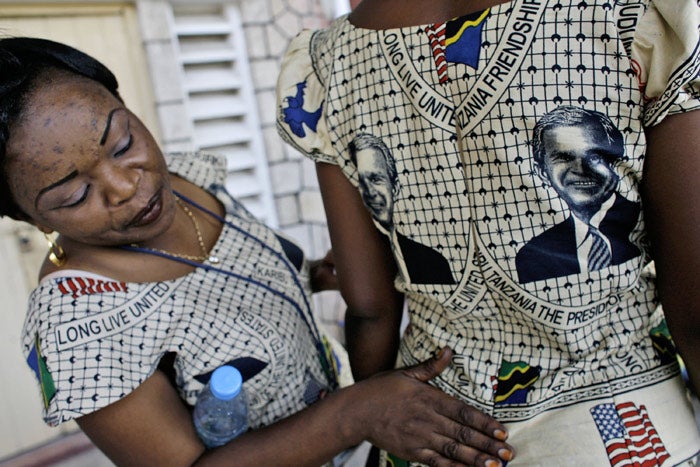
As George W Bush works his way through a five-country African tour, most of the elements that make up an average Bush foreign junket will be in place. Chorus of schoolchildren singing to him at the airport? Check. Obligatory "traditional costume", worn with a smirk? Check. Public anger towards one of the world’s most unpopular leaders? Er, not quite.
The US President's visit to Benin, Liberia, Ghana, Rwanda and Tanzania may, on the surface, be about promoting America's funding for Aids treatment, shoring up support for a US military base on the continent, and quietly scoping out new oil opportunities. But there is another, perhaps more important, reason for President Bush's week-long visit to Africa: people actually like him here.
A recent report from the Pew Global Attitudes Project found that "the US image is much stronger in Africa than in other regions of the world". At least 80 per cent of respondents in Ghana, Kenya and Cote d'Ivoire were favourable to the US. In all other sub-Saharan African countries polled, there were more "favourables" than "non-favourables". Part of the reason for that support is money. Lots of it.
When President Bush came to power in 2001, the US spent $1.4bn a year on humanitarian and development aid in Africa. By 2006, the figure had quadrupled to $5.6bn a year. And it is likely to get bigger. The centrepiece of Mr Bush's aid to Africa is the President's Emergency Plan for AIDS Relief (Pepfar), a five-year, $15bn Aids prevention and treatment programme launched in 2003. His most recent budget proposes doubling the funding to $30bn over the next five years.
Despite rows over the programme's emphasis on abstinence and faithfulness to one partner rather than condoms to control Aids, it has helped to fund anti-retroviral (ARV) drugs for 1.3 million people across the continent. Before, the US funded ARV treatment for just 50,000 people.
Taken alongside US funding for malaria prevention, plus the Millennium Challenge Accounts, which provide funding for countries with strong governance records, Mr Bush has done more for Africa than any other US president, according to Joel Barkan, a senior associate at the Washington-based Centre for Strategic and International Studies. "I am a very severe critic of the Bush administration," he said, "but you cannot take away from the president the fact that the commitment of the US, in terms of aid and debt relief, is certainly greater under Bush than Clinton."
For all the work that Bill Clinton has done on Aids prevention through his charitable foundation since he left office, he took little interest in Africa during his presidency. His one and only visit was in 1998, when he apologised for his government’s inaction during the Rwandan genocide. It was also on Mr Clinton's watch that US troops pulled out of Somalia following the Black Hawk Down incident in 1993, leaving the country in the midst of a deadly security vacuum that exists to this day.
For President Bush, this is his second visit – and the fifth for his wife, Laura. Such is the indifference with which the White House has traditionally viewed Africa that Mr Bush is the first incumbent ever to visit the continent more than once. Before Mr Clinton's trip the last US President to step foot on African soil was Franklin D Roosevelt in Casablanca, where he met Winston Churchill during the Second World War.
The countries on Mr Bush's itinerary can all be described as "success stories", and he will be keen to claim his part in some of that success. Unsurprisingly, there will be no stop off in Somalia, the catastrophic scene of America’s third front in the "war on terror", or in south Sudan. The US had been a primary driver behind the 2005 peace deal between north and south Sudan, but in the years since, the agreement has become fractured and little progress has been made. Kenya is another country missing from the President's travel plans, although the US Secretary of State, Condoleezza Rice, will arrive in Nairobi on Monday to meet President Mwai Kibaki and the beaten presidential candidate, Raila Odinga.
The trip will not be without its difficulties. China's influence is growing across the continent, which has been visited twice by the Chinese president, Hu Jintao, since Mr Bush's last trip. Africom, the new US military command, is also on the agenda. African countries have been reluctant to host the force – meaning it is currently based in Stuttgart.
Join our commenting forum
Join thought-provoking conversations, follow other Independent readers and see their replies
Comments
Bookmark popover
Removed from bookmarks