The Big Question: Is it time for business, tourists and expats to return to Zimbabwe?
Why are we asking this now?
A gradual easing of restrictions on foreign journalists working in Zimbabwe was marked last week by the lifting of the reporting ban on the BBC and CNN. During the first six months of the unity government, harassment of the international media has diminished if not disappeared.
At the height of tensions, security forces were routinely arresting Western journalists and threatening them with up to two years in prison. In reality none were held for more than a month, while reporters from neighbouring Botswana and South Africa received much harsher treatment. The return of the BBC and other broadcasters will bring a welcome end to the theatrical "undercover" reports from Zimbabwe which often deflected attention from the daily misery of the living conditions they were meant to highlight.
There will be close scrutiny of the BBC's coverage to determine whether any editorial compromises were made to regain access. The strange double-speak employed by BBC officials to explain their deal with the administration was worrying because it stressed the importance of forgetting the last 10 years; this is something the Mugabe government would be delighted with but would poorly serve viewers. Strong independent voices such as the weekly Zimbabwean newspaper and the London-based SW Radio Africa remain excluded, although there are signs that may soon change.
Is it OK to go on holiday to Zimbabwe?
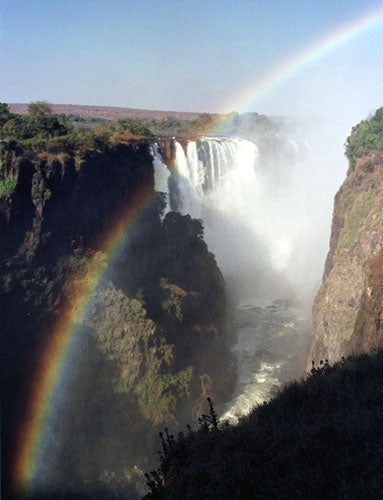
The strange nature of Zimbabwe's crisis meant it was never really unsafe to visit the country. The gradual collapse of a once robust economy and infrastructure never translated into any direct threat to foreign visitors. The cholera epidemic killed slum-dwellers, not tourists. The real question was whether tourists wanted to lend financial backing to a brutal regime. That ethical dilemma remains but most Zimbabweans would be in favour of tourists coming back. From the spectacular Victoria Falls to the vast and beautiful Hwange National Park, Zimbabwe ought to rival Kenya and South Africa for tourist income. The facilities on offer have suffered from a decade of neglect but the potential is vast and the welcome almost always friendly.
Is the economy finally recovering?
Despite the absurd posturing of the frankly ludicrous Deputy Prime Minister, Arthur Mutambara, who last month claimed that Zimbabwe would be in the G20 by 2015, the economy remains in tatters. Mr Mutambara's comments came at the announcement of a new luxury golfing and residential project in Warren Hills, Harare, which underlines the fact that, for now, the recovery has been felt by the rich, not the poor.
Harare is a paradise for Russian money-launderers, unscrupulous Western investors and Chinese mineral companies. The abandonment of the hyperinflated Zimbabwean dollar and the switch to the US dollar has flooded the country with imports, but these are only affordable to those with hard currency reserves. There are green shoots in the agricultural sector where tobacco production and seed sales have risen but real structural investment will have to wait for political stability. Zimbabwe's vast and well educated diaspora, thought to number more than four million people, has shown little inclination so far to return en masse. Along with the foreign donors, big mining interests and major food importers, they are waiting for evidence that the fragile recovery will not be sabotaged by the country's febrile politics.
Who are the winners and losers in the new Zimbabwe?
The biggest winners in the "new", power-sharing Zimbabwe are the ruling party cronies who enriched themselves over the past 10 years and are now being allowed to rehabilitate themselves as the country emerges awkwardly from international disgrace and isolation. The land-grabbers, militia bosses and plunderers of the central bank, including the governor Gideon Gono, are all still under the protection of the government and now free to spend their profits at home instead of crossing to South Africa to shop.
Zimbabwe's writers, musicians and poets, who are legion, are also capitalising on the new, freer atmosphere in the country; civil servants are earning a pittance but that is still more than they were one year ago. The losers remain the rural poor left adrift by the politically-motivated destruction of the agricultural sector and the urban unemployed who make up the vast majority of the people.
Has the political violence stopped?
No. Last Sunday, soldiers from the bodyguard of army chief Philip Sibanda assaulted the gardener of former opposition leader and now Finance Minister, Tendai Biti. The attack proved how bitter and personal the continuing political intimidation is. Protesters are still routinely beaten and Mr Biti's recent budget, which called for a reduction in expenditure by senior officials, prompted someone to send him a bullet in an envelope. The nominated Deputy Agriculture Minister, Roy Bennett, has received death threats which he says emanate from the President's office. Harare is now the court of two almost entirely separate and competing governments, each with its own antagonistic factions. Amid this chaos, members of the security services accustomed to complete impunity are pursuing their own agendas, acting as freelance thugs and settling scores against their critics. Without root-and-branch reform of the police and Central Intelligence Organisation, or a South Africa-style truth and reconciliation process, this will not change.
How is the unity government holding together?
Behind the facade of unity is a war of attrition that Robert Mugabe has been trying to win by arresting former MPs from the opposition Movement for Democratic Change. Some 14 MDC lawmakers face trumped-up charges ranging from assault to playing the wrong kind of music or stealing colleagues' mobile phones. Any convictions would trigger by-elections and potentially overturn the MDC's single-seat parliamentary advantage. MDC insiders speak of a junta that is still controlling the security apparatus and employing it to wreck any progress from the power-sharing administration. Mr Mugabe's role in this is unclear, they say, but the autocrat's intention to hold on to power at all costs is obvious.
What are the key battlegrounds?
The constitution – which Mr Mugabe has twisted to suit his own interests – is key to Zimbabwe's future. The MDC is determined to create a constitutional basis for an independent judiciary, the return of the rule of law and free and fair elections. The embattled Prime Minister, Morgan Tsvangirai, staggers on – humiliated after the driver of the truck that killed his wife and nearly him earlier this year in suspicious circumstances, was fined $200 for the incident. The former union leader has no power over security forces, the courts or the police but must use his leverage with the international community to win the constitutional battle and outmanoeuvre his opponent. That would be something that no other rival of the former school teacher Mr Mugabe, 85, has managed.
So should outsiders re-engage with Zimbabwe?
Yes...
* Zimbabwe is opening up to the world again starting with the broadcasters CNN and the BBC.
* Zimbabwe was always a wonderful tourist destination and now needs visitors to kick-start its recovery.
* Dollarisation has halted the precipitous inflationary slide and simplified potential investment.
No...
* Those who stand to profit from any economic recovery are the people who ruined it in the first place.
* There can be no proper economic recovery without real political freedom and consequent stability.
* Low-level, insidious political violence continues as the state undermines any signs of progress.
Join our commenting forum
Join thought-provoking conversations, follow other Independent readers and see their replies
Comments