War in Darfur is finished, claims UN commander
Nigerian general suggests only one rebel group is still capable of military attacks
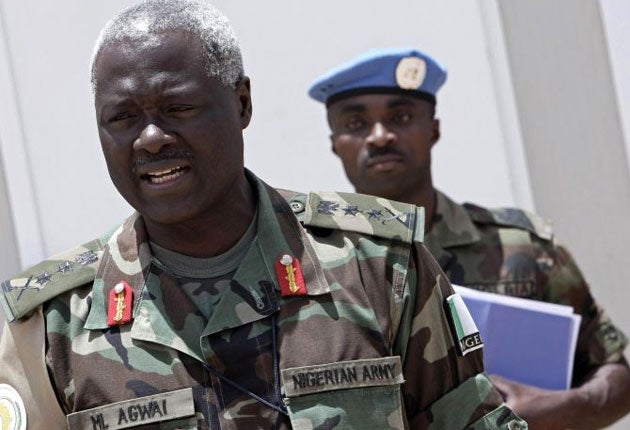
The six-year war in Darfur is effectively over, according to the United Nations military commander in the region. The conflict that has cost 300,000 lives, according to UN estimates, and displaced up to 2.7 million people has ended, General Martin Luther Agwai said yesterday.
"As of today, I would not say there is a war going on in Darfur," the outgoing head of the joint UN-African Union mission told reporters in the Sudanese capital Khartoum. "Militarily there is not much. What you have is security issues more now. Banditry, localised issues, people trying to resolve issues over water and land at a local level. But real war as such, I think we are over that."
However, the Nigerian general's comments drew an angry response from Western campaigners and some Sudan observers. One regional analyst, Gill Lusk, said the remarks were unhelpful because they could lead people to believe that Darfur's problems had been solved. "There has been a large decline in fighting in Darfur, and that is undoubtedly a good thing for the people," she told the BBC. "But it is the government that turns the tap on and off – they can restart the violence whenever they want."
At the height of the war in 2005, Arab Janjaweed militias were raiding African villages, burning, killing and raping civilians. In some cases, villages were bombed by government planes disguised as humanitarian flights. The scale of the atrocities provoked an international outcry and accusations of genocide against the Arab-led government in Khartoum.
It also resulted in the International Criminal Court issuing an arrest warrant this year for Sudan's President Omar al-Bashir, the first time a serving president has been indicted for war crimes. Khartoum has denied charges of genocide, estimates casualties at 10,000 and maintains that the hundreds of thousands of Darfuris living in refugee camps should return home.
General Agwai said the underlying causes of the conflict, and many of the rebel groups, remained in place but he said only one of them – the Justice and Equality Movement – was in a position to launch military strikes. "Because of the fragmentation of the rebel groups, I do not see any major thing that can take place," the commander added.
Fouad Hikmat, a regional analyst with the International Crisis Group, said the absence of war did not amount to peace. "We do not have peace in Darfur. There is no violence but it is not peace. All of the underlying causes of conflict in the region remain. There is a sort of ceasefire but the violence could return very quickly."
The Darfur conflict began in 2003 when several non-Arab groups took up arms against Khartoum, complaining at lack of representation and deliberate neglect of the region. The Bashir government has sought to portray the fighting as tribal rivalries over land and water. Attempts at reaching a negotiated settlement have failed.
America's special envoy to Sudan, Scott Gration, said in June there were only the "remnants of a genocide" in Darfur.
Join our commenting forum
Join thought-provoking conversations, follow other Independent readers and see their replies
Comments
Bookmark popover
Removed from bookmarks