We have failed, admits UN, as fresh wave of Congo rapes emerges
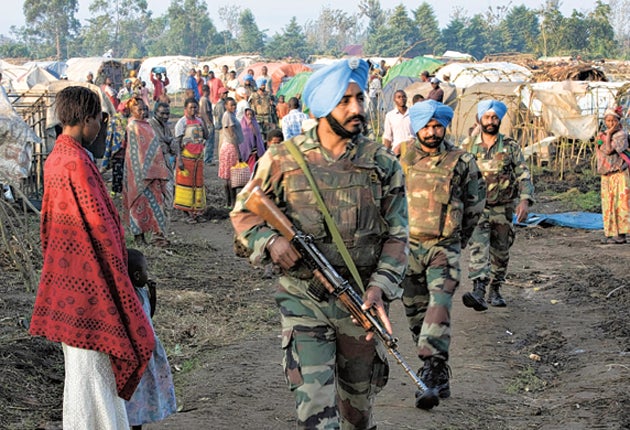
The United Nations has been urged to go back to basics in protecting civilians in Eastern Congo after admitting that 500 rapes in the space of a single month amounted to a serious failure in its mission.
The mass rape of more than 240 women in villages close to a peacekeeping base in Eastern Congo a month ago has seriously shaken confidence in the UN's largest operation of its kind. It has prompted debate at the Security Council, an internal inquiry and a new show of force titled "operation shopwindow". Meanwhile, details are still emerging of another spate of mass rapes in a different part of the vast mineral-rich country, which takes the total number of people affected since the end of July to 500.
Human rights groups yesterday called on the UN peacekeeping mission, Monusco, to get out of their armoured cars and talk to the communities they are mandated to protect.
"People on the ground are telling us that they don't see enough of the UN and when they do see them it's in heavily armoured vehicles from which it's impossible to communicate with anyone," said Marcel Stoessel, country director for Oxfam.
UN peacekeepers sent a patrol into the area of Luvungi where the mass rapes were underway while they were happening but failed to speak to locals or discover what was going on.
Mr Stoessel said people "want the UN to get out of those vehicles, speak with local communities and identify threats together". And, he added: "Right now, that's not happening everywhere."
The comments came after the UN's top peacekeeping official reported to the Security Council on Tuesday that the real number of mass rapes in Congo since July was double that previously reported.
UN assistant secretary-general for peacekeeping Atul Khare, who was sent to the Democratic Republic of Congo after the Luvungi attacks were reported, said: "While the primary responsibility for protection of civilians lies with the state – its national army and police force, clearly – we have also failed... We must do better."
Rape has become a common weapon in the conflict over the control of mining operations in Eastern Congo with an estimated 15,000 serious acts of sexual violence reported every year.
The UN, which is in the tenth year of its mandate there, has been repeatedly criticised for failing to protect communities from armed groups.
"This is deja vu, we've seen similar scandals every year over abuses near a UN base," said Congo expert Jason Stearns. "The question is why is it still happening?"
While peacekeeping resources are a problem, especially since 1,700 troops were withdrawn, the fundamental problem lies in the UN force's contradictory mandate, the analyst said. Monusco is committed both to protecting civilians and to working with the Congolese army, which has been identified as the single worst human rights abuser. This leaves peacekeepers having to be "very aggressive toward their own partner in the army," which would call for strong leadership the mission doesn't have.
While the attacks in Luvungi in North Kivu province have dominated the debate, reports are emerging from South Kivu and the Shabunda area suggesting a similar scale of mass rape. The Luvungi attacks have been blamed on rebel groups but the Shabunda rapes have been blamed on the Congolese army.
Despite the criticisms of the UN, analysts say its role remains essential. "A Monusco withdrawal would be the worst case scenario," said Mr Stoessel, who added that the exit of peacekeepers could see a conflict which came to be known as "Africa's world war" reignited. "Displaced people still go to sleep around UN bases, they are still the best hope for the people," he said.
Join our commenting forum
Join thought-provoking conversations, follow other Independent readers and see their replies
Comments
Bookmark popover
Removed from bookmarks