Antigua behind the brochures: gangsters' paradise?
The shooting of Catherine Mullany and her husband, Ben, has put the Caribbean island of Antigua under a harsh spotlight. As crime spikes and gangs proliferate, has its allure been tarnished beyond repair? Stephen Foley reports from St John's

It is a raucous, joyful racket. Eighty-strong and dressed in identical yellow T-shirts worn down to their knees, the mainly teenage members of the Cool & Smooth Ebonites Steel Orchestra International leap and dance in unison, hammering away at dozens of drums. It is loud, both in colour and in volume. This is Antigua with its carnival face on.
The postcard-pretty island's annual celebration of emancipation is reaching its crescendo this weekend. A beauty queen has been crowned. In fields around the island, people are preparing floats. Costumes – fabulous costumes – are being designed and assembled. A teenager is wheeling a unit through the street piled high with connected speakers and ghetto-blasters, promising tinnitus with its painted legend: "Weapon of Mass Destruction."
Only behind the carnival mask Antigua is a troubled island, with one event hanging heavy over the audience, even as the steel drums rang out. The shooting of a British honeymoon couple in an apparently motiveless attack left 31-year-old Catherine Mullany dead from a shot to the head, and Ben Mullany, her husband of just two weeks, fighting for his life in a ramshackle hospital on a hilltop here.
Yesterday, Mr Mullany was flown home to the UK, a bullet still lodged in his brain, while the police admitted that – long after the first crucial 48 hours of the investigation had passed – they had no firm idea who carried out what is thought to have been a botched robbery. The fact is, though tourists have typically been spared the worst of Antigua's violence, this is not an atypical crime.
The murder rate has spiked in this island in the past two years. Dr Mullany was the tenth person killed in seven months, the fifth in four weeks. The fear of her murder's potential consequences has certainly caused a convulsion in the body politic and galvanised an anti-crime mood among the public. Whether this east Caribbean jewel, home to 80,000 people, can quickly get a handle on its crime rate, however, seems far from certain.
Gun crime and gang violence are on a sharp rise among Antigua's young, linked to a global trade in guns and marijuana, crack and other cocaine, a traffic that has put the island and its neighbours at a vital crossroads between the narcotics producers of South America and the eager consumers of the US and Europe. These drugs seep into the population, payment in kind for dealers, or simply an impossible lure at prices that are a fraction of the street prices in the developed world, sometimes as low as US$1 (50p) for a rock of crack cocaine.
This is not the face of Antigua that Antiguans want to present to the world. Every man and woman here knows the importance of the tourist industry to the island's economy. Some 75 per cent of its income relies on it.
As the Ebonites scramble from the stage, a proud audience member, David Peters, hangs over a railing and shakes his head. "This island is a paradise – it will always be a paradise – but the people in paradise are scared."
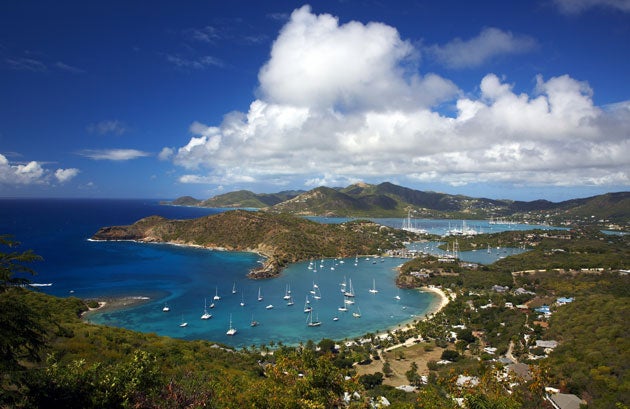
The Mullanys really did get the view on the front of the honeymoon brochure. The Cocos Hotel where they stayed and were attacked is made up of tiny, blue-green painted cottages nestled into the hillside on the south-east coast of the island, looking out into the Caribbean Sea. Down the windy path from the hotel is a powdery white expanse of exquisite beach, one of the 365 beaches which lured close to 100,000 tourists last year.
Security guards patrol the gates to the hotels and resorts in this part of the island, though. Not all of Antigua shares in the luxuries of the beach resorts or the exclusive playgrounds of the rich on their luxury yachts. Eric Clapton, the guitarist, was so shocked by the effects that crack and other drugs were having on the population that he set up the Crossroads rehab centre in Antigua in 1998.
Kim Martin, the admissions director at Crossroads, says: "Crack cocaine is the number-one substance of abuse for our Antiguan clients, followed by alcohol. It was the influx of crack that caused members of the community to approach Clapton in the first place and it is still very visible, particularly in some parts of the island, which is leading to crime."
The capital, St John's, in the north-east, is where half of the island's population live. You don't want to meander far from the touristy quays on St John's deep-water harbour, where cruise ships dock to allow their passengers to stock up on designer gear from the boutiques along the water. Only a few blocks up the hill and the shops and banks give way to more dishevelled buildings, run-down stores selling only a handful of items, homes with crumbling front steps. There is no shortage of opportunity to find drugs, as twenty-something men make their friendly approach to tourists.
And then, not five minutes drive away is Villa, the neighbourhood where a high-school student, Ken Watkins, 17, was shot in the back of the head on 5 July, a neighbourhood that, our hotel guide mutters darkly, tourists should stay away from.
"There are drugs in the island," says the police commissioner, Gary Nelson, "and I have no idea how many guns are here. Crime is spiking all over the Caribbean. These homicides here, with young people involved, they are usually drug-related."
Last night, the commissioner said he believed the murder of Ms Mullany was linked to a murder in St John's two months ago when a robbery victim was shot in the back of the head. Mr Nelson said it was probably not the first time the killer had struck. "There's something wrong with this person," he added.
But the police chief hinted at his frustration by saying that there was a code of silence on the island or a lack of trust in his officers that stopped witnesses coming forward.
On the streets of Villa, lined with dilapidated single-storey residences and with dogs and chickens running about, residents say there are fearful. "Guns are in the wrong hands, and these people have become trigger happy," says Jennifer Charles, a neatly dressed woman in her thirties. "Everybody is worried about the effect of this."
On the same streets, Jerome Joseph, whose alter ego is Dr Mozarati, a "shock-jock" on the government-owned Crusader Radio, says Antigua is in the midst of a "gang war", with groups of youths making gang names such as Black Juice, Thug Mansion and the OT Bloods common currency. "You can't be soft," Mr Joseph laments, "and I am in favour of the death penalty. Crack five necks and I believe many more will get the message."
Others still blame outsiders. Jamaicans and deportees are the most-favoured scapegoats and the Prime Minister, Baldwin Spencer, pointed a finger of blame at Britain this week, claiming that, along with the US, it was deporting criminals with an Antiguan background back to the island in numbers with which it could not cope. Commissioner Nelson sighed when the issue was raised at a press briefing yesterday, and said there were no firm conclusions; a UN report found little evidence that deportees were committing crime, although it posed the possibility they were acting as role models for gang members.
Antigua's police appear hopelessly out of their depth. The police station on the high street in St John's is crumbling. The new commissioner, brought in from Canada with other former Mounties, has put his energies into solving the lack of funds and infrastructure within the organisation.
Certainly, the police station in St John's is falling apart, with detainees staring out at the public through a chicken-mesh grille behind the officers at reception. A rapist has stalked the island for more than two years, preying on poor women. The police believe his tally of rapes has passed 40, but they have made little progress in the case.
Mr Nelson's appointment speaks of the frustration of the government at what is seen as rampant corruption in the force, and at gathering numbers of unsolved crimes. The public is asking why a local man – a black man – cannot be made head of the police. The government, though, wanted an outsider, free of taint.
This is an island still unwinding the legacy of the Bird family, which ran the government as an elected dynasty from independence until only four years ago. Then a tide of corruption and smuggling allegations swept their their Labour Party away in an election landslide for Mr Spencer. Conspiracy theorists say police were part of the corruption of the old regime. They suggest the spike in crime stems from that change of government.
Perspiring under the Antiguan sun, and in the sudden spotlight of the world's media, the commissioner chooses his words carefully. Mr Nelson spent 38 years as an officer in Canada, including as head of Ottawa's homicide and drugs intelligence units. Here, he talks of "morale" as an issue, but never corruption. "I was brought down here to build a police force, and we are finding a lot of good officers, people who are intelligent and who want to work hard," he says. The unspoken suggestion is: not all of them.
Time after time, Antiguans will chat freely with reporters about their shock at the tragedy in the Cocos Hotel and the 29 murders here since the start of 2007, but there is a fear that prompts them to draw back at the suggestion of giving their name. Young people and the authorities are twin dangers. This is a small island, a gossipy island, and anybody can find you.
"I am a fighter," says a 72-year-old taxi driver, after recounting how a 16-year-old had threatened to kill him after he admonished him for not paying attention when crossing the road. "But I fight with my fists. These people have guns."
A brief guide to Antigua
*Antigua has a population of around 80,000 and together with its twin island, Barbuda, was made a colony by the English in 1667.
*Slave labour was used on the island's sugar plantations until the abolition of slavery in 1834. Antigua and Barbuda became an independent state in 1981, and continues as a member of the Commonwealth.
*The murder rate per head of population in Antigua is more than three times higher than in New York, with 19 murders committed in 2007.
*Baldwin Spencer, the prime minister of Antigua and Barbuda, has partly blamed Britain and the US for the recent crime wave. Between them, they have deported 280 criminals to Antigua in the past decade.
*Catherine Mullany was the tenth person to be murdered this year, but the first tourist killed in more than a decade.
*Tourism makes up 75 per cent of Antigua's economy, with roughly 33,000 British visitors arriving each year.
Join our commenting forum
Join thought-provoking conversations, follow other Independent readers and see their replies
Comments