Dictator jailed in final judgment on Argentinian junta's dirty war
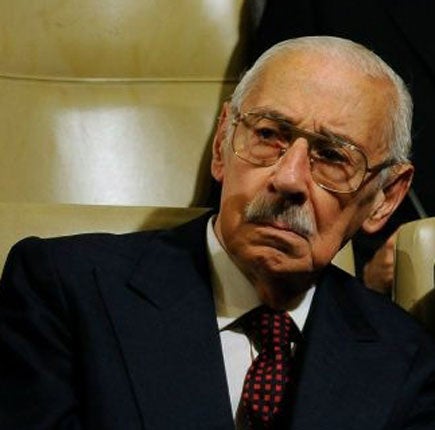
The former military dictator of Argentina, Jorge Videla, who was the principal architect of the so-called "dirty war" during which as many as 30,000 civilians were "disappeared" to secret prisons, never to be seen again, has been found guilty of crimes against humanity and sentenced to 25 years in prison.
More than 20 other former military and police officials were also convicted and given harsh sentences alongside Videla, who, at 85 years old, will in all probability now die behind bars. They included his former army chief, retired General Luciano Benjamin Menendez.
The convictions triggered jubilation among victims' relatives, including members of the Mothers of the Plaza de Mayo, the human rights group which over decades relentlessly demanded that leaders of the military junta that ruled Argentina from 1976 to 1983 be brought to justice. Making the guilty pay is "the only thing we have left in life", said Nair Amuedo of Mothers of the Plaza de Mayo. "Our children haven't appeared – we don't know anything about them. At least these murderers were condemned for who they are." Some of the relatives held up grainy black-and-white pictures of their lost loved ones in the courtroom as the sentences were read out.
The three-judge panel sitting in a Cordoba court found Videla guilty of aggravated homicide, aggravated torture and torment followed by death. It also ruled that Videla must serve his sentence in a common prison.
Videla spoke defiantly before his sentence about his role in combating what he saw as a leftist insurgency encouraged by the former Soviet Union. "I don't speak of 'dirty war'; I prefer to speak of 'just war'," he told the court. He was first convicted of crimes against humanity in 1985. However, he only served five years before being pardoned by the former president Carlos Menem.
The door to new prosecutions was reopened in part because it has taken this long for Argentina to purge its judicial system of judges and prosecutors who retained ties to the dictatorship era. The new trials were also strongly encouraged by the current government of President Cristina Fernandez de Kirchner.
Exactly how many people in Argentina were tortured and murdered by the junta – a majority of them students – has never been firmly established. By government reckonings the toll was about 13,000 but human rights groups put it closer to 30,000.
The case brought against Videla and his co-defendants specifically related to 31 victims of the "dirty war" who were rounded up and taken to a secret prison in Cordoba where they were tortured, including with water-boarding and electrocution, and left naked in cold and damp cells. The court heard that they were told that their families would be killed if they did not confess to a leftist conspiracy against the state. The court found Videla "criminally responsible" for the deaths of the 31 men. One of the judges described Videla as "a manifestation of state terrorism".
Given the opportunity to speak before sentencing, the former coup leader showed scant remorse, however, saying he had been wrongly convicted. "Much of what took place in the 1970s has been distorted, and perverse facts about the war have been concealed," he argued.
The junta was merely fighting to defeat "an internal, irregular and revolutionary conflict, which was being encouraged from abroad," Videla said, making reference to the former Soviet Union. He added: "In this war we used force against an enemy who was trying to alter Argentine society's way of life. It [the war] was also backed by a majority of the population, who felt relieved by our actions."
Videla also used his podium to imply that Mrs Kirchner's government was born of the leftist scourge he tried to destroy. "The enemies of yesterday achieved their goal and govern the country and they try to set themselves up as champions of human rights," he said.
Menendez, meanwhile, told the court that leftist groups were operating in Argentina before the military coup. "They were combatants who took on certain risks," he suggested. "It's not a crime against humanity to fight an armed combatant."
Join our commenting forum
Join thought-provoking conversations, follow other Independent readers and see their replies
Comments
Bookmark popover
Removed from bookmarks