
Larry King is wondering if reality TV is "out of control". Fellow news anchor Campbell Brown has "shocking" evidence that it "actually harms people". Even CNN's fluffy Showbiz Tonight is hosting earnest studio discussions about the "many, many" shows having a "detrimental effect on real life".
The very public meltdown which saw Susan Boyle rushed to The Priory on Sunday has kickstarted a process of noisy soul-searching among some of the biggest names in American TV.
Several of America's best-known opinion-formers spent the week asking serious questions about the genre of television show that facilitated her all-too-giddy rise from unemployed, cat-loving spinster to global singing sensation. In a country that has embraced Britain's reality TV formats almost as vigorously as it took Boyle to its heart – the Scottish singer was invited on Oprah, and plastered across every major news network – her case symbolises the excess of an industry built on the exploitation of what critics call "disposable people".
Her admittance to London's famous rehab clinic comes months after Paula Goodspeed, a mentally fragile contestant who was cruelly rejected by Simon Cowell on American Idol, committed suicide in a car parked outside fellow judge Paula Abdul's LA home. An influential Hollywood website, TheWrap.com, this week published an investigation into what headline-writers are calling the "Truman Show syndrome" (named after the Jim Carrey film about an exploited reality star). It revealed, to public amazement, that at least 11 participants on real-life TV shows have recently committed suicide.
The report highlighted the shocking case of Cheryl Kosewicz, who took her life after appearing on the CBS show Pirate Masters in 2007. "This frickin' show!" she wrote in an email shortly before her death. "It's not getting good reviews... Then I made the National Enquirer... The hits keep on coming."
It further discussed Kellie McGee, who took an overdose in 2005 after being dropped from ABC's Extreme Makeover, in which frumpy women are given a "Cinderella-like transformation" at the hands of Beverly Hills cosmetic surgeons.
After being told that her facelift was being cancelled because it didn't fit with the show's production schedule, McGee had cried: "How can I go home as ugly as I left?"
So widespread is the problem that some US psychiatrists now specialise in preventing former reality TV stars from taking their own life. Dr Jamie Huysman, who founded the AfterTVcare organisation, has treated more than 800 such patients, and says that broadcasters are failing their "duty of care." "This is a far, far bigger problem than you realise," he said yesterday. "The deaths you know about are the tip of an iceberg. I can think of at least three other ones that have occurred, a couple of weeks after TV shows, which went totally undocumented.
"Producers have to start being socially responsible. At the moment, they are taking vulnerable contestants and treating them as what I'd call disposable people. They don't seem to mind, because when someone goes home and dies, it happens off camera."
Boyle's case coincided with the start of another season of the US version of I'm a Celebrity Get Me Out of Here, and the grandfather of reality shows, Big Brother. It also followed news that Nadya Suleman, the fragile woman known as "Octo-mum", is to force her eight newborn children to grow up in front of a documentarian's camera.
The sheer quantity of reality shows currently in production is part of the problem. Entire channels are devoted to broadcasting them, and they have largely replaced the studio chatshow as the cheapest means for US broadcasters to garner mass audiences.
TV chatshows were forced to get their house in order in the mid-1990s, following the death of Scott Amedure, a gay man who was murdered after confessing that he was in love with a heterosexual friend, Jonathan Schmitz, during an episode of The Jenny Jones Show. Schmitz killed Amedure three days later.
Following that incident, it became standard practice to screen chatshow guests for psychiatric problems. But reality programming lags far behind. Most experts complain that producers make no provision for after-care.
"For the most part, the people they hire to conduct pre-screening are simply not robust enough," says Carole Lieberman, a media psychiatrist who appeared as an expert witness in the Jenny Jones case. "They don't stand up to the producers because they're star-struck and they think if they tell the truth, then it'll be the last TV show they ever get booked on. So vulnerable people keep getting put in positions they shouldn't."
The often-unspoken suspicion is that TV producers quietly encourage reality contestants to have meltdowns because it boosts ratings. Some evidence certainly suggests as much. A couple of years back, Melanie Bell, who starred in the pilot show Vegas Elvis, jumped to her death from the Stratosphere hotel after a long day of filming.
Producers responded to the crisis by putting out a press release, trumpeting the fact that Vegas Elvis was now "the second reality show in less than two months to suffer a cast member suicide".
Fame and misfortune: Reality TV suicides
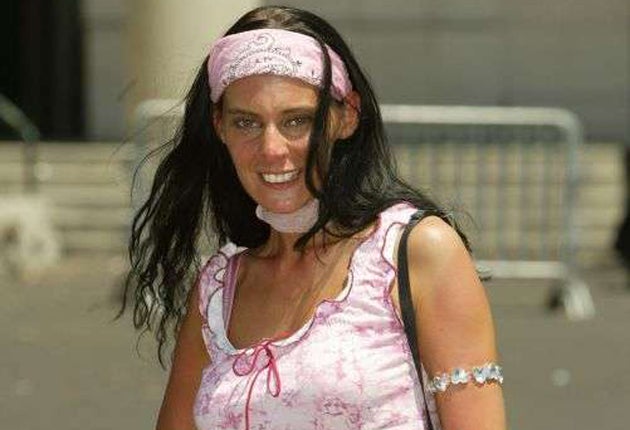
*Like many a would-be contestant, Paula Goodspeed's appearance on American Idol in a 2006 audition was brief and forgettable. After trotting onstage and revealing herself a huge fan of the judge, Paula Abdul, the eccentric 30-year-old, above, belted out an excruciating version of Tina Turner's "Proud Mary". The judges were unimpressed. Simon Cowell's critique verged on the personal, highlighting the braces that Goodspeed wore on her teeth. "I don't think any artist on earth could sing with that much metal in their mouth," he gleefully declared. "You have so much metal in your mouth, it's like a bridge!" Ms Goodspeed apparently failed to see the joke. In November last year, she took an overdose in a car parked next to Paula Abdul's home.
*Boxer Najai Turpin was handed the chance of a lifetime when he was selected to appear on The Contender, an NBC show following would-be champs trying to win a $1m tournament. But weeks before his bout, Turpin shot himself while sitting in a car with his girlfriend, following an argument over their two-year-old daughter. His trainer Perry "Buster" Custus told reporters he had failed to cope with the potential pressures of life in front of the cameras. "He had a lot of stuff on his mind. I was going to talk to him about it while we were driving to the camp," he said.
*Simon Foster was chosen to appear on the UK version of Wife Swap because he had an "open relationship" with wife Jane, in which they both had sexual partners outside of the marriage. Shortly after the show aired, Foster was plastered across the tabloids and sank into depression. First he lost his job; then his wife moved out, taking their two children to live with her lesbian lover. A public laughing stock, he soon became homeless. Months later, he committed suicide by consuming a combination of methadone and alcohol.
Join our commenting forum
Join thought-provoking conversations, follow other Independent readers and see their replies
Comments