Nationalisation: Uruguay's solution to its drug problem
Law allowing state to sell cannabis could be adopted across Latin America in defiance of US
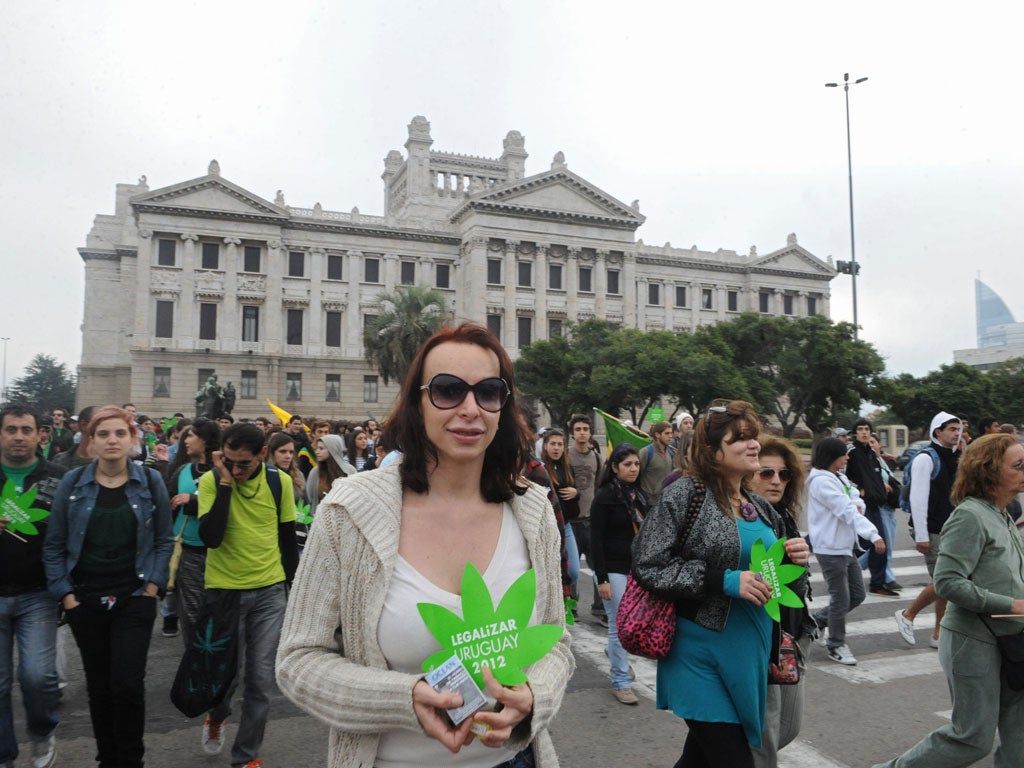
Uruguay – in a bid to curb a narcotics-fuelled violent crimewave across the country – has unveiled plans to nationalise its cannabis market and become the first government in the world to sell the soft drug to consumers.
The measure is aimed at both reducing the rising power of drug gangs and the growing number of users of crack and freebase cocaine in what has traditionally been one of Latin America's most peaceful nations.
"We want to fight two different things: one is the consumption of drugs and the other is the trafficking of drugs," said the Defence Minister Eleuterio Fernández Huidobro.
"We believe that the prohibition of certain drugs is creating more problems in society than the drug itself. Homicides have risen as a result of the settling of accounts [between rival drug gangs] and this is a clear symptom of the appearance of certain phenomena that did not exist previously in Uruguay." Under the plans, the government would initially grow cannabis and sell it to registered users. But once the scheme is up and running, it hopes to cash in and allow private companies to take over the production of the drug.
Possession of small amounts and consumption of marijuana is currently not illegal in Uruguay but growing and selling it is. The new bill would seek to put the drug dealers out of business by making it easier, safer and possibly cheaper for users to buy marijuana from official dispensaries.
President José Mujica, a former leftwing guerrilla, has now sent a bill to the Uruguayan congress which is widely expected to approve it. The legislation is part of a larger packet of measures to tackle law and order issues.
Last night, even opposition lawmakers were tweeting in qualified support. One, Luis Lacalle Pau, of the centre-right National Party, wrote: "I don't believe it would be a good thing to continue associating marijuana with money." The measure represents a rejection of the "stepping stone" argument that cannabis is a gateway drug to more damaging substances. Mr Fernández Huidobro highlighted the government's expectation that it would actually result in a fall in the use of harder drugs.
It also marks the latest chapter in the region's gathering rebellion against Washington's "war on drugs", launched in the 1970s by President Nixon. Many Latin Americans resent being blamed for producing coca – cocaine's key raw ingredient – when impoverished peasant farmers are largely responding to demand from the US and Europe.
The costs of prohibition to the region have been huge, with Mexico, Honduras, El Salvador and Guatemala in particular, seeing tens of thousands die as the drug cartels confront law enforcement and battle each other for control of the main cocaine corridor from the Andes into the US market.
"An erroneous decision by Nixon has been what has caused all these disasters, declaring a war that has been won by the narco-traffickers," Mr Fernández Huidobro told the Montevideo newspaper El País.
In the last 12 months, the Mexican President, Felipe Calderon, has called for "market" alternatives to prohibition to be considered while Colombia's President, Juan Manuel Santos, has said he would welcome an international debate about legalisation.
Worryingly for Washington, both presidents come from the right of the political spectrum and have been staunch supporters of the war on drugs.
Uruguay is thought to have around 150,000 regular consumers of cannabis, roughly 5 per cent of the population, representing an annual market worth around £50m.
Join our commenting forum
Join thought-provoking conversations, follow other Independent readers and see their replies
Comments
Bookmark popover
Removed from bookmarks