Rape on the rise in Haiti's camps
Girls as young as 12 have been attacked as sexual violence plagues the quake's survivors
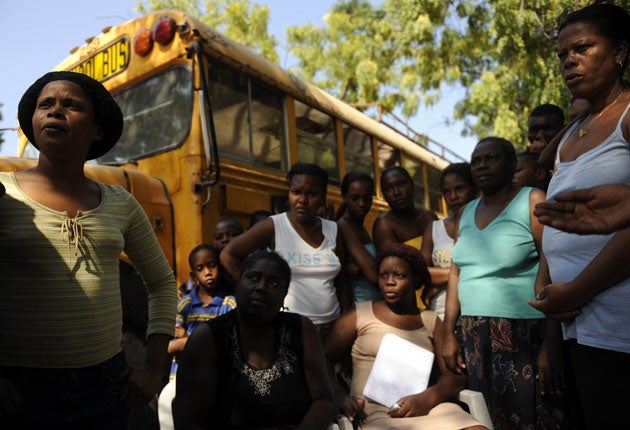
In one of the great unmentioned effects of the earthquake in Haiti, women and young girls are suffering a rising number of rapes and sexual assaults, according to leading aid agencies. So widespread are the reports – and they include the rape of a girl of 12 by her rescuer after she was pulled out from the rubble – that emergency measures are now being taken.
Displaced men and women patrol some camps with makeshift arms to ward off attackers; girls wear jeans under their skirts for protection if they go out after dark; temporary women-only health centres are being set up; and NGOs try to deliver aid to dangerous neighbourhoods where women are too scared to go out in search for food.
Sarah Spencer, gender-based violence co-ordinator for the International Rescue Committee (IRC), who arrived in Port-au-Prince two weeks ago, said: "Violence against women was a problem in Haiti before this crisis. Now, women and girls are dramatically more vulnerable to attack. The humanitarian community focuses on food, water and shelter, understandably, but this is at the sake of protection for women. Criminal gangs have regrouped; security is poor; people are sleeping in the streets, too frightened to go inside or else in crowded, unlit camps, surrounded by strangers. Many women have been left without male protection because their husbands or brothers were killed. All of this means the risk to women in post-disaster Haiti have elevated dramatically."
Ms Spencer met two women looking for help for their female colleague who had been raped on the street the night before. The victim had been unable to find medical help – emergency contraception, antibiotics and retroviral drugs – because many of the health centres that care for victims of sexual attacks were destroyed or badly damaged in the earthquake.
About half an hour outside the capital, the Ti Source camp is home to 3,000 people who came to the hilly ground to escape their flattened homes in the town of Mariani. Scared by reports of rapes in the town below and neighbouring camps, Martine Josil, 24, persuaded some of the men in the camp to form a security group.
Ms Josil said: "After the earthquake we felt very afraid because people were talking about rapes and robberies in other camps. We were all sleeping out in the open on the streets and things were very chaotic. There were many women who had lost their husbands and they felt very vulnerable. We didn't want to get raped so we asked the guards to protect us."
The men, and some women, carry makeshift weapons – iron bars and knives – and guard the camp throughout the night in groups of five. Jean Michelet Cornet, 30, is one of the 21 volunteer security guards at Ti Source who makes sure everyone is in their tent after dark, and then checks for any strangers. He said: "We are here to protect the women in our camp from sexual abuse or even beatings from their husbands. We have machetes, iron bars and ropes to protect the women in our camp."
In addition, girls are being told to wear jeans under their skirts after dark because they are more difficult to cut. But according to Sheelagh Kathy Mangones, country programme co-ordinator for Haiti from the UN Development Fund for Women, these ad hoc measures alone are not enough. Violence, especially sexual violence, always escalates after a major disaster when security is unstable and women are forced to live in the open, in close proximity to unknown men.
Last week Marjolein Jacobs from Plan International visited two camps in the southern city of Jacmel, one in Pichinat where nearly 4,000 people are sleeping under plastic sheets. Several women have been subjected to violent attacks here already. The second, the Wolf camp, is much smaller, with about 400 people. An attempted rape of a 14-year-old girl on 29 January was thwarted by people who heard her screams. There is neither security nor any lights in either camp. There is no privacy even to wash. Ms Jacobs said: "We need to talk to the girls and identify those most vulnerable, make sure they know how to try to keep safe. We need to get patrols and security set up in every camp. And we must find out who is left in the justice system, the police, with knowledge about gender-based violence. We must act to protect women now."
In Port-au-Prince, two female health centres have been set up by the International Rescue Committee in the past week, providing rape victims with life-saving medical treatment such as retroviral drugs which protect against HIV. More than 5 per cent of the adult population have HIV/Aids in Haiti, the highest rate outside Africa. ActionAid is delivering food and water to poor neighbourhoods where women are too scared to leave their homes and walk to aid distribution points, in case they can't get home before sunset.
Street gangs have regrouped and prisoners have escaped, including members of some of Haiti's most infamous gangs. Street lighting is still poor, which makes parts of the city too dangerous to risk getting stuck outside after dark. IRC, ActionAid and Plan are trying to target distribution to women and children.
Rates of sexual and domestic violence against women and girls in Haiti are among the highest in the world. In the days after the earthquake, a Swiss doctor, Olivier Hagon, told the Swiss newspaper Le Temps that he treated a young girl, no older than 12, for vaginal tears after she had been pulled out from under the rubble and then raped by her rescuer.
Rape was used as a political weapon during the armed rebellion which ousted President Jean-Bertrand Aristide in February 2004, and attacks by groups of armed men have remained high ever since.
Rape was criminalised only in 2005 but, as with domestic abuse, it remains shrouded in shame. Victims are often forced out of school and ostracised by their communities. Many victims do not report violence because they have little faith in the criminal justice system, according to Taina Bien-Aimé, director of the US-based human rights organisation Equality Now.
Three of the country's most prominent women's rights activists were killed in last month's earthquake. In a country where the law and infrastructure were already fragile, their deaths have been deeply felt, but those left know they must regroup as soon as possible, said Ms Bien-Aimé, who lost several members of her own extended family in the earthquake.
Ms Bien-Aimé said: "The international agencies, including the UN, are capable of dealing with these issues; they have the experience from previous disasters. We need to know what they are doing about it and whether the protection of women is a priority."
Join our commenting forum
Join thought-provoking conversations, follow other Independent readers and see their replies
Comments
Bookmark popover
Removed from bookmarks