Revealed: the infighting that has hobbled hunt for Bin Laden
Disagreements within the Bush administration blamed for failure of the US to defeat al-Qa'ida
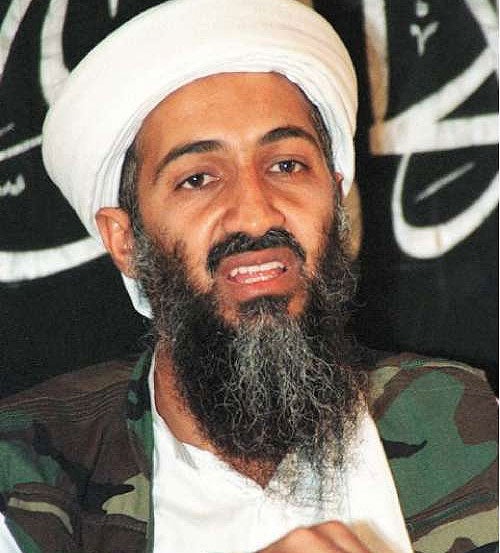
Damaging details of infighting within the Bush administration and intelligence agencies are emerging, just months before George Bush leaves the White House.
A scathing assessment of US failures in its war with al-Qa'ida was published by The New York Times yesterday, containing the charge that the infighting has hobbled efforts to capture Osama bin Laden and his senior lieutenants.
The report coincides with revelations in The New Yorker about deep unease among congressional leaders over a secret directive issued by the Bush administration which significantly boosts the activities of Special Operations Forces inside Iran. The magazine also detected further disarray by highlighting concern within the US military about White House support for possible military strikes on Iran, which would aim to set back Iranian nuclear ambitions.
Mr Bush will now leave office with al-Qa'ida having successfully relocated its base of operations from Afghanistan to Pakistan's tribal areas. According to the report in The New York Times, there may be more than 2000 foreign recruits to al-Qa'ida. The newspaper describes how last year the Pentagon's Special Operations Forces were authorised to launch missions in the mountains of Pakistan. But they are still awaiting the green light to launch attacks on al-Qa'ida camps in the North West territories. There was "mounting frustration" at the delay, a senior defence source told the newspaper. There have been numerous American missile strikes in Pakistan since 2002, but militants have continued to flock to al-Qa'ida encampments it is reported.
The US failure to tackle the al-Qa'ida leadership comes at a time when Mr Bush is increasingly focused on projecting the US military into Iran. Operations in Iran have been expanded with the Central Intelligence Agency and the Joint Special Operations Command joining forces, according to current US officials. The New Yorker reported that undercover US operations inside Iran are undergoing a major expansion aimed at destabilising the religious leadership.
Barack Obama, the Democratic presidential candidate, is to travel to Afghanistan and Iraq as part of a seven-nation tour later this year to address what is seen as a weakness on foreign policy compared to his veteran Republican opponent, Senator John McCain. Mr Obama has said he wants to send up to 10,000 soldiers to Afghanistan, where violence has increased as the Taliban and al-Qa'ida regroup. Mr Obama has accused Mr Bush of neglecting the fight in Afghanistan to pursue an unnecessary war in Iraq.
Most damaging of all for President Bush's legacy may be a 700-page official history by the US Army. It points the finger of blame at US-based commanders who believed "in the euphoria of early 2003" that the goals in Iraq had been accomplished and failed to send enough troops to handle the occupation. The study specifically blames President Bush's declaration on board an aircraft carrier off San Diego on 1 May 2003, that major combat operations were over for reinforcing that view. The audacious conclusions of the official army history, On Point II, were defended in a foreword by General William Wallace, commanding general of US Army Training and Doctrine Command, who wrote: "One of the great and least understood qualities of the United States Army is its culture of introspection and self-examination."
The report blames civilian and military planning for the failures of post-Saddam Iraq. After Saddam was toppled, US commanders sat back and expected a peaceful transition much as they had experienced in Bosnia and Kosovo.
The report also said the administration of George Bush assumed incorrectly that the Saddam regime would collapse after the 1991 Gulf War. The army history points out that the coalition commander, General Tommy Franks, told his subordinates to prepare to move most of their forces out of Iraq by September 2003.
"In line with the ... general euphoria at the rapid crumbling of the Saddam regime, Franks continued to plan for a very limited role for US ground forces in Iraq," the report said.
It would take until July 16 2003 for his successor, General John Abizaid, to acknowledge that US forces were facing a classic guerrilla insurgency.
Some of the most scathing criticisms of the US military have come from within its own ranks.
Lt- Col Paul Yingling touched off the debate last year, complaining in public: "After going into Iraq with too few troops and no coherent plan for postwar stabilisation, America's general officer corps did not accurately portray the intensity of the insurgency to the American public."
Join our commenting forum
Join thought-provoking conversations, follow other Independent readers and see their replies
Comments
Bookmark popover
Removed from bookmarks