Scientists attack court ruling against Obama's stem cell policy
Federal judge blocks embryo research funding in surprise blow for President
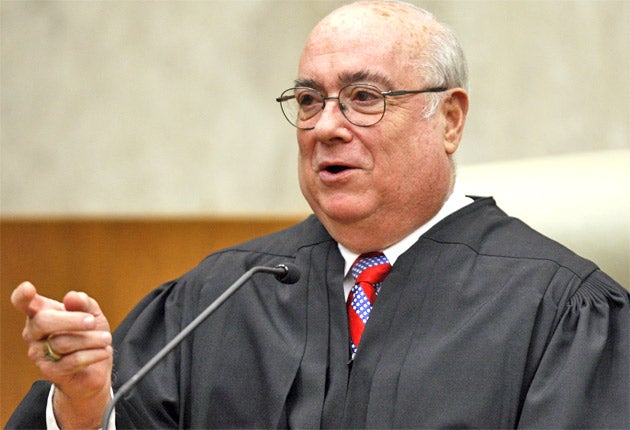
A judge has overturned a decision by Barack Obama to relax rules on funding US government research using human embryonic stem cells which promises to revolutionise medical science in the 21st Century.
Scientists yesterday described the judge's ruling as "an astounding blow to American biomedical research" that threw into immediate doubt tens of millions of dollars in federal funding to support research that holds out the promise of new treatments for ailments ranging from heart disease to paralysis. President Obama last year eased the limits on research placed by his predecessor, George W Bush. The judge's ruling overturning the decision appalled many leaders of the scientific community but cheered right-to-life conservatives.
"It will be incredibly disruptive," said Sean Tipton of the American Society for Reproductive Medicine yesterday. But Tony Perkins of the Family Research Council welcomed it as a "stinging rebuke to the Obama administration and its attempt to circumvent sound science and federal law".
The surprise intervention is a reminder of the still unresolved tug-of-war in the US between a medical community that is anxious to push the frontiers of stem cell research and conservative activists who have moral and religious objections to any work that tampers with "human life". As such it is only barely removed from the more familiar and equally emotionally charged debate about abortion.
District Judge Royce Lamberth, who was appointed by President Ronald Reagan, based his ruling on a 1996 law passed by Congress that explicitly banned the use of federal dollars for research involving the destruction of human embryos. In 2001, Mr Bush set his own course, making funding available only to 21 colonies of embryonic stem cells already in existence.
The likely impact of Judge Lamberth's action, a temporary injunction, remained a little hard to read. While he said his intention was to reinstate the "status quo" regarding stem cell research, there were fears that he may have gone beyond even the restrictions that Mr Bush put in place.
He defended his ruling by saying the Obama administration had tried to get around the 1996 law by drawing a line between work that involved destroying human embryos and work that could be done on embryos that were already available, usually left by women or couples in fertility clinics who have signed declarations authorising their use for research.
But, the judge said, that distinction was false, because newly destroyed embryos or embryos that have already been destroyed come to the same thing. "As demonstrated by the plain language of the statute, the unambiguous intent of Congress is to prohibit the expenditure of federal funds on 'research in which a human embryo or embryos are destroyed,'" the judge wrote.
Under the Obama doctrine, as many as 75 stem cell lines had been identified as suitable for scientific research. Moreover, the National Institutes of Health had been expected to spend $127m (£82m) supporting research. It is not clear if that funding will now have to be rescinded.
The US Justice Department last night said the Obama administration would appeal the ruling, while the White House confirmed it was exploring "all possible avenues" to ensure such research could continue.
Charmaine Yoest, chief executive of Americans United for Life, which supports an end to the research, said: "The Obama administration has attempted to skirt the law by arguing that they are only funding research after the embryos are destroyed. That administration policy is in violation of the law."
The case against the administration was brought by two scientists on the grounds that it would trigger too much competition for funds from the NIH and was therefore jeopardising their own work. The judge issued the injunction because he deemed that once at trial the plaintiffs were likely to prevail.
It is another political setback for President Obama, who has struggled to deliver on some of the promises of his 2008 campaign, ranging from closing Guantanamo Bay to restoring employment numbers. The lifting of the stem cell research restrictions was his first major act in the area of scientific policy.
"The long-term practical impact is a massive halt to most embryonic stem cell research in the US," said Irving Weissman, director of the Stanford Institute for Stem Cell Biology and Regenerative Medicine.
Evan Snyder, director of the stem cells and regenerative biology programme at Sanford-Burnham Medical Research Institute, La Jolla, California, termed the ruling "an astounding blow to American biomedical research and to healthcare".
Join our commenting forum
Join thought-provoking conversations, follow other Independent readers and see their replies
Comments
Bookmark popover
Removed from bookmarks