Secret Osama bin Laden documents reveal dark days for al-Qa'ida

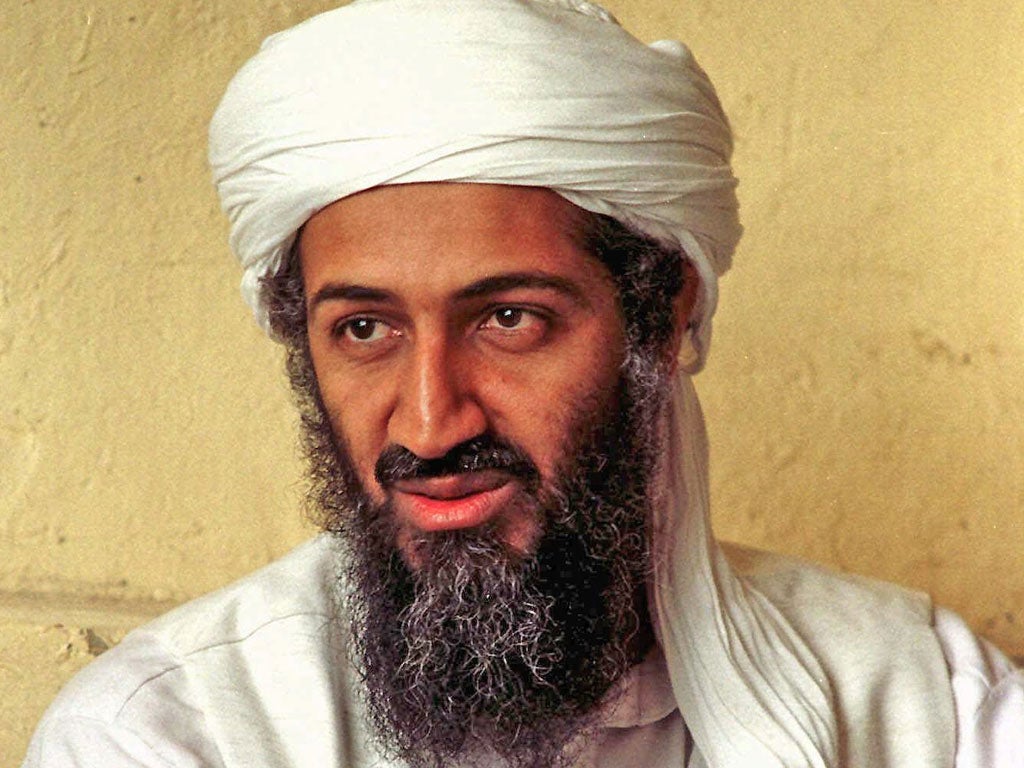
In letters from his last hideout, Osama bin Laden fretted about dysfunction in his terrorist network and crumbling trust from Muslims he wished to incite against their government and the West.
A selection of documents seized in last year's raid on Bin Laden's Pakistan house was posted online Thursday by the US Army's Combating Terrorism Center. The documents show dark days for al-Qa'ida and its hunkered-down leader after years of attacks by the United States and what Bin Laden saw as bumbling within his own organization and its terrorist allies.
"I plan to release a statement that we are starting a new phase to correct (the mistakes) we made," bin Laden wrote in 2010. "In doing so, we shall reclaim, God willing, the trust of a large segment of those who lost their trust in the jihadis."
Until the end, bin Laden remained focused on attacking Americans and coming up with plots, however improbable, to kill US leaders. He wished especially to target airplanes carrying Gen. David Petraeus and even President Barack Obama, reasoning that an assassination would elevate an "utterly unprepared" Vice President Joe Biden into the presidency and plunge the US into crisis.
But a US analysts' report released along with Bin Laden's correspondence describes him as upset over the inability of spin-off terrorist groups to win public support for their cause, their unsuccessful media campaigns and poorly planned plots that, in bin Laden's view, killed too many innocent Muslims.
Bin Laden's inner circle also was frustrated when, in 2010, attention in the US shifted to the weak economy without apparently crediting al-Qa'ida for the economic damage that terrorist attacks had caused. "All the political talk in America is about the economy, forgetting or ignoring the war and its role in weakening the economy," his spokesman, Adam Gadahn, wrote.
Al-Qa'ida's relationship with Iran, a point of deep interest to the US government, was rough, judging from the documents. After the US invaded Afghanistan in 2001, some top al-Qa'ida operatives and their families fled to Iran, where authorities put them under house arrest. Over the years, Iran has released some, including members of Bin Laden's family. Still, others remain.
Atiyah Abd al-Rahman, who became al-Qa'ida's No. 2 after Bin Laden's death, complained bitterly about dealing with the Iranians and their Byzantine methods of negotiating. Al-Rahman was later killed in a US drone strike.
"The criminals did not send us any letter, nor did they send us a message through any of the brothers," al-Rahman wrote. "Such behavior is of course not unusual for them; indeed, it is typical of their mindset and method. They do not wish to appear to be negotiating with us or responding to our pressures."
Bin Laden himself wrote that "controlling children" was one of the keys to hiding in cities, as he did for years while US forces searched Pakistan's rugged frontier. He encouraged his followers in hiding to teach their children the local language and not let them out of their homes "except for extreme necessity like medical care."
The correspondence suggests that al-Qa'ida carefully monitored US cable news networks and generally did not like what it saw. "We can say that there is no single channel that we could rely on for our messages," Gadahn wrote, although he described ABC as "all right, actually it could be one of the best channels as far as we are concerned." He complained that Fox News "falls into the abyss, as you know, and lacks neutrality." CNN, he said, "seems to be in cooperation with the government more than the others except Fox News, of course."
Gadahn suggested sending videos of Bin Laden's remarks to all the US news networks — except Fox News. "Let her die in anger," he wrote.
The correspondence includes letters by then-second-in-command Abu Yahya al-Libi, taking Pakistani offshoot Tehrik-e-Taliban Pakistan to task over its indiscriminate attacks on Muslims. The al-Qa'ida leadership "threatened to take public measures unless we see from you serious and immediate practical and clear steps towards reforming (your ways) and dissociating yourself from these vile mistakes that violate Islamic Law," al-Libi wrote.
Apparently Bin Laden was not made of aware of Tehrik-e-Taliban Pakistan's planned bombing of Times Square in New York in May 2010. But he expressed disappointment that Faisal Shahzad did not manage to pull off the attack after the bomb failed to detonate. Shahzad was convicted and sentenced to life in prison for the attempted attack.
Bin Laden also warned the leader of Yemeni AQAP, Nasir al-Wuhayshi, against attempting a takeover of Yemen to establish an Islamic state, instead saying he should "refocus his efforts on attacking the United States."
And he seemed uninterested in recognizing Somali-based al-Shabab when the group pledged loyalty to him because he thought its leaders were poor governors of the areas they controlled and were too strict with their administration of Islamic penalties, like cutting off the hands of thieves.
Nothing in the papers that were released points directly to al-Qa'ida sympathizers in Pakistan's government, although presumably such references would have remained classified. Bin Laden described "trusted Pakistani brothers" but didn't identify any Pakistani government or military officials who might have been aware of or complicit in his hiding in Abbottabad.
It was not immediately clear how many of bin Laden's documents the US was still keeping secret. In a note published with the 175 pages in Arabic that were released Thursday along with English translations, retired Gen. John Abizaid said they probably represent only a small fraction of materials taken from the compound in the US raid that tracked down and killed bin Laden in May 2011. The US said the documents span September 2006 to April 2011.
The report said the Special Operations troops in the bin Laden raid were trained to search the home afterward for thumb drives, printed documents and what it described as "pocket litter" that might produce leads to other terrorists. "The end of the raid in Abbottabad was the beginning of a massive analytical effort," it said.
It said the personal files showed that, during one of the most significant manhunts in history, bin Laden was out of touch with the day-to-day operations of various terrorist groups inspired by al-Qa'ida. He was "not in sync on the operational level with its so-called affiliates," researchers wrote. "Bin Laden enjoyed little control over either groups affiliated with al Qaida in name or so-called fellow travelers."
AP
Join our commenting forum
Join thought-provoking conversations, follow other Independent readers and see their replies
Comments