Sick, broke, forgotten: America's hip-hop 'hero'
He laid the musical foundations that made rappers rich. But Kool Herc's plight is an indictment of US healthcare.

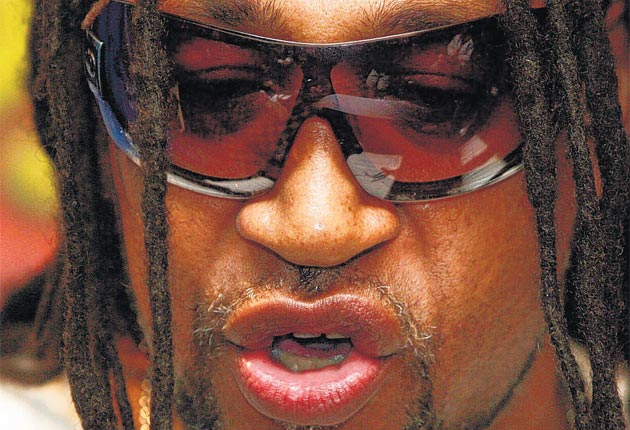
When Clive Campbell was growing up in an imposing high-rise block in the Bronx, he had little prospect of becoming a national icon, in spite of a god-like physique that inspired his friends to name him Hercules. Campbell was one of six children of Jamaican immigrants, who had headed to the richest country on earth but by 1973 found themselves in an unforgiving neighbourhood infested with street gangs.
It was there, at 1520 Sedgwick, that on a hot August night in 1973 Campbell, also known as Kool Herc, deejayed at a block party in a way nobody had before – and hip-hop was born. You would have thought that, almost 40 years later, now that the genre has borne a global billion-dollar industry defined by gold teeth and expensive rides – and that Herc is revered as its founding father – he might have enough money to pay his hospital bills.
But instead, the sad plight of Herc has shamed America over the way it treats its artistic pioneers and forced hip-hop to stop and think about its modern values.
When rumours about Herc's health started to emerge online last weekend, the prognosis was dire. He was said to be "very sick" and "broke". Hip-hop is used to burying its heroes well before their time. Tupac Shakur, Biggie Smalls and Jam Master Jay were shot dead. At 55, Herc was an elder statesman and, on hearing news of his demise, many feared the worst.
In the event his condition was not critical. Requiring treatment for kidney stones, he had run up medical bills of $10,000 (£6,200) and lacked the insurance to cover the cost. It was a humdrum medical procedure but one that generated severe discomfort – and not only for the patient. "This is just a disgrace that Kool Herc has to negotiate over the details of his healthcare," Bill Adler, a former executive at the Def Jam record label, told The New York Times. Jeff Chang, an author and hip-hop critic, told ABC News: "He's a cultural icon on the level of somebody like Louis Armstrong. To me he's one of the most important Americans of the 20th and 21st centuries, culturally."
As the clamour rose, Kool Herc sat up in bed to issue a statement to MTV News in an effort to highlight the inadequacies of the American healthcare system. "We live in one of the superpowers of the world! 'Give me your tired, your poor...' and then you don't take care of them?" he said, quoting from the Emma Lazarus poem "The New Colossus", which is grafted on to the Statue of Liberty. "There should be no weak ants in the colony. There shouldn't be anyone fighting for healthcare."
In the statement he referred to his long battle to have 1520 Sedgwick acknowledged as the birthplace of hip-hop. That campaign ended successfully in 2007 when the New York State Office of Parks, Recreation and Historic Preservation designated the tower block as a structure of "exceptional importance".
It was here, on 13 August 1973, that Kool Herc invented the break. By using two turntables he was able to extend the percussion break in the middle of a funk hit by immediately switching to a second copy of the same record on his other deck. With his sister Cindy, Herc had promoted the party with hand-drawn flyers and a great crowd had gathered, hungry for an alternative to the disco music dominating Manhattan and the street gangs inhabiting the clubs of the Bronx.
As he played tracks by James Brown or The Incredible Bongo Band, Herc, who had lived in Jamaica until the age of 12 and was inspired by the island's dancehall music culture, introduced vocal interjections such as "To the beat, y'all" and "You don't stop!" He also coined the terms B-boy and B-girl in recognition of adherents to the new break culture, a style which quickly attracted other DJs such as Afrika Bambaataa and Grandmaster Flash. But unlike those two pioneers, Kool Herc did not go on to exploit the commercial opportunities that emerged as hip-hop spread during the 1980s.
"I think he is one of those true innovators who are not really about the limelight. He's just into preserving the culture that we are all living off," said Shortee Blitz, hip-hop presenter on the British radio network Kiss. He noted that hip-hop was a "successful industry" and said he hoped that multi-millionaire stars such as P Diddy and Jay-Z would assist a man who had provided them with so much opportunity. "He has enabled people to feed their families and companies to make so much money. And if it wasn't for Kool Herc, music today would sound drastically different."
Hattie Collins, the editor of RWD magazine, agreed. "It's impossible to predict the hypothetical, but it's quite possible that without Kool Herc, we could still be dressed in platforms and Spandex dancing to disco, with the DJ changing the disc song by song," she said. "Rappers, regardless of what type of rhymes they deliver in whatever language that may be, owe him a huge, huge debt."
The music writer Angus Batey goes further yet, believing that even the title of "founding father of hip-hop" is an inadequate description of Kool Herc's cultural contribution.
"His innovation was to take a section of a record and, by isolating and repeating it, turn it into something between a new piece of music and a musical instrument in itself," he said.
"Herc invented the breakbeat – and that discovery or innovation didn't just inform the cultural explosion that was hip-hop, it reached into every sector of music making in the late 20th and early 21st century."
Thanks to his kidney stones, Kool Herc's achievements are being recognised and celebrated. But equally the man who transformed the soundtrack to our lives has a new bone to chew on.
"We are fighting for healthcare not just for me but for everyone," he said last week. "I see this situation as another quest for me to shine light on a sensitive issue for the community. I'm an instrument of God. I'm here for a purpose and I want to be here for the solution."
Join our commenting forum
Join thought-provoking conversations, follow other Independent readers and see their replies
Comments