Testing time for Chavez as nation decides if he can rule on and on
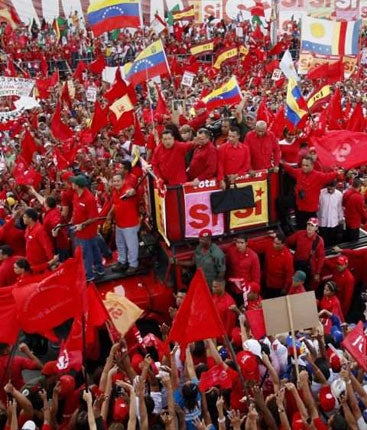
The people of Venezuela have a second chance tomorrow to tell Hugo Chavez, their leader since 1999, whether they like him so much he can keep the keys of the presidential palace pretty much for as long as he likes, or whether they have had as much of him and his so-called Bolivarian revolution as they can take.
With voting in a constitutional referendum to end term limits for the President as well as other elected officials to begin at dawn tomorrow, tensions in the streets of Caracas and other big cities have been palpable. Polls suggest that the President goes into the referendum with a very slight edge.
Tens of thousands of red-shirted Chavistas, supporters of Mr Chavez, flooded the avenues of the capital on Thursday, a day after the President claimed on television that his security forces had foiled an attempted coup against him by renegade soldiers, but gave scant details.
The stakes are high for Mr Chavez, a former tank commander, the country and the region. Under the existing constitution, he would be forced to leave office in 2012. If he wins, he can stay President for as long as he can win elections.
It is not the first time he has asked for an end to term limits. A similar question was put to voters in December 2007 and Mr Chavez suffered a narrow but humiliating defeat, in part thanks to a "no" campaign energised by students. His standing was further damaged by opposition gains in municipal and state elections last November, including in Caracas where his party lost the office of mayor.
But while a suddenly stumbling economy, food shortages and soaring violent crime should all be combining to weaken Mr Chavez politically, his manner of governing and campaigning has become increasingly autocratic. The referendum campaign has been marred by blatant acts of intimidation against critics of the President. The opposition, again aided by students, has struggled to get its message out.
The "regime has mounted a propaganda and intimidation campaign of a ferocity rarely seen in Latin America since the region returned to democracy 25 years ago", the Washington Post said in an editorial, echoing complaints voiced by Mr Chavez's critics.
Leopoldo Lopez, former mayor of Chacao, one of the municipalities that make up Caracas, said: "We work in the context of an unequal and abusive campaign. But we do so with the certainty that by exercising our vote we will win."
The new mayor of Caracas, Antonio Ledezma, has been locked out of City Hall, which is occupied by Chavista activists. Four other city government buildings have also been taken over. Calls on the government to intervene have gone unanswered. "There's total impunity," Hector Urgellas, the city's director of finance said. "These groups get their orders from the government."
Other recent incidents have included the desecration of a synagogue in Caracas by gunmen, the ransacking of the Ateneo, a cultural centre in the capital by pro-Chavez radicals claiming it was a haven for far-right activists. There have also been two tear-gas attacks against Vatican offices in the capital.
While the referendum is ostensibly about Mr Chavez's options when his second six-year term ends in 2012, opposition figures fear that a yes vote tomorrow would instantly embolden the President to ride even more rough-shod over state-level or municipal office-holders outside the governing party.
In the 10 years of Chavez rule, he has aggressively pursued his socialist vision, nationalising swathes of industry and using petro-dollars to invest in infrastructure, health care and education. He has also befriended Iran and Cuba, gleefully mocking America and positioned himself as a pied piper of a left-leaning block of Latin states.
Most importantly, many Venezuelans may not yet have begun to feel the impact of the sudden downtown in the country's economic fortunes. Mr Chavez's options for sustaining his programme of generous public investments are in peril as the price of oil slides. The country is already gripped by inflation which, at more than 30 per cent is the worst in South America.
Yet the years of high public spending have produced changes that many ordinary Venezuelans appreciate, particularly the expansion of health clinics and classrooms. If the Chavista machine can get them to the polls tomorrow, victory may be the President's this time around.
Ten years of The Hugo show
*1999
Chavez becomes president with 56.2 per cent of the popular vote. He deniesaccusations that he is planning to create a "Cuban-style dictatorship". Wins a referendum on a new constitution allowing him to stay in power for up to 12 years.
*2000
Chavez re-elected president with 59 per cent of the vote. Granted power to legislate by decree for a year.
*2003
Opponents petition for a referendum on his rule, but this is rejected by the electoral authorities. New petition is put forward.
*2004
Referendum is won by Chavez with 58 per cent.
*2005
Chavez's allies win all National Assembly seats in an election boycotted by the opposition, who say electoral authorities are biased.
*2006
Chavez wins third term with 63 per cent of the vote, giving him another six years in power. Earlier in the year he had talked of holding a referendum on letting him run again in 2012.
*2007
Chavez suffers his first defeat, polling 49 per cent in a referendum which would have removed any limits on him standing for re-election.
*2008
Chavez announces a new referendum which could let him rule indefinitely.
Join our commenting forum
Join thought-provoking conversations, follow other Independent readers and see their replies
Comments
Bookmark popover
Removed from bookmarks