The other Americas are booming: Latin America has its best prospects for a century
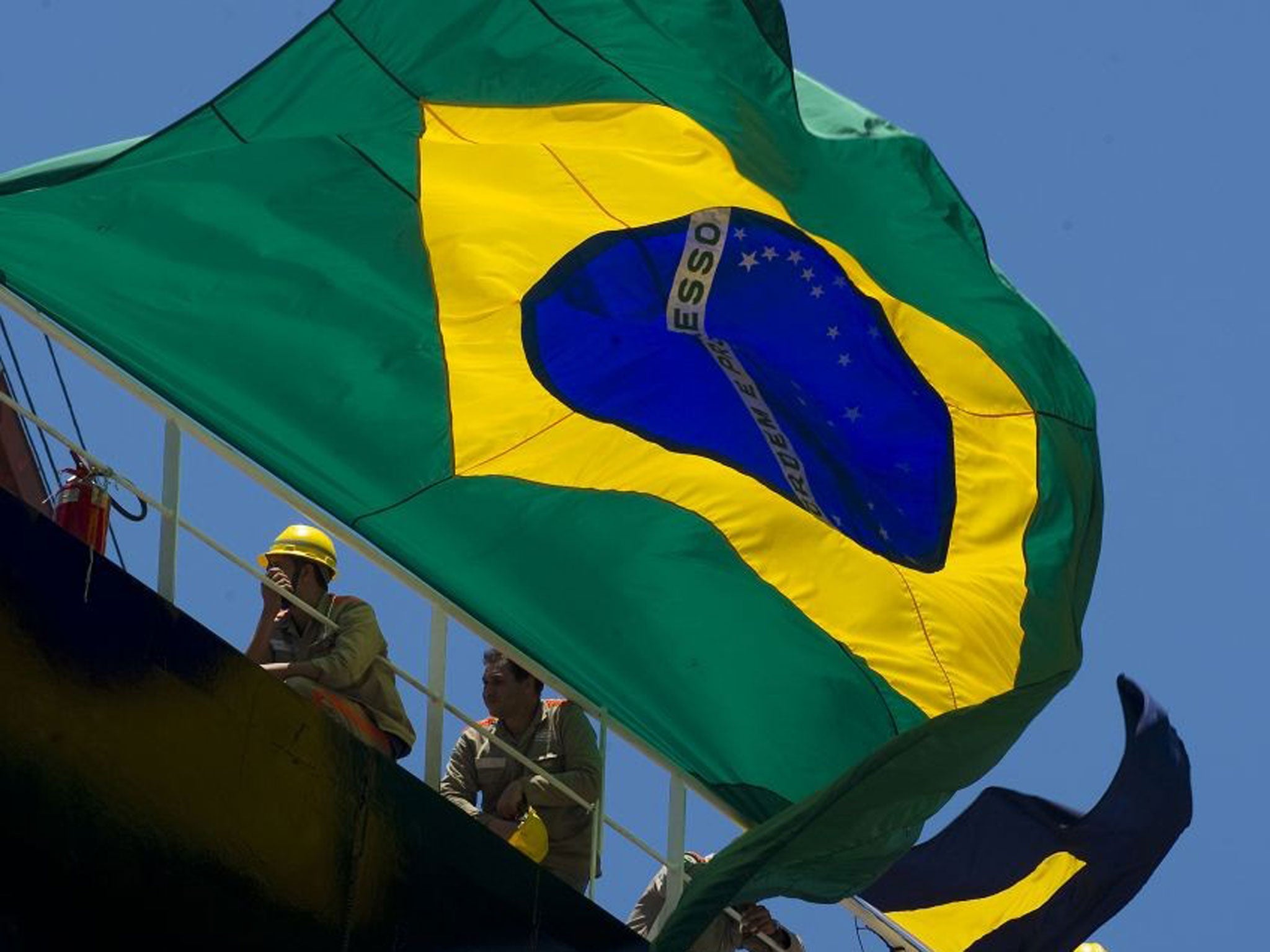
In the annals of geopolitical insults, few have been more sweeping than Richard Nixon's admonition to a young Donald Rumsfeld as he pondered his future career. "Latin America doesn't matter," he offered. "People don't give a damn about Latin America". He said it in 1971. Would anyone in Washington dare say it again?
If the region has demanded at least occasional attention from the West in more recent years, it has largely been because of one country and its (to Westerners) vexing leader. But now Hugo Chavez has gone and a new conversation has started: what will Latin America look like without him?
Viewed from Buenos Aires, the death – and the embalming – of the Venezuelan populist seems at once both important and peripheral. As the residents of this city, los porteños, crammed the downtown cafés yesterday for their cortados and cappuccinos, they could not miss the posters everywhere showing Chavez under the slogan: "To cry for him is not enough. We must follow his example". Yet their own president, Cristina Fernandez de Kirchner, went to Venezuela only to attend the lying in state, leaving before the funeral.
She attempted to explain via Twitter. "How I would have liked to be there! But I can't: the heat, my chronic hypertension and the doctors ban me." The reality is that Ms Fernandez rushed home to deal with a deepening economic crisis, a teacher's strike in Buenos Aires province and fallout from a guilty verdict on Friday in the gun-running trial of one of her predecessors, Carlos Menem.
There is also the referendum in the Falkland Islands. The result is hardly in doubt. How passionately she reacts is likely to be in direct proportion to the political pressures she is facing at home. Under Ms Fernandez, Argentina has seen inflation spiral: some say to 25 per cent, though the government insists it is lower. Last month, Argentina was reprimanded by the International Monetary Fund for failing to offer honest and transparent economic indicators. If it doesn't fix things, it could face expulsion from the organisation, which would be unprecedented.
If Ms Fernandez has other things to attend to, so does the continent. While it may be true that Chavez's passing may spell change for his country and those few neighbours that depended on him for support, financial and ideological, such as Cuba, Nicaragua and Bolivia, the rest of Latin America is hardly in stasis. The continent is cooking. The Olympic Games are coming. So is the World Cup. Exports to China and elsewhere of everything from soya beans to oil and iron ore are booming. And millions of Catholics are praying for a first Latin Pope, perhaps Oscar Andres Rodriguez Maradiga, currently the Archbishop of Tegucigalpa, Honduras, or Joao Braz de Aviz of Brazil.
"From a macroeconomic point of view, Latin America is probably in the best position it has been almost in a hundred years and certainly in the last 60 or 70 years," Miguel Kiguel, an economic analyst in Buenos Aires and a former chief economist at the World Bank, said here last week. "For the first time since the 1920s perhaps, the region is experiencing a period of reasonable growth, high commodity prices, relatively low inflation, on average, low debt, external balances and increases in national reserves." Stoking the furnace, he says, are Brazil and Mexico.
The rest of the region can hope the rising fever in those two countries is contagious. "In India, people ask you about China, and in China, people ask you about India: which country will become the more dominant economic power in the 21st century? I now have the answer: Mexico," Thomas L Friedman, the New York Times columnist, contended last month after spending a few days in the Mexican city of Monterrey. He went on: "If Secretary of State John Kerry is looking for a new agenda he might want to focus on forging closer integration with Mexico rather than beating his head against the rocks of Israel, Palestine, Afghanistan or Syria."
Britain is already noticing. When David Cameron, the Prime Minster, attended the G20 summit in Los Cabos, Mexico, last June, he flew on to Mexico City for bilateral talks with the then Mexican president, Felipe Calderon, before returning to London. As his officials pointed out, Mexico is expected to rank as the world's seventh largest economy by 2020. Last September, Mr Cameron found himself in New York for the UN General Assembly. Did he go straight home when he was done? No, he travelled first to Rio de Janeiro, Sao Paulo and Brasilia.
Conversation at breakfast with an ex-pat British businessman, Tom, turns to Brazil and the World Cup. The challenge of hosting the quadrennial soccer festival in 2014 and the Olympic Games in 2016 has sent Brazil into a frenzy of building and sanitising. Slums, or favelas, are being razed and new rail lines are being strung across the landscape. One indicator of the heat being generated is the $60,000 that some apartment owners in Rio are asking for from fans who wish to rent them for the month of the tournament. Tom will be staying with friends.
Chile, which has taken a more conservative path than its neighbours, continues to stand out as the continent's poster child for economic and political stability. In Brazil, meanwhile, there has been some tempering of the economic explosion that made it a founding member of the Bric group of fast-growing nations, together with Russia, India and China. Last year, its GDP growth slowed to 0.9 per cent from 2.7 per cent in 2011 and 7.5 per cent in 2010. But Brazil, as it expands new oil exploration and benefits from high commodity prices, still has its economic house in order. The post-Chavez era may also give Brazil room to assert itself on the diplomatic stage.
"Venezuela was seen as having all this clout basically because Chavez was leading a group that was populist and nationalist, and Brazil has not got into that game," says Mr Kiguel. "Somehow it has maintained a balance between Venezuela and Chile, if you want to take the extremes, and you can expect it to keep that role." Argentina has less scope for influence. "It is going to be very difficult for Argentina with Cristina to be a leader in the region."
Those in Washington or elsewhere who believe that, without Chavez, Venezuela will evolve quickly into what they would recognise as a mature democracy, might want to consider the experience of Argentina. Peron died in 1974 and yet this country has still not escaped the mythology of his populism. And they didn't embalm Peron.
Carlos Bernata, 39, a management consultant in Buenos Aires who flies across the whole of Latin America for work, despairs of the government's handling of the economy. Meanwhile the mystique of Peron and of his second wife, Evita –which Ms Fernandez exploits whenever she is able – remains as potent as ever, he says, even among the young. "I am optimistic for the continent," he says, "but not for Argentina."
Join our commenting forum
Join thought-provoking conversations, follow other Independent readers and see their replies
Comments
Bookmark popover
Removed from bookmarks