US plan to protect right whale from shipping blocked by Cheney
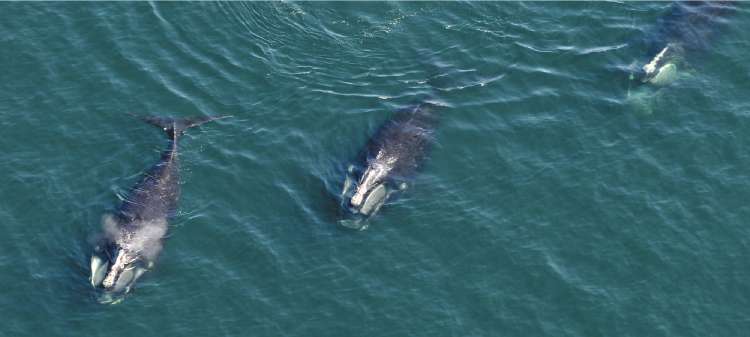
Efforts to protect the critically endangered North Atlantic right whale from being killed by ships are being blocked by Vice President Dick Cheney according to leaked documents.
A behind the scenes struggle is raging between the White House and US government scientists who want to force ships to slow down near the calving grounds of the almost extinct right whale.
The right whale controversy is the latest example of the Bush Administration sidestepping the advice of its on scientists which are aimed at protecting endangered species or threats to the environment. On Monday, a judge had to order the administration to release its much-delayed decision aimed at protecting the polar bear under the Endangered Species Act.
Only 350 of the whales remain in Atlantic waters off America's eastern seaboard and they are considered one of the most endangered species on Earth. Government scientists warn that the loss of just one more pregnant female is enough to doom the species, which was almost hunted to extinction in the 19th century.
Every year around three right whales are either injured or killed in collisions with ocean-going vessels like containerized cargo ships even though they are protected under the Endangered Species Act. Right whales frequently wash up on shore bearing deep scars from being struck by ships propellers.
To reduce ship strikes the National Oceanic and Atmospheric Administration (NOAA) decided that ships should restrict their speed to 10 knots or less near whale feeding and calving grounds during parts of the year.
But Mr Cheney's office, which tends to operate in secrecy, sent letters repeatedly questioning whether the rule was needed according to leaked documents. Flatly contradicting the scientific research Mr Cheney's staff argued, "that we have no evidence that lowering the speeds of 'large ships' will actually make a difference."
A critique of the scientists analysis by the administration led to a strongly worded reply in which they said: "The basic facts remain that there is a direct relationship" between a vessel's speed and the likelihood of death or serious injury to the whale, and "at vessel speeds at or below 10 knots, the probability of death/serious injury is greatly reduced."
There was, the scientists wrote, "no basis to overturn our previous conclusion that imposing a speed limit on large vessels would be beneficial to whales."
Congressman Henry Waxman who publicised the correspondence said it was "the latest instance of the White House ignoring scientists and other experts."
A number of European shipping companies have strongly opposed the NOAA proposal, saying slowing their vessels will hurt the economy and cost the industry money. But while the World Shipping Council wants to block the rule, but the largely US Chamber of Shipping of America is in favour and its director of maritime affairs, Kathy J. Metcalf has told the White House that "the economic impacts" of cutting shipping speeds "are well worth the benefits."
The right whales migrate from the Gulf of Maine to warmer waters off Florida and Georgia to give birth. The exhausted mothers, which have not eaten for weeks, then make their way slowly up the coast with their young, passing close by busy shipping ports off Georgia and Massachusetts.
Since NOAA scientists first tried to order ships to reduce speed, at least three right whales have died from ship strikes and propellers have wounded two. Voluntary efforts to get ships to look out for whales known to be in their area have been a total failures, according to scientists who can log their progress by monitoring GPS satellite data.
Beth Allgood, of the International Fund for Animal Welfare, said the refusal by the White House to implement the new speed restrictions were "not a huge burden on industry; it's a huge burden on the whales."
Join our commenting forum
Join thought-provoking conversations, follow other Independent readers and see their replies
Comments
Bookmark popover
Removed from bookmarks