
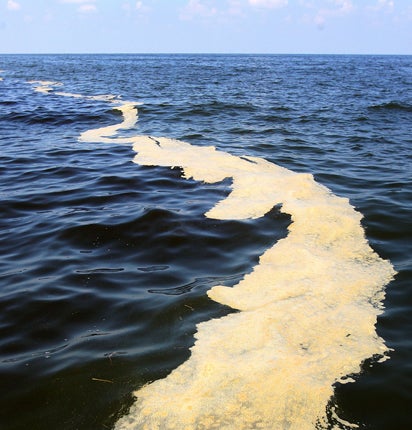
The Gulf of Mexico has been "carpet- bombed" with a highly toxic chemical dispersant for months on end, breaking official guidelines issued in the aftermath of April's Deepwater Horizon disaster which stated that BP should use the substance only in "extremely rare" cases, according to documents released by a US House of Representatives committee at the weekend.
BP recently admitted spraying 1.8 million gallons (about 6.8 million litres) of Corexit on the ocean during its battle to limit the damage from what is the costliest spill in its industry's history.
However, the House Energy and Environment Subcommittee said that "the validity of those figures is now in question", after learning that the US Coast Guard fast-tracked permits for the oil company to use the substance on at least 74 occasions.
"BP carpet-bombed the ocean with these chemicals, and the Coast Guard allowed them to get away with it," said the committee's chairman, Edward Markey. "[They are] a toxic stew of chemicals, oil and gas, with impacts that are not well understood... After we discovered how toxic these chemicals really are, they had no business being spread across the Gulf in this manner."
The disclosure raises the prospect that damage to marine life from the oil spill could eventually be outweighed by damage from Corexit, which is designed to break slicks into tiny droplets which can then be consumed by bacteria.
Clean-up workers say the dispersant is an invaluable weapon in the fight to prevent oil hitting the shore, where it causes the worst damage.
But some scientists say the chemical mixture, which at one point was being released at a rate of about 70,000 gallons a day, causes more harm than good, and may have contributed to huge plumes of hydrocarbons below the ocean's surface. The fact that Corexit now seems to have been so widely used also poses the question of who, exactly, is calling the shots in the Gulf.
The Obama administration issued a directive on 25 May that limited its use to all but the "rarest" of cases.
But official figures now show that every time BP subsequently asked to be allowed to use the controversial substance, the US Coast Guard, which is running the day-to-day clean-up, instantly granted a permit. The Environmental Protection Agency, which should have been overseeing the operation, was frozen out of the daily meetings at which the special permits were issued until 22 June, causing it to complain that "the approval process appears to be somewhat pro forma, and not as rigorous as the EPA desires".
The Committee's documents show that on 16 June, BP told the Coast Guard that use of Corexit had never exceeded 3,365 gallons on any recent day. Yet in emails it sent to Congress, BP admitted on 12 and 13 June it had used a total of 14,305 gallons and 36,000 gallons respectively.
BP's cap on the broken well has now prevented more oil from spilling for two straight weeks, and its engineers will today begin an effort to plug the well for good. Asked about Corexit, a spokesman said yesterday "dispersant use was pre-approved as a response tool, and approved during the response, because it is effective and, on balance, less harmful" than un-dispersed oil.
Join our commenting forum
Join thought-provoking conversations, follow other Independent readers and see their replies
Comments