'120 die' as US bombs village
Afghan outrage after strike targeting Taliban fighters hits women and children
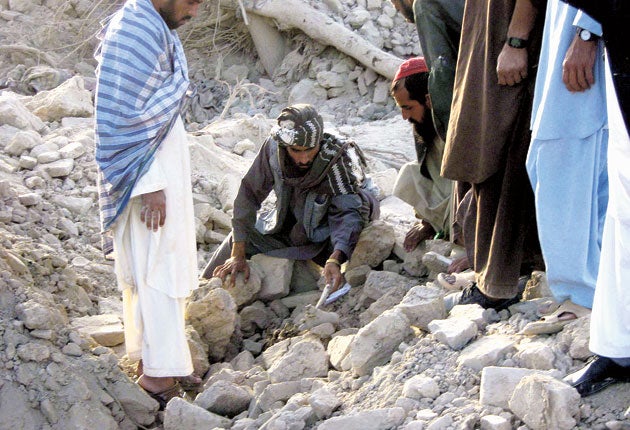
A misdirected US air strike has killed as many as 120 Afghans, including dozens of women and children. The attack is the deadliest such bombing involving civilian casualties so far in the eight years since the US-led invasion of Afghanistan.
Families in two villages in Farah province in western Afghanistan were digging for bodies in the ruins of their mudbrick houses yesterday. "There were women and children who were killed," said Jessica Barry, a Red Cross spokeswoman. "It seemed they were trying to shelter in houses when they were hit." Survivors said the number of dead would almost certainly to rise as the search for bodies continued.
The killing of so many Afghan civilians by US aircraft is likely to infuriate Afghans and lead to an increase in support for the Taliban in the bombed area. President Hamid Karzai, who was meeting President Barack Obama in Washington yesterday, sent a joint US-Afghan delegation to investigate the incident. The US Secretary of State Hillary Clinton, standing next to Mr Karzai, voiced her "deep regret".
US Marine Special Forces supporting the Afghan army apparently called in the air strike on Tuesday on two villages in Bala Baluk district after heavy fighting with the Taliban. Accounts by Afghans of high civilian casualties are often denied or dismissed by US officials. But a team from the Red Cross visited the scene of this attack. "There were bodies, graves, there were people burying bodies when we were there," said Ms Barry. She said a first aid worker for Afghanistan's Red Crescent died with 13 members of his family. "Dozens of dead bodies were seen in the two locations we went to." Rohul Amin, the provincial governor of Farah, told The Independent that "the dead numbered over 100". Villagers brought 30 bodies, including women and children, in a truck to Mr Amin in Farah City to prove it had happened.
The Afghan government has made increasingly angry denunciations of the US Air Force for using its massive firepower without regard for ordinary Afghans. Wedding parties have been a frequent target of US bombers in both Iraq and Afghanistan, presumably because they are mistaken for gatherings of militants.
The US air strike on Bala Baluk appears to have been deadlier for civilians than any similar event since the first US intervention in Afghanistan in 2001. The government has asked villagers not to bury the dead until investigators arrive today.
Previously the worst such incident was a US strike on Azizabad in August 2008 when the US originally claimed that no civilians were killed. Afghan and UN investigators concluded that 90 Afghans had been killed. A high-level American inquiry later admitted that 33 civilians had been killed. Opinion polls in Afghanistan show that backing for the Taliban soars in provinces affected after bombing or shelling kills innocent people.
The air strikes were preceded by two days of fighting between Afghan government forces supported by the US and dozens of Taliban fighters. Farah is a poor province whose people are mostly farmers and where the Taliban has been very active. The provincial police chief, Abdul Gaffar, said three police officers and 25 Taliban were killed in fighting near the village of Ganjabad in Bala Baluk district.
Local residents later told Afghan officials that they put their children, women and elderly men in walled compounds in the village of Gerani, which is three miles from the scene of the fighting and where they thought they would be safe. It was these compounds which were then attacked from the air and most of the people sheltering inside were killed.
Despite US denials or claims that a high death toll among civilians is Taliban propaganda, the US military should have very immediate access to eyewitnesses to air strikes. This is because the most severely injured are often taken to American medical facilities at US military bases. It is not known if this happened at Bala Baluk.
After the Azizabad killings last year, the US and Nato forces in Afghanistan were meant to have introduced more stringent rules to safeguard civilians from their strikes. The top US commander in Afghanistan, General David McKiernan, issued a directive ordering commanders to consider not pursuing Taliban fighters into populated areas. The US also pledged to investigate bombing incidents alongside Afghan investigators.
Afghan air strikes: The toll mounts
552 Civilians killed in air strikes in 2008.
17 per cent Proportion of US drone attacks to hit targets since January 2006.
701 Killed in drone attacks in three years.
14 Al-Qa'ida leaders in that number.
4.5 million dollars The estimated cost of a single Predator drone.
Join our commenting forum
Join thought-provoking conversations, follow other Independent readers and see their replies
Comments
Bookmark popover
Removed from bookmarks