A young man sacrificing his future to shut down Fukushima
David McNeill meets a nuclear worker who sees it as his duty to save the stricken plant – even if it means an early grave
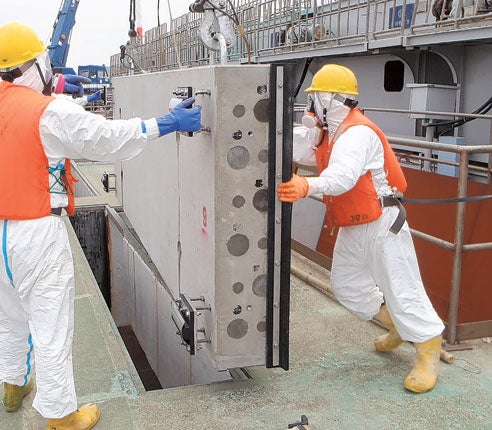
Atsushi Watanabe (not his real name) is an ordinary Japanese man in his 20s, about average height and solidly built, with the slightly bemused expression of the natural sceptic. Among the crowds in Tokyo, in his casual all-black clothes, he could be an off-duty postman or a construction worker. But he does one of the more extraordinary jobs on the planet: helping to shut down the Fukushima Daiichi nuclear power plant.
That job, in a complex that experienced the first triple-reactor meltdown after Japan's 11 March earthquake and tsunami, means he will never marry or raise a family for fear of health problems down the line, and may not even live to see old age. But he accepts that price. "There are only some of us who can do this job," he says. "I'm single and young and I feel it's my duty to help settle this problem."
Mr Watanabe has been employed as a maintenance worker at Daiichi since he left school more than a decade ago. By the time he was growing up in the 1990s, the intense discussions and protests sparked by the decision to build the plant in 1971 had faded. When he graduated high school, there was little debate in his family about where he would work. "It was seen as a perfectly natural choice," recalls Mr Watanabe, who is using a pseudonym because his employer does not permit its staff to give media interviews. "The plant was like the local air. I wasn't afraid of it at all."
His job was to check the pressure inside pipes, opening and closing the valves. He liked the work, which he felt was important. "I thought we were on a mission to provide safe power for Japan, for Tokyo. I was proud of that."
It paid 180,000 yen (£1,400) a month. Since April, when he agreed to go back inside the Daiichi plant's gates, he has been paid the same amount – plus Y1,000 a day that he calls "lunch money".
On 11 March, when the quake disabled the plant, he watched in terror as pipes hissed and buckled around him. He spent a week in a refugee centre, waiting for the inevitable call from his boss to come back to work. When the call came, he said yes immediately. Everyone was given a choice, although there was, inevitably, unspoken sympathy for the married men with children.
As subcontractors to the plant's operator, Tokyo Electric Power (Tepco), he and his colleagues are well down the plant's employment food chain. Full-time Tepco employees are at the top, mostly white-collar university graduates with better pay and conditions. Tepco managers, including its president, Masataka Shimizu, who disappeared and became a national laughing stock during the nuclear crisis, are considered desk-bound eggheads; too much head and no heart, unlike the blue-collar workers who kept the plant running.
"[Mr Shimizu] had never worked onsite before or experienced any problems, so when trouble hit his instinct was to run away," Mr Watanabe says. He says he feels no contempt for the disgraced company boss, only sympathy. "If you pushed a guy like that too hard, he might commit suicide."
Initially, he says, some day labourers got big money for braving the lethally poisoned air at the plant. "At 100 millisieverts a day you could only work for a few days, so if you didn't get a month's pay a day, it wasn't worth your while. The companies paid enough to shut them up, in case they got leukaemia or other cancers later down the line. But I have health insurance because I'm not a contract worker, I'm an employee."
Mr Watanabe says it is too early yet to draw a line under the world's worst nuclear disaster since Chernobyl. The government last week announced that its January timetable for bringing the Fukushima plant back under control is on target, but the plant is still leaking one billion becquerels of radiation an hour, according to Tepco, and the state of the uranium fuel inside its three crippled reactors remains a mystery.
"The fuel has melted, but melted through or not – we don't know," Mr Watanabe says. "It's at the bottom of the reactor. If it melts out, and meets water, it would be a major crisis. The engineers are working very hard to get it under control."
Researchers have already started arriving in Fukushima Prefecture, home to two million people, to measure the impact of this radiation on local life. Tim Mousseau, a University of South Carolina biological scientist who spent more than a decade researching inside the irradiated zone around the ruined Chernobyl plant in Ukraine, was there last week. "What we can say is that there are very likely to be very significant long-term health impacts from prolonged exposure," he says.
Whatever happens, Mr Watanabe has abandoned any hope of getting married. "I could never ask a woman to spend her life with me," he says. "If I told her about my work, of course she will worry about my future health or what might happen to our children. And I couldn't hide what I do."
Why do people do dangerous, potentially fatal jobs? Some, as Mr Watanabe does, might consider it a duty to "nation" or "society". No doubt there is an element of bravado too – he compares himself to the young wartime kamikaze pilots who saw themselves as the last line of defence against invasion and disaster.
Whatever his reasons, Mr Watanabe displays infinitely more humility, concern for humanity and humour than the men who run his industry. For roughly the same take-home pay as a young office clerk, he and his workmates have sacrificed any hope of normal lives. He has never met the Prime Minister, the local prefecture Governor or even the boss of Tepco. He will never have children and may die young. In another world, he might be paid as much as a Wall Street trader, an idea that makes him laugh.
"I'll probably get a pen and a towel when I retire," he says. "That's the price of my job."
Join our commenting forum
Join thought-provoking conversations, follow other Independent readers and see their replies
Comments