Afghan clerics threaten protests if marital law is amended
Shia minority determined to defend the first legislation to enshrine their rights
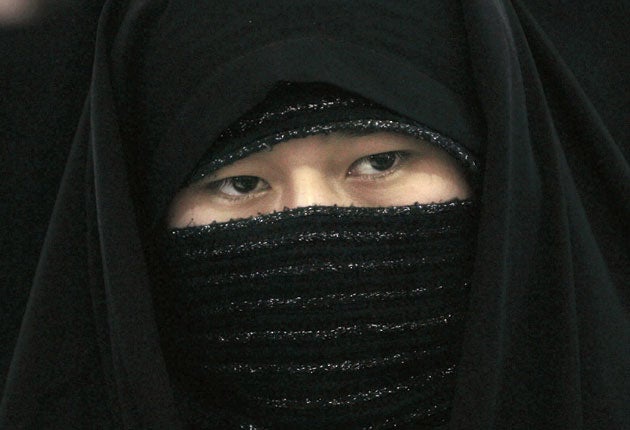
Supporters of the Afghan law which critics claim legalises marital rape and restricts the rights of women say they will oppose amending the legislation significantly.
"A change in this law will be illegal and against democracy," said Sayed Abdul Latif Sajadi, a senior Shia cleric in Kabul who played a leading role in drawing up the legislation and pushing it through parliament. "Any change will be against the wishes of four million people." In an implied threat, he said that the Shia clergy had so far successfully dissuaded their followers from taking to the streets . "If the government understands the sensitivity of this they will not touch it."
The Shia Family Law, which has been denounced inside and outside Afghanistan, applies only to the four million Afghans who are Shia. It is the first time in predominantly Sunni Muslim Afghanistan that the Shia, mostly members of the long-oppressed Hazara ethnic group, have had their rights legally defined and recognised.
"Those Afghans who protest against the law just want to make the West happy," says Mohammed Sarwar Jahadi, a former prisoner of the Taliban and an MP for the Hazara heartland of Bamyan province in central Afghanistan.
He said the law was discussed in parliament over a two-and-a-half-year period and was whittled down from 750 to 249 articles. "During that time we didn't hear a single protest."
He asserts that it was only after foreign leaders like Barack Obama had come out against it that it became a political issue in Afghanistan.
Mr Jahadi is more open to amendments than the Shia clergy, but does not think there is much wrong with the law already passed.
"I don't accept that it is a violation of human rights," he said, claiming that the law's provisions had been misreported and were yet to be published in their final version.
Mr Sayed Sajadi, a Hazara, said the strength of protests against the law surprised him. "It was unexpected because already 99 per cent of Afghan women only leave the house with their husband's permission."
The Taliban are likely to be pleased by the outcry over the new law because it will make it more difficult for the US, the UK and the Nato powers to demonise them as the sole proponents of the subjugation of women in Afghanistan.
They have burned girls' schools, insisted on women wearing the burqa and murdered women's rights campaigners. Most pro-government Afghan leaders are unlikely – and often hypocritical – proponents of equality between men and women, since this is against the norms of Afghanistan's highly conservative and religious society.
The Afghan President Hamid Karzai earlier in the week blithely assured Gordon Brown that the law would be reviewed and amendments introduced.
But he is likely to find this difficult to do in practice, because the Shia community wants legal recognition and the new law, while undoubtedly oppressive to women, largely reflects their actual condition.
Many Afghans say that in any case the relationship between men and women in their country is none of the business of foreign non-Muslim politicians and Nato commanders. Women protesting against the law were denounced by counter-demonstrators chanting: "Death to the enemies of Islam! We want Islamic law!"
The protesters had started their two-mile march to parliament outside the gleaming new Khatimal Nabiyeen mosque, the centre of a recently founded Shia religious university run by Ayatollah Asif Mohseni, the most powerful Shia cleric in Afghanistan, whom the demonstrators see as the main influence behind the new law.
Passed last month, the law says a husband can demand sex with his wife every four days unless she is sick or would be injured by intercourse. It also regulates when and for what reasons a wife can leave her home alone without her husband's permission.
Ayatollah Mohseni, while adamantly rejecting changes in the law, has suggested that it does not imply sexual servitude of woman and only means that husband and wife should sleep in the same room every fourth night.
But a translation appears to read that every fourth day a man "can pass the night with his wife, unless it is harmful for either side, or any of them is suffering from any kind of sexual disease. It is essential for the woman to submit to the man's sexual desire."
Join our commenting forum
Join thought-provoking conversations, follow other Independent readers and see their replies
Comments