British troops fight Taliban 'seven times a day'
The Ministry of Defence confirms that UK forces are suffering death rates almost twice those sustained by US forces in Afghanistan
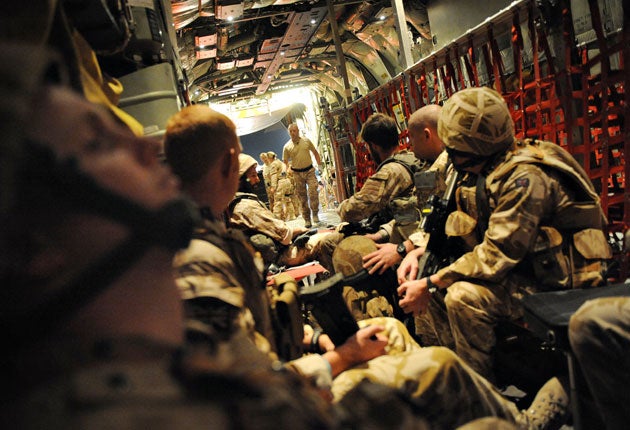
The full scale of the lethal challenge facing UK forces in Afghanistan was laid bare last night after the Government reported that British soldiers fought directly with Taliban insurgents seven times every day.
As the threat from the resurgent Taliban has multiplied recently, the number of confrontations with opposition forces has soared more than twenty-fold from the 10 experienced every month only three years ago.
New details of the number of "contact events" undergone by British forces in Helmand province emerged as a new study, compiled from official Ministry of Defence figures, revealed that British forces are suffering death rates as bad as those endured by the Soviets, who lost a war of attrition against Afghan insurgents in the country during the 1980s.
The analysis shows that the death rate among UK and Canadian forces during the early summer surge doubled to around 16.2 per thousand personnel in theatre operations for a year, compared to the previous three months. The figure was almost twice the death rate sustained by the Americans during the same period.
A senior source at the MoD last night confirmed that the differences in casualties sustained had prompted calls for a rethink of UK tactics at the highest levels within the department.
Sheila Bird, a leading statistician, who compiled the running study with a former SAS commander, Clive Fairweather, found that the number of lethal attacks from improvised explosive devices (IEDs) more than doubled to 94 – and they claimed the lives of 136 Coalition personnel.
"The statistics are very clear – this is a definite and disturbing pattern showing fatality rates for British forces in Afghanistan are consistently higher than those of US forces," said Professor Bird. "It is highly unlikely that the difference in fatality rates is just down to chance. The most obvious first thing to think about is the difference in the territories and levels of resistance the forces are operating in."
Colonel Richard Kemp, a former commander of British forces in Afghanistan, said the differences in the fatality rates could be down to the American forces having far more support personnel, but added: "Our combat forces are concentrated almost exclusively in the real hot zone – Helmand – whereas only a proportion of American combat forces are in that area... and that might account for some of that discrepancy."
The shadow Defence Secretary, Liam Fox, said the sacrifice being made by British troops was "proportionally greater than any other nation, with the potential exception of the Canadians". He added: "We're in the most dangerous part of the country and, of course, have had particular exposure to IEDs. And then what is, I think, the real controversial issue is whether, had we had more helicopters and better-armoured vehicles, we could have maintained our level of military activity without taking so many casualties and fatalities."
Bob Ainsworth, the Defence Secretary, reported that the number of confrontations with insurgents in Helmand had leapt from 10 in June 2006 to a peak of 220 last December. The last available figures recorded 180 troops facing "contact events" in February.
t A British soldier who was killed in Afghanistan last week was yesterday named as 23-year-old Lance Corporal James Hill from Redhill in Surrey.
L/cpl Hill of the 1st Battalion Coldstream Guards was described by his fiancée, Anastasia Newman, as the "most wonderful, caring and loving man you could ever meet". His parents, Brian and Claire, said he was the "finest son they could have asked for".
He was killed on Thursday as a result of an explosion near Camp Bastion in Helmand province. He was the second UK serviceman to be killed in a week in explosions close to Camp Bastion. His death brings the total number of UK troops killed since the start of operations in October 2001 to 221.
Join our commenting forum
Join thought-provoking conversations, follow other Independent readers and see their replies
Comments
Bookmark popover
Removed from bookmarks