Developing a thirst for India pale ale
For centuries, English brewers have shipped beers to India. Now the subcontinent's entrepreneurs are developing their own. Andrew Buncombe reports
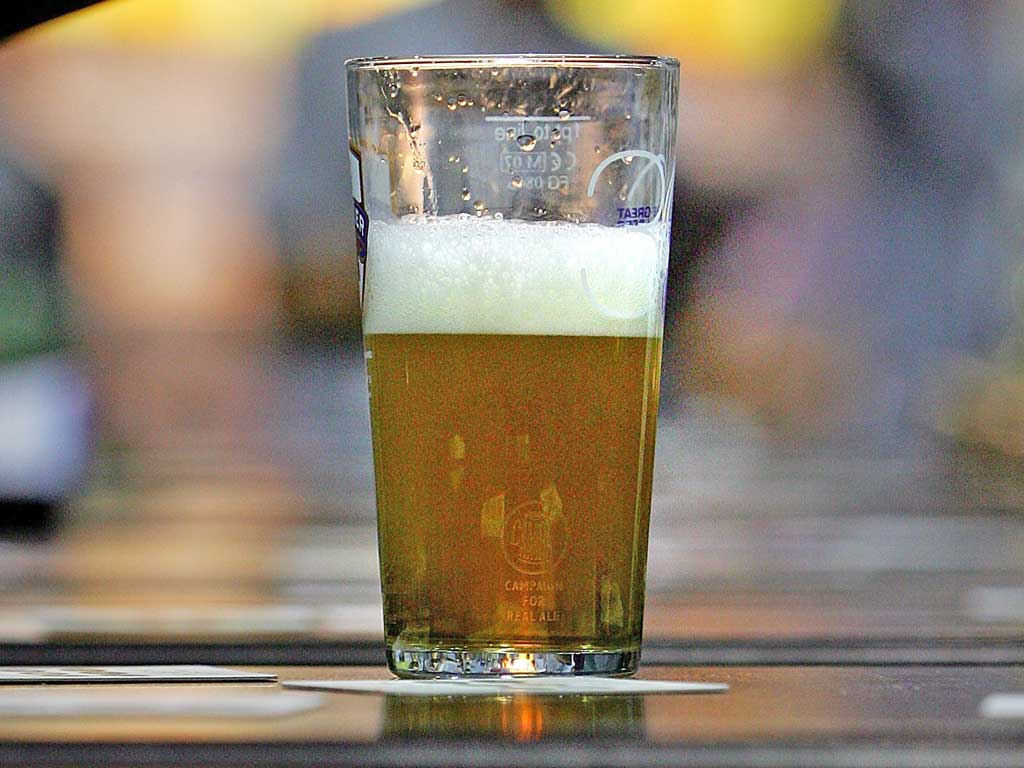
The beer came in a chilled mug, gleaming with condensation, and was set down with the care and precision that indicated the barman did not want to spill a drop. "This is our ale," he said. "It's one of our most popular." More than two centuries after English brewers shipped strong, heavily-hopped beer to India to quench the thirst of British troops and merchants, India Pale Ale (IPA) has returned to the subcontinent. In a parallel of the way that IPA's growth originally benefited from the mercantile class led by the East India Company, so its return has come about as a result of a boom in micro-breweries whose most loyal customers are India's new generation of corporate warriors.
It is a market with huge potential for brewers. While whisky is consumed in vast quantities, and although there is a growing middle-class with disposable income, the country consumes an average of less than two litres of beer per person each year – a fraction of the 74 litres drunk in Britain and the 107 litres gulped down in Germany.
As social attitudes that once frowned upon the consumption of alcohol loosen, Indian and international companies are racing to exploit the gaping potential not sated by established home-grown lager brands such as Kingfisher and Cobra. The market is said to be growing by 10 to 20 per cent a year and by 2016 could be worth £5.8bn.
One of the frontlines for this expansion is Gurgaon – an ill-planned and often chaotic satellite city of Delhi which has been developed over the past 15 years to house national and international businesses. Where once stood simple farms on the edge of a desert, there are now gleaming buildings of glass and steel, traffic snarls and power-cuts.
In recent years, Gurgaon has also become home to at seven least micro-breweries, whose staff make beer in shining steel kettles imported from Germany and China. Most of the outlets produce wheat beer and pilsner-style lager, but when Vikas Sachdeva opened his Downtown Diners and Living Beer Café last year, he wanted to do something different. "We decided we had to create our own hype," said Mr Sachdeva, 36, who studied engineering at college. "We knew that lager and wheat beer were already available, so we said 'How do we do something unique'. We decided to go for an ale."
This produced an immediate challenge. Despite India's celebrated role in the development of one of the world's most famous types of beer, until the arrival of the micro-breweries every drop produced here was uniform-tasting lager, kept in bottles and often treated with glycerine as a preservative.
As a result, Mr Sachdeva and his brewmaster Gagan Jain, 27, had to scour the internet for recipes and follow online forums. They were delighted to receive advice from brewmasters in Europe, and when foreigners visited the bar they listened to their comments and tweaked the recipe. Friends returning from European holidays also provided some bottles of the real thing.
"He gave me the challenge of producing an ale beer but I had never had an ale," said Mr Jain, who as a microbiology student in the city of Nagpur made experimental brews in his lodgings. The arrival of micro-breweries has been a hit and they are slowly emerging across India – first in Gurgaon and Bangalore and, more recently, in Pune and Punjab. Officials in Delhi are said to be considering whether or not to grant licenses for them. "I like this place. There is a buzz with a new place," said Gurav Balhara, a business consultant who was sitting sipping with a friend one recent evening at the Downtown café.
Next door at the Hops 'n' Brew micro-brewery, the operations manager, Ajay Rana, said most of his evening customers were corporate employees, while a younger crowd came during the day. The most popular of the bar's beers is its wheat variety, with a refreshing, lemony taste. "Freshly-brewed beer is more smooth," said Mr Rana. "It also has health benefits."
India Pale Ale was named for the strong "October beer" first shipped to the subcontinent at the end of the 18th century by the East India Company. A number of brewers produced such beer but George Hodgson, of east London's Bow Brewery, benefited from his location on the River Lea, close to the headquarters of the East India Company. After the brewery was taken over by Mr Hodgson's son, there was some falling out and the trade was snapped up by brewers in Burton-upon-Trent, in Staffordshire, famous for the amount of sulphate in its water which helps the bitterness. It is commonly believed that IPA was brewed especially to survive the long sea journey to India. More recently, beer experts have suggested that already-existing October ale – designed to be laid down for some months – simply fitted the bill. Other strong beers, such as porter, also survived the journey, which could take six months.
The writer Pete Brown, whose book Hops And Glory recounts his journey escorting a barrel of IPA by sea to India, said beer was shipped to the country because it was too hot to brew it anywhere other than in the colonial hill stations. One of the few successes was a brewery set up by Edward Dyer at Kasauli in the 1820s. It produced Lion IPA under the slogan "as good as back home" for more than a century. Bought out by Mohan Meakin, the company has for decades produced only lager.
Mr Brown said IPA sent by boat would have had an alcohol content of between 7 and 8 per cent, almost twice as strong as most regular "real ales" brewed in Britain today. "The beer was designed to be cellared. And you could not do that if was not strong and hoppy," he added.
The IPA produced by Mr Sachdeva and Mr Jain, known as corporate ale, contains a relatively modest alcohol content of between 4.5 to 5 per cent, and is produced from local and imported malt and German hops. It has a distinctive mineral taste and, unlike most IPAs, is served part-filtered, which gives it a cloudy appearance.
Their mission to change Indian drinking habits is a major battle. At present, up to 80 per cent of beer sold is "strong" bottled lager. One company, Vijay Mallya's United Breweries Group, producer of the ubiquitous Kingfisher, had a 57 per cent market share last year.
Complicated laws tax alcohol by volume rather than strength, encouraging the sale of strong beers and spirits to those seeking the maximum kick for their money. Yet Mr Sachdeva remains confident of his product. He said: "I know what is going to sell. I known what will suit India."
Join our commenting forum
Join thought-provoking conversations, follow other Independent readers and see their replies
Comments
Bookmark popover
Removed from bookmarks