Fears for food supply as radioactive water pours from stricken reactor
Contaminated samples increase tensions and lead to import bans
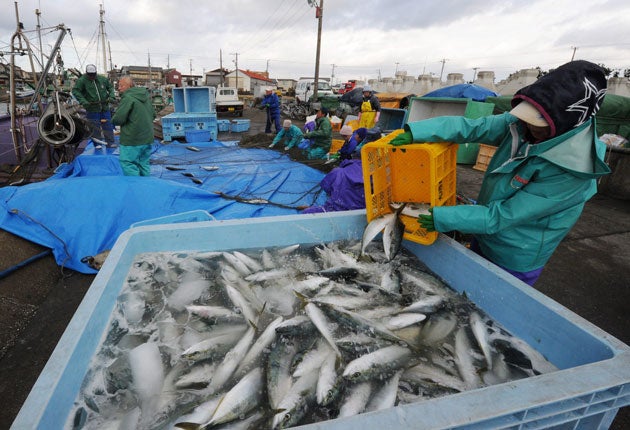
Radioactive water was pouring from a damaged reactor at Japan's crippled Fukushima nuclear plant last night, with officials warning it will soon reach the sea. The contaminated samples were found outside the reactor building for the first time, causing concern that soil and sea in the surrounding area will be poisoned.
Efforts to contain the crisis at the stricken complex, which was hit by a massive earthquake and towering tsunami earlier this month, have been hampered by repeated setbacks.
The crisis has begun to fray relations between the embattled government and the power utility widely blamed for creating confusion over the real extent of the crisis. That confusion has spurred import bans on Japanese products abroad, the flight of some 160,000 foreigners from Tokyo, an embargo on food from the affected region and a global debate on the future of the nuclear industry.
Japan's energy giant Tepco was yesterday accused by the government of making "unforgivable mistakes" in its handling of the country's worsening crisis, after releasing startlingly high radiation figures which it later retracted. "This sort of mistake is not something that can be forgiven," said government spokesman Yukio Edano.
Tepco's vice-president, Sakae Muto, promised to "do better" after company officials sent their own workers fleeing from the plant on Sunday when they reported radiation levels 10 million times higher than normal. The figure turned out to be a miscalculation.
Several foreign energy firms said yesterday that they had been contacted by Tepco, asking for help in bringing the situation under control. Électricité de France (EDF) and Areva both confirmed that they had received contact. The International Atomic Energy Agency (IAEA) said over the weekend that the crisis could take months rather than weeks to resolve.
Japan's government has been accused of allowing an incestuous relationship to develop with power giant Tepco to the detriment of safety standards. Senior government figures have become accustomed to lucrative posts in the energy sector on retiring from public life and criticism of companies like Tepco has consequently been muted.
Mitsuhiko Tanaka, a retired nuclear engineer who had worked on the Fukushima reactors, said the "nuclear village" in which public officials, academics and power company employees avoided criticising each other had created a dangerous consensus which had made the industry less accountable.
Influential nuclear critic and MP, Taro Kono, went further, suggesting the power lobby's influence on the media, where it is among the country's leading advertisers, had insulated it from proper inspection. "The power industry is one of the largest spenders so media can't criticise it," he said.
Meanwhile, Japan's Nuclear Safety Commission took another step towards admitting that one of the reactors at Fukushima Daiichi had been breached. But it once again stopped short of confirming whether the breach was in the primary containment vessel where the nuclear fuel is stored – this would be the precursor to a full meltdown and a more serious situation.
Radioactive sea water has been detected more than a mile from the plant but the government has dismissed concerns over fishing, saying the exclusion zone prohibits vessels from working near the nuclear complex.
The plant's operators have been hamstrung by the need to pump seawater and fresh water into the plant to avert a meltdown and now need to dry it out before power to the cooling system can be repaired and restored.
Hundreds of thousands of gallons of water sprayed on to the damaged reactors since 11 March have become "highly radioactive". It is preventing workers from approaching the units to carry out other vital work.
With the spectre of a potential nuclear meltdown 150 miles away, the official blossoming of Tokyo's cherry trees was met with muted celebrations yesterday. The normally joyous occasion, which marks the blossom appearing at the capital's Yasukuni shrine, was overwhelmed by the news that the death toll from the 11 March disaster has climbed above 11,000, with more than 17,339 missing and 170,000 people living in temporary shelters.
Recovery efforts along the 90 miles of blighted coast were further hampered by a strong aftershock yesterday morning registering 6.5 on the Richter scale and prompting a short-lived tsunami warning.
Join our commenting forum
Join thought-provoking conversations, follow other Independent readers and see their replies
Comments
Bookmark popover
Removed from bookmarks