From dancing to disability– Bollywood gets serious
India's film industry used to mock everything from stutters to mental illnesses. Now it's championing a more enlightened take
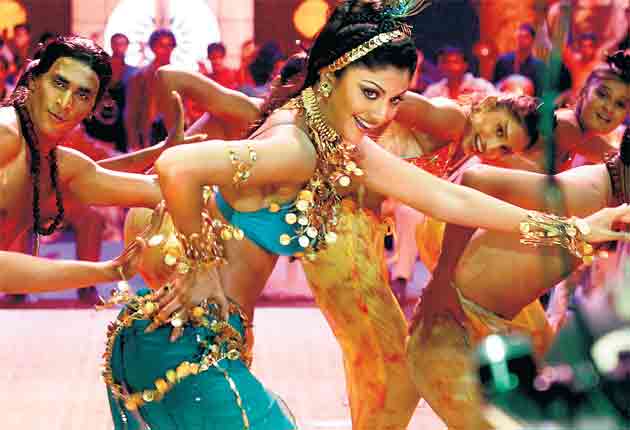
For a long time, if you spotted a disabled character in a Bollywood film the chances were they were there as a figure of fun.
Their disability, be it a speech impediment or a mental illness, was something to be mocked, either by the other characters or else the sniggering audience.
But something has changed. In the last couple of years, a flurry of Hindi-language films starring some of the industry's biggest names have featured differently-abled characters in positive roles. Not only that, many of the films have been box-office hits in India and beyond.
The change that is sweeping through the directors' studios of Mumbai appears to reflect a growing awareness within Indian society of the issues surrounding disability, something that has taken place because of the work of NGOs and advocacy groups. Now the actors themselves are also rallying to the cause. Among those who have spoken out is Hrithik Roshan, a leading Bollywood actor with legions of fans at home and abroad. Roshan, who was recently in London to unveil his waxwork model at Madame Tussauds – the fifth Bollywood star to be thus feted – starred as a quadriplegic in last year's film Guzaarish.
Speaking to The Independent, Roshan, who suffered a stammer as a child, said he still had to spend an hour every day on speech exercises in order to get through ordinary conversations, never mind film scripts. "In the greed of entertainment, we use people's disabilities to garner a cheap laugh, which is completely wrong," he said of films that still portrayed disability for comic effect. "My stammer was always a cross [to bear] in my life. I remember the first time somebody asked me what I wanted to do in life and I tried to say I wanted to be an actor, but I couldn't get the words out. I got stuck on the word 'actor'. I could feel a loss of breath as my stammer came and my facial expression stuck. The more anxious I felt, the worse it got."
Roshan, who caught the eye of Hollywood after his most recent film, Kites, became the first Bollywood film to debut in the US box office top 10, has been applauded by organisations working for disabled rights. The actor, who was reportedly on the shortlist for Jake Gyllenhaal's role in Prince of Persia, said the childhood bullying he received because of his stammer gave him the motivation both to succeed and to speak out. "I want to tell all the people out there who are suffering from a speech impediment that nothing is impossible if you are willing to work hard," he said. "After 37 years, I still have to sit in the bathroom for an hour with the door closed and teach myself to talk every single day."
Film industry analysts say the shift in Bollywood's attitude can be traced back to the 2005 film Black, the first by a major director to focus on a girl with disabilities. More box office success followed with the 2007 film Taare Zameen Par, directed by Aamir Khan and telling the story of an eight-year-old boy who suffers from dyslexia.
Mridula Murgai, a Delhi-based film blogger and the founder of a now defunct organisation that invited Indian film and TV stars to meet with disabled people and talk about their portrayal on the screen, said Khan's film marked a breakthrough. "The film was totally focused on the troubled world of a young boy and the inability of all those around him to understand the fact that there is a problem somewhere and that he is not a difficult child, just a different one," she said.
"Here was a paradigm shift in how a director looks at disability – from the point of view of the disabled person. Rather than making us just sympathise with his predicament, the director asked us to treat him with love and care and to stop getting upset with his inability to cope with the normal world."
Since then there have been films featuring the rare genetic condition progeria (Paa), Asperger's syndrome (My Name is Khan), amnesia (Ghanjini) and speech problems (Kaminey).
However, Ms Murgai said while the change was welcome, problems remained; disabled characters were often shown being "cured", possibly raising false expectations among viewers, little attempt was shown to portray the lives of those who cared for differently-abled people, and disabled characters rarely appeared to be happy. "I would like to see a happy disabled person. They should not all be a burden in the lives of those around them," she said.
Indeed, some organisations say Bollywood needs to do more. The Indian Stammering Association recently organised a petition to protest about the portrayal of a character with a speech impediment in the film Golmaal 3. "There has been some change in the industry," said association's spokesman Nitin Tomer. "But in this film there was a character with a speech impediment and he was made fun of."
One area in which Indian cinema has so far resisted change is the use of actors who are differently-abled. But even there a shift may be under way. Last year, the Tamil-language film industry based in the city of Chennai – sometimes referred to as Kollywood – produced the film Maa, using a cast of differently-abled actors.
It was directed by Fathima Beevi, who uses a wheelchair, and the score was produced by G Kathik, who has been visually impaired since childhood. The movie, which examines whether disability should stand in the way of love, was supported by the charity Action Aid. The film's lead actor, TMN Deepak, said the movie had been well received by Tamil audiences, especially in the city of Madurai where it was watched by thousands of people. "Attitudes towards disability are changing," said Deepak. "Things like the UN Convention on the Rights of Persons with Disabilities are now coming more into the mainstream. The print media has helped a lot."
Roshan, whose Madame Tussauds waxwork double features him typically bare-chested, said he had been forced to think again about his own problems with speech difficulties by the release of the British film The King's Speech, which shows King George VI struggling to overcome a stammer.
"When you find yourself in the public eye, you are subjected to even harsher scrutiny by onlookers. Everyone is observing you to the most minute detail, as if under a microscope." he said. "Rather than celebrating our uniqueness, those character traits are perceived as flawed and we are encouraged to aspire towards perfection. It places a huge amount of pressure on individuals.
"Sadly, it is a universal phenomenon. The most damaging by-product of this is our self-perception, and how we see ourselves through the eyes and opinions of others."
Join our commenting forum
Join thought-provoking conversations, follow other Independent readers and see their replies
Comments
Bookmark popover
Removed from bookmarks