'I lost my moral compass': how a young US soldier triggered an abuse scandal in Afghanistan
Jeremy Morlock is central to a controversy that has been compared to Abu Ghraib. Guy Adams tells his story, from Sarah Palin's home town to Afghanistan - and jail
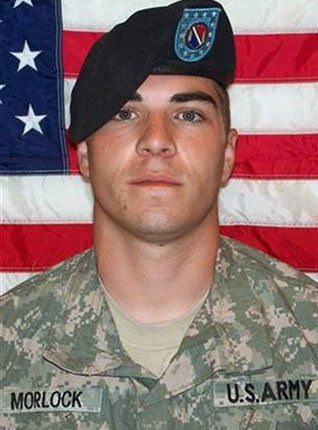
Smiling as he leaned over the young man's body, and using one hand to present his bloodied face to the camera, Corporal Jeremy Morlock celebrated the murder of an innocent Afghan civilian as if he had just bagged a magisterial moose from the wilds of his native Alaska.
Photos of the 23-year-old soldier treating a human being as if he were some sort of hunting trophy shocked the world when they were published last week by the German news magazine Der Spiegel. Even the US Army, an organisation not usually given to grovelling apology, described the images as "repugnant".
On Wednesday, at Joint Base Lewis-McChord near Seattle in Washington State, Morlock was sentenced to 24 years in a military prison, after pleading guilty to being part of a "kill squad" of junior soldiers who randomly murdered three unarmed locals, for sport, during a 12-month tour of Kandahar province, which ended last spring.
The relatively light sentence followed a plea bargain that will soon see Morlock give evidence against four comrades who are also accused of taking part in the murders. In exchange for evidence about how the group "waxed" victims (an expression used in his interviews with prosecutors) he should be eligible for parole some time around his 30th birthday.
Yet behind the stiff formality of the courtroom drama, Afghanistan's version of the Abu Ghraib scandal seems likely to leave important questions unanswered. Did senior officers know about the "kill squad's" activities? Did they care about the mental health of the young men under their command? And are a few wayward junior soldiers now being made scapegoats for an abuse problem which runs far deeper?
Jeremy Morlock's story certainly gives pause for thought. Born in Wasilla, Alaska, he grew up the third of eight children in a working-class Athabaskan native family. As a teenager, he played ice hockey with his friend Track Palin, in a team managed by Palin's mother, the state's now-famous former Governor, Sarah Palin. After leaving the local Houston High School in 2006, he joined the army, assigned to the 5th Stryker Brigade of the 2nd Infantry Division. During initial training, he suffered homesickness and occasional depression, exacerbated by the sudden death of his father, Richard, who drowned in 2007.
In the summer of 2009, Morlock began a year-long tour of southern Afghanistan. He was swiftly involved in four different "contacts" with enemy forces. After three of them, he was found to have concussion. "I have been here barely for two months, and I don't think that I will ever be able to talk about some of the things that have happened," he told his mother, Audrey, in a letter suggesting that he was traumatised and having trouble sleeping.
Morlock soon began smoking locally cultivated marijuana several times a week. He was also being prescribed ten different medications (including painkillers, anti-depressants, and sleeping pills) by military doctors. An army medical evaluation later found that he had post-concussive syndrome, dependence on cannabis, had abused opiates and sedatives, and was suffering from personality disorder and post-traumatic stress disorder. But he was not removed from the front line.
Morlock told prosecutors that he and his colleagues began randomly killing unarmed Afghans shortly after Christmas 2009, allegedly at the behest of their sergeant, Calvin Gibbs, who was said to be in the habit of keeping the fingers of victims as souvenirs and to have claimed to have carried out similar murders during a tour of Iraq. "If Gibbs knew that I was sitting in front of this camera right now there's no doubt in my mind that he'd fucking take me out," he told investigators, in an interview uploaded to YouTube.
The three murders before the court marital occurred in January, February and May last year. Details of what occurred are still being fleshed-out, but Morlock says the bodies of the victims were re-arranged to leave the impression that they had been armed. Lawyers for Gibbs and the other defendants strongly dispute his claims.
There can be little doubt that the 5th Stryker Brigade was in turmoil. Its commander, Colonel Harry Tunnell, was abruptly removed from his position last summer, and has been accused at this week's court martial of presiding over a "dysfunctional" brigade. His command structure, "created an environment that led to these crimes", a defence psychologist hasalleged. Several troops took concerns about drug abuse and bullying to senior officers, but were ignored (and in one case assaulted) for their pains. The family of one soldier, who had revealed in a message on Facebook that he thought innocent civilians were being killed deliberately by colleagues, contacted staff at the brigade's HQ near Seattle, but their allegations were not properly investigated.
Morlock, who has been held in solitary confinement since his arrest last summer (he is yet to meet his first child, born shortly afterwards) has never sought to blame his behaviour on drug abuse, stress, mental health problems or poor pastoral care in the army. In court this week, he admitted: "I lost my moral compass."
His mother has spent $50,000 helping to fight his case. She was not at home when The Independent called yesterday, but told her local paper, The Mat Su Valley Frontiersman, that her son's prosecution represented an effort to paper over a widespread problem.
"I believe he was taking orders from somebody else," she said. "I believe there are higher up people involved, and these guys are the scapegoats for the whole thing... It's not only his unit [involved in criminal activity], there's all kinds of stuff going on over there... No one will ever understand what happens in a war zone unless you're there."
Join our commenting forum
Join thought-provoking conversations, follow other Independent readers and see their replies
Comments
Bookmark popover
Removed from bookmarks