Kabul's new elite live high on West's largesse
'Gilded cage' lifestyle reveals the ugly truth about foreign aid in Afghanistan
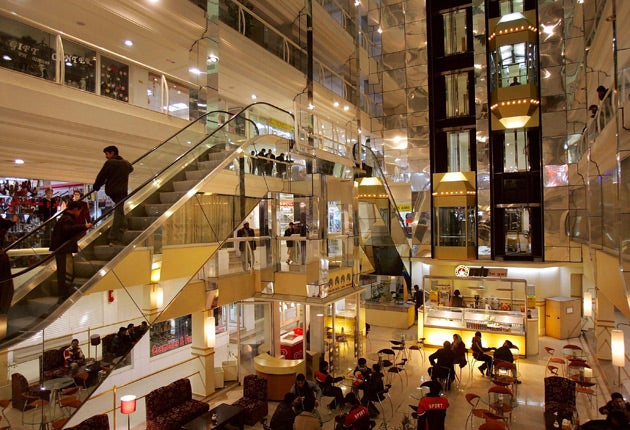
Vast sums of money are being lavished by Western aid agencies on their own officials in Afghanistan at a time when extreme poverty is driving young Afghans to fight for the Taliban. The going rate paid by the Taliban for an attack on a police checkpoint in the west of the country is $4, but foreign consultants in Kabul, who are paid out of overseas aids budgets, can command salaries of $250,000 to $500,000 a year.
The high expenditure on paying, protecting and accommodating Western aid officials in palatial style helps to explain why Afghanistan ranks 174th out of 178th on a UN ranking of countries' wealth. This is despite a vigorous international aid effort with the US alone spending $31bn since 2002 up to the end of last year.
The high degree of wastage of aid money in Afghanistan has long been an open secret. In 2006, Jean Mazurelle, the then country director of the World Bank, calculated that between 35 per cent and 40 per cent of aid was "badly spent". "The wastage of aid is sky-high," he said. "There is real looting going on, mainly by private enterprises. It is a scandal."
The dysfunctional reputation of the US aid effort in Afghanistan is politically crucial because Barack Obama, with strong support from Gordon Brown, has promised that a "civilian surge" of non-military experts will be sent to Afghanistan to strengthen its government and turn the tide against the Taliban. These would number up to 600, including agronomists, economists and legal experts, though Washington admitted this week that it was having difficulty recruiting enough people of the right calibre.
Whole districts of Kabul have already been taken over or rebuilt to accommodate Westerners working for aid agencies or embassies. "I have just rented out this building for $30,000 a month to an aid organisation," said Torialai Bahadery, the director of Property Consulting Afghanistan, which specialises in renting to foreigners. "It was so expensive because it has 24 rooms with en-suite bathrooms as well as armoured doors and bullet-proof windows," he explained, pointing to a picture of a cavernous mansion.
Though 77 per cent of Afghans lack access to clean water, Mr Bahadery said that aid agencies and the foreign contractors who work for them insist that every bedroom should have an en-suite bathroom and this often doubles the cost of accommodation.
In addition to the expensive housing the expatriates in Kabul are invariably protected by high-priced security companies and each house is converted into a fortress. The freedom of movement of foreigners is very limited. "I am not even allowed to go into Kabul's best hotel," complained one woman working for a foreign government aid organisation. She added that to travel to a part of Afghanistan deemed wholly free of Taliban by Afghans, she had to go by helicopter and then be taken to where she wanted to go in an armoured vehicle.
There have been numerous attacks on foreigners in Kabul and suicide bombings have been effective from the Taliban's point of view in driving almost all expatriates into well-defended compounds where living conditions may be luxurious but which are as confining as any prison. This means that many foreigners sent to Afghanistan to help rebuild the country and the state machinery seldom meet Afghans aside from their drivers and a few Afghans with whom they work.
"Risk avoidance is crippling the international aid effort," said one aid expert in Kabul. "If governments are so worried about risk then they really should not be sending people here and having them work under such restricted conditions."
The effectiveness of foreign advisers and experts in Iraq is often further reduced by the very short time they stay in the country. "Many people move on after six months," said one expatriate who did not want to be named. "In addition some embassy employees receive two weeks off work for every six weeks they are in the country, on top of their usual holidays."
Some officials working for non-governmental organisations in Afghanistan are themselves troubled by the amount of money which foreign government officials and their aid agencies spend on staff compared to the poverty of the Afghan government.
"I was in Badakhshan province in northern Afghanistan which has a population of 830,000, most of whom depend on farming," said Matt Waldman, the head of policy and advocacy for Oxfam in Kabul. "The entire budget of the local department of agriculture, irrigation and livestock, which is extremely important for farmers in Badakhshan, is just $40,000. This would be the pay of an expatriate consultant in Kabul for a few months."
Mr Waldman, the author of several highly-detailed papers on the failures of aid in Afghanistan, says that a lot of money is put in at the top in Afghanistan but it is siphoned off before it reaches ordinary Afghans at he bottom. He agrees that the problems faced are horrendous in a country which was always poor and has been ruined by 30 years of war. Some 42 per cent of Afghanistan's 25 million inhabitants live on less than a dollar a day and life expectancy is only 45 years. Overall literacy rate is just 34 per cent and 18 per cent for women.
But much of the aid money goes to foreign companies who then subcontract as many as five times with each subcontractor in turn looking for between 10 per cent and 20 per cent or more profit before any work is done on the project. The biggest donor in Afghanistan is the US, whose overseas aid department USAID channels nearly half of its aid budget for Afghanistan to five large US contractors.
Examples cited in an Oxfam report include the building of a short road between Kabul city centre and the international airport in 2005 which, after the main US contractor had subcontracted it to an Afghan company, cost $2.4m a kilometre – or four times the average cost of road construction in Afghanistan. Often aid is made conditional on spending it in the donor country.
Another consequence of the use of foreign contractors is that construction has failed to make the impact on unemployment among young Afghans which is crucial if the Taliban is to be defeated. In southern provinces such as Farah, Helmand, Uruzgan and Zabul, up to 70 per cent of Taliban fighters are non-ideological unemployed young men given a gun before each attack and paid a pittance according to a report by the Institute for War and Peace Reporting. By using these part-time fighters as cannon-fodder, the Taliban can keep down casualties among its own veteran fighters while inflicting losses on government forces.
Some simple and obvious ways of spending money to benefit Afghans have been neglected. Will Beharrell of the Turquoise Mountain charity, which is encouraging traditional Afghan crafts and reconstruction of part of the old city, says tangible and visible improvements are important. He said: "We went in for rubbish clearing because it is simple and provides employment. We brought the street level down by two metres in some places when we had cleared it away."
A striking feature of Kabul is that while the main roads are paved, the side streets are often no more than packed earth with high ridges, deep potholes and grey pools of dirty water. New roads have been built between the cities, such as Kabul and Kandahar, but these are often too dangerous to use because of mobile Taliban checkpoints where anybody connected to the central government is killed on the spot.
The international aid programme is particularly important in Afghanistan because the government has few other sources of revenue. Donations from foreign governments make up 90 per cent of public expenditure. Aid is far more important than in Iraq, where the government has oil revenues. In Afghanistan a policeman's monthly salary is only $70, which is not enough to live on without taking bribes.
Since the fall of the Taliban the Afghan government has been trying to run a country in which the physical infrastructure has been destroyed. Kabul is now getting electricity from Uzbekistan but 55 per cent of Afghans get no electricity at all and just one in 20 get power all day. Money can be distributed more swiftly by the US military but this may not undercut the political support of the Taliban to the degree expected.
Afghans themselves are unenthusiastic about President Obama's plan for more US military and civilian involvement in Iraq. And the failure of foreign aid to deliver a better life to Afghans also helps explain plummeting support for the Kabul government and its Western allies. Oxfam's Mr Waldman believes better-organised aid could still deliver the benefits Afghans hoped for when the Taliban were overthrown in 2001, but he warns: "It is getting very late in the day to get things right."
Go figure: The West's spending in Afghanistan
$57 The foreign aid per capita to Afghanistan, compared with $580 per capita in the aftermath of the Bosnian conflict.
$250,000 Typical salary of foreign consultants in Afghanistan, including 35 per cent hardship allowance and 35 per cent danger money. Afghan civil servants typically receive less than $1,000 a year.
$22bn The shortfall in donations compared to the international community's estimate of Afghanistan's need – around 48 per cent.
40 per cent Share of international aid budget returned to aid countries in corporate profit and consultant salaries – more than $6bn since 2001.
$7m Daily aid spend in Afghanistan. The daily military spend by the US government is around $100m.
View all comments that have been posted about this article.
Offensive or abusive comments will be removed and your IP logged and may be used to prevent further submission. In submitting a comment to the site, you agree to be bound by the Independent Minds Terms of Service.
- Print Article
- Email Article
-
Click here for copyright permissions
Copyright 2009 Independent News and Media Limited


Comments
We all know that it is a jolly gravey train for the lads.
When the gravey runs dry; Afghanistan will just revert to what it always was....... "A Dirt Town" run by bandits on mules; not very different to what it is now........"A Dirt Town" run by international bandits in Humvees.
In fact, the Russians slowed down many of the democratic reforms brought about by the PDPA government of Taraki.
Had not the US interfered in 1978-79, Afghanistan might today be a modern country with freedom of religion and women's rights.
Even prior to the 1978 revolution in Afghanistan, the ISI had been supporting anti-Government forces there, notably the Jamiat-i-Islami. The US also used the notorious Iranian secret police, SAVAK to fund Islamist terrorists in Afghanistan - but this stopped after the Shah of Iran was overthrown.
After the April 1978 revolution, the ISI-aided Islamists in Afghanistan began a campaign of terror against teachers and civil servants. That year, the CIA began covert action in Pakistan, training Afghan Islamist militants there and beaming anti-government broadcasts from there to Afghanistan.
In May 1979 an operative of the CIA met leaders of the Mujaheddin, including an ISI-employed drug dealer, Gulbudin Hekmatyar, in order to ascertain their needs.
Zbigniew Brzezinski, interviewed by Le Nouvel Observateur in January 1998, confirmed what Robert Gates, the former CIA head said in his memoirs, that aid to the Mujaheddin began six months prior to the Soviet intervention.
According to Brzezinski, President Carter signed the first directive ordering secret aid to the anti-government forces on 3rd July 1979. The Americans thereby 'knowingly increased the probability' that there would be an intervention.
The Le Nouvel Observateur interview may be found at:
http://www.globalresearch.ca/articles/B
Of course none of that makes breaking Pakistan up any easier.
What is to be the source of wealth that makes Afghanistan in its current form - or in any other - a modern democracy ? This is the final problem of empire - you can conquer all you like, but in the end so many places are a burden on the treasury, not a boon to it.
Right now the west is there in order to stop Afghan influence destabilising Pakistan - and Pakistan has nukes, so this is probably a good idea as a temporary, emergency measure. How about merging Afghanistan and Pakistan, creating a nice big country as a buffer between Iran and India ? Let Afghanistan be Pakistan's problem ? Pakistan could get the benefits of being the aid middleman - a bit of lucre rubbing off there'll do more good than fattening up a bunch of American 'consultants'.
Cant believe how some many being killed so that nothing good comes of it.
What as waste of lives and time.
The end result will be the same as the Russians - lots of lives lost, leave with your tail between your legs.
Who cares about the dead? They are gone. I honestly am against the numbers we get these days. They are never in line with the people who cried after the dead. If 3000 families will cry, you will soon find that some are mourning the brother, wife?s? death. Therefore, there is s double count. Then we have some who do not want complain and cry, as they know there is no further help. Let us just take a small example. The Karzai brother is running a business. The people who die in the wars have employments in the Karzai Corporation. If they squeak, they will be fired. The numbers automatically come down. It is called human emotional blackmail. And Military will never give you the correct figures as this de moralizes the other who are alive.
I thank you
Firozali A. Mulla
The answer of course is ludicrously simple.Too simple for the imbeciles in charge: The opium poppy. The West should be buying up the opium harvest to make morphine for medical purposes. Legalizing heroin and distributing and taxing the excess would also help to reduce the catastrophic effects on health and law and order that occur when a country's citizens are addicted to an 'illegal' substance.
As I say the solution is too simple and the corrupt assholes running the show may find it difficult to line their pockets in a climate of openness.
Someone is making a huge amount of money form the Afghan heroin crop and it doesn't appear to be the farmers. We know the Taliban make money out of Opium , however given the lessons of history we must suspect that the CIA have got their hand in this business somewhere.
Read up on your history of this country before you post unintelligent comments and do us all a favor.
Ahmedinajad and Iran are right; the USA is the Great Satan. Honestly septic tanks with their coca cola and macdos. What a bunch of retards; well, ones like kodak.
Mr. Cockburn are you a development economist? Because anyone adequately read on the subject can see that to make your assertion would require entire volumes of research and empirical analysis. Perhaps you should read something by William Easterly. Foreign aid is not even a factor considered in the modern development literature unless the aid in in the form of direct capital investment like infrastructure. The existence and development of institutions is the more important factor in a nations economic growth. The amount of money spent directly on aid programs is therefore irrelevant as are the salaries of aid workers. What matters is whether these highly paid people are being effective at developing the infrastructure and institutions to support Afghan growth. A more relevant question is whether Afghans are getting bang for the Western buck.
As you're well aware I'm sure, the danger of working in Kabul is real and always present. Expatriates have a target on their backs from the minute they land. Most of their salaries are danger pay, to compensate for the very real possibility that they will never make it home. The salaries are necessarily high to attract people to work in Afghanistan.
While the juxtaposition of the disparate lifestyles of the expatriates and the locals is interesting, it offers no insight on the plight of the Afghan people.
R in Pakistan
So please stop this nonsense of aid workers causing the problems. The country is in deep trouble, because the powerful nations of the day (Sovier Union and US) used it for their geopolitical games. Our western democracies are part of this, as we have become decadent societies where voters know nothing about poor countries and politicians put them at the bottom of their lists. This is the root-cause of the problems. Now Afghanistan is 30 years in crisis. And indeed now the number of problems are overwhelming. Just to mentione a few: corrupt goverment, a lack of local capacity and technical skills to stimulate economic growth, Pakistan weird and hostile politics, distrust between Afghans (ethnic groups; regional differences), dramatically poor infrastrucuture. Indeed next to thet we have too many unwanted foreigners, some of whom are insufficient cross-cultural experience (please let these 600 US civilians stay home), many suffering from unrealistic expectations of Afghans and western politicians. Wanting to have everything at once, means that you get nothing. And i do agree about the security. It is overdoen and not wise. This week I slept in Uruzgan in a normal house in Terin Kowt. This is possible if you work with professional development consultant who know how to connect to people of another culture.
Lastly, the general idea that aid can gain the hearts and the minds of the Afghans is non-sense. This is a game of western politicians to avoid being held responsible. Afghans are not so easily fooled. They know very well that in the end only political processes can lead to real improvements. First of all Pakistan has to be reigned in. Last week I was in an grape growing area where farmers and traders loose a lot of money as Afghan trucks ar not allowed into Pakistan. As long as Karzai and the US do not deliver on such simple issues, the hearts and mind can not be won by providing some wheat seeds for free.
Lastly a question: if consultant are earning so much easy money in Afghanistan, why is it then so difficult to get them here?
They are self centred, selfish and way out greedy. The Wolrd cannot afford them.
To the bigger issue, global geo-politics - The US needs a buffer zone to counter international terrorism. Pakistan is their target. It's a sovereign nation, but an unstable one. That's their target, and rightly so. Forget charitable acts, if that country moves to a more radical Islamic agenda.
Lefty liberals won't post, if and when that country (the ruling elite) is radicalised. Forget Korea. Pakistan versus India and the world is a a more frightening prospect.
For a moment I thought you would react on my contribution. Unfortunately you went off in all kind of directions, but I fail to see what the relation is with what I wrote. Do you mind trying again?
U.S. regulators seized Silverton Bank of Atlanta on Friday; a bank that provided services to other banks and the biggest bank failure so far this year, but officials said the impact would be minimal.
Silverton had about 1,400 client banks in 44 states and provided services that included credit card operations, clearing accounts and trading of loans, including the real estate loans that were its undoing. We are up the trees now.
I thank you
Firozali A. Mulla
Problem you fail to mention is that there is no taxation. So, you rent a big house to some aid sector organization, but the money goes into the pocket of some rich Afghan that doesn't have to give anything back to his own people. The result is a high real estate market in Dubai with rich afghans buying apartments.
DE Teodoru
Kabul's new elite live high on West's largesse
'Gilded cage' lifestyle reveals the ugly truth about foreign aid in Afghanistan
I simply do not understand the story. If I get free income just sitting down doing nothing what do you expect me to do? Spend, spend and spend in the Casinos, in the property in any place I want as the money is ever flowing, this is the law of money. Easy come easy go.
In Afghanistan, a policeman's monthly salary is only $70, which is not enough to live on without taking bribes. This is in most of the countries I men taking the bribes. I am amazed that this Police in Afghanistan do not take bribe. Can you please check this is up, as I doubt this?
The international aid programme is particularly important in Afghanistan because the government has few other sources of revenue. Donations from foreign governments make up 90 per cent of public expenditure. They have the huge crop of Poppy the drug.
I thank you
Firozali A. Mulla
In the name of Allah, I begin?
Yasmin Alibhai-Brown: Who'd be female under Islamic law?
I am a Muslim woman and, like my late mother, free, independent, sensuous, educated, liberal, contrary and confrontational when provoked, both feminine and feminist. I style and colour my hair, wear lovely things and perfumes, appear on public platforms with men who are not related to me, shake their hands, embrace some I know well, take care of my family.
I am honest I do not wear the veil as I was brought up in the secluded regions and I am a firm believer in the terrorism, I mean I hate them but they come from the Pakistan and I cannot go there to tell them not to come here.
In Muslim states, violence against women is validated. A dark age is upon us, like the global warming and the potholes in UK. The G20 meet and the police beat up the pedestrians. Who has ever heard of this? We believe in giving all the population houses in the Ice, as we have no place here. I say no more of this. Please give me the job. I will see the Gitmo open again as our prisons here are full. I will give oil to all who have bicycles and camels.
All will have education and I am going to talk to Balls to start the education at two. The compulsory age of two is good to learn the Quran and then they can take up armory and swords.
Please give the job, please I plead. Contact me at the papers c/o The editor who wants to fire me anyway.
I thank you
Firozali A. Mulla
The (illegally) rich get richer and the poor get poorer.
How do aid agencies justify this? Do they have any ethical standards?
Who knows?
Anthony, Kabul
The Aid agencies are businesses-pure and simple. There are some genuine angels amongst the aid workers but they are few and rarely listened to.
HQ in Europe is so busy getting funding, and donations from the public. Greed and competition is very obvious. The Aid workers eat, drink, sleep and often fornicate together-particularly when they go into Pakistan or elsewhere for R & R.
30cents in the USD is possibly what the Afghans get and there is one agency that gives only 10%. The Afghan elite of course are making hay while the sun is shining. Their loyalty is to themselves and not to their country. What an appalling example the West has set.
If an Afghan aid agency complains there is the constant threat of withdrawing funding. What security do they have.