King of Bhutan gives up his absolute monarchy
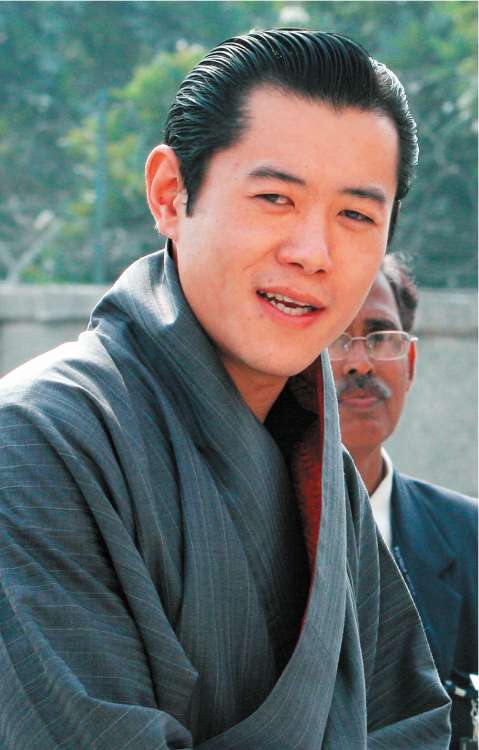
The Himalayan kingdom of Bhutan, a land that has made promoting happiness its paramount goal, ends more than a century of royal rule today with its first parliamentary elections. And no one, except the King who is giving up his power, seems happy about it.
Candidates proudly call themselves monarchists. Party workers describe the vote as "heartbreaking". Voters fret about what will become of the Land of the Thunder Dragon when it trades its Precious Ruler for politicians.
Bhutan has long been an eccentric holdout from modernity. A mountainous land where Buddhist kings reigned supreme, it only allowed the internet and television in 1999. It is perhaps most famous for gross national happiness, an all-encompassing political philosophy that seeks to balance material progress with spiritual well-being.
The election is, in some respects, no different. Unlike so many other countries, where upheaval has been midwife to democracy, Bhutan has never been more peaceful or prosperous; it is only voting because the king said it should.
"No one wants this election," said Yeshi Zimba, one of the candidates, as he campaigned door-to-door in the capital, Thimpu. "His Majesty has guided us this far, and people are asking, 'Why change now?'" After the election, King Jigme Keshar Namgyal Wangchuck, 28, will remain head of state and will probably retain much influence. But elected leaders will be in charge, a fact that worries many here who have seen the disastrous democracies in Nepal and Bangladesh, as well as the often corrupt and chaotic politics in neighbouring India.
"People were looking around at what is happening in south Asia and saying, 'No thank you'," said Kinley Dorji, who runs the state-owned newspaper, Kuensel. "But His Majesty said you can't leave such a small, vulnerable country in the hands of only one man who was chosen by birth and not by merit."
The Bhutanese are not so sure, and the two political parties both stick closely to the king's vision, promoting gross national happiness and featuring leaders who each served twice as prime minister under royal rule. On one side stands Sangay Ngedup, 58, the brother of one of the king's four wives. On the other stands Jigmi Thinley, 56, a man who helped put flesh on the king's concept of gross national happiness.
"Why do we need these people and their arguments?" asked Kinzang Tshering after listening to one candidate's pitch. "They tell us they are better than the other ones. How should I know which one is better? I think His Majesty is better."
The vote for the 47-seat National Assembly is the latest step in a slow engagement with the world, which Bhutan began in the early 1960s. Back then, Bhutan was a medieval society with no paved roads, no electricity and no hospitals. Goods were bartered rather than bought, and almost no foreigners were let in.
But across the Himalayas, other isolated Buddhist kingdoms such as Tibet and Sikkim were coming under the sway of foreign powers, and Bhutan – sandwiched between India and China – decided it needed to change to survive.
"In the past, the strategy was to hide up in the mountains," said Mr Dorji. Not any more. The country of about 600,000 people now has a cash economy. It is even likely to join the World Trade Organisation soon and thousands of tourists are welcomed every year, albeit on heavily supervised and expensive tours.
Bhutan retains many of its peculiar ways. Mountain climbing is banned to preserve the pristine forests that laws dictate must cover 60 per cent of the country. Bhutanese must go about in public in their national dress: a colourfully striped knee-length robe for men and an embroidered silk jacket with a wraparound skirt for women.
Join our commenting forum
Join thought-provoking conversations, follow other Independent readers and see their replies
Comments