Leading journalist 'murdered by Pakistani security service'
Saleem Shahzad had warned that the authorities might act against him and revealed a previous threat
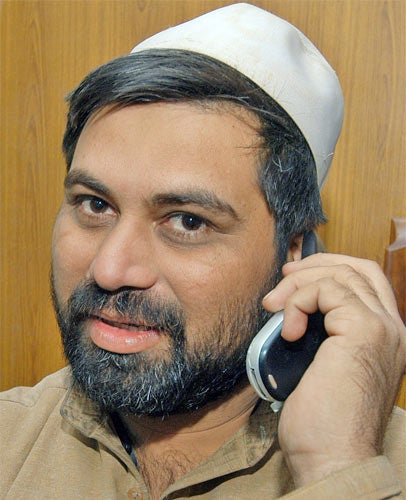
A surge of outrage and grief jolted Pakistan last night after the discovery of the body of a journalist who had highlighted alleged links between al-Qa’ida and the country’s military, two days after he went missing in Islamabad. It appears he had been tortured and beaten before being killed and his body dumped.
Human rights campaigners, who have highlighted Pakistan as one of the most dangerous places for journalists to work, said they believed Syed Saleem Shahzad, the 40-year-old correspondent for Asia Times Online, had been abducted by the intelligence services after the publication of an article about a recent militant attack on a naval base. Mr Shahzad, who had previously been questioned by the InterServices Intelligence (ISI) agency, had warned the authorities might act against him and had even revealed a previous threat.
In an email to Ali Dayan Hasan of Human Rights Watch (HRW) last October, Mr Shahzad had forwarded details of a meeting when he had questioned by senior ISI officials over a an earlier controversial article. He had written: “Dear Hasan, I am forwarding this email to you for your record only if in case something happens to me or my family in future.”
The affable Mr Shahzad, who was married with three young children, went missing on Sunday evening after leaving his home in Islamabad to take part in a television news show where he was to discuss his latest report. He never arrived at the studios. His family contacted HRW the following day and Mr Hasan said that, through interlocutors, they learned he was being held by the ISI. They understood Mr Shahzad would be released by Monday evening.
But yesterday afternoon, reports emerged that Mr Shahzad’s car and identity card had been discovered near the town of Mandi Bahauddin, around 100 miles south of Islamabad. Soon after it was revealed local people had also found the journalist’s body, lying on the bank of a canal. Local reports said he had been shot. It is unclear how long the body had been there. A friend of Mr Shahzad who went to try and collect the body from the police station told The Independent it appeared he had been tortured and television images of the journalist also showed the journalist’s bruised face. “It’s very bad. His face was hit very badly,” said the friend.
The disappearance of Mr Shahzad, who also worked for the Italian news agency Adnkronos International, came just two days after the publication of his final article. In it, he had written that al-Qa’ida militants had infiltrated the naval forces at the Mehran naval air station in Karachi, which was attacked and besieged on May 22 in a confrontation that lasted more than 16 hours. It said the attack had been carried out after talks between the militants and the navy broke down. This week, it emerged Pakistani authorities had arrested a former naval commando, Kamran Ahmed Malik, and were questioning him over the attack and his alleged links to militants.
Mr Shahzad was known to have sources both within the Pakistan’s intelligence community and among Taliban and al-Qa’ida militants and had on one occasion interviewed militant leader Ilyas Kashmiri. Last October, the journalist had been called for a meeting at ISI headquarters after he had written an article that claimed the Pakistani authorities had released from custody Afghan Taliban military commander Mullah Baradar to negotiate with the Pakistan army.
Mr Shahzad said the mood at the meeting, at which he was asked for but declined to reveal the sources for his article, was polite but that at the end one of the senior officers had said to him: “I must give you a favour. We have recently arrested a terrorist and have recovered a lot of data, dairies and other material during the interrogation. The terrorist had a hit list with him. If I find your name in the list, I will certainly let you know.”
Mr Hasan said the journalist had taken the final words as a threat.
“He told me he was being followed and that he is getting threatening telephone calls and that he is under intelligence surveillance,” Mr Hasan told Reuters. “We can’t say for sure who has killed Saleem Shahzad. But what we can say for sure is that Saleem Shahzad was under serious threat from the ISI and [we have] every reason to believe that that threat was credible.”
One of the ISI’s media wing officials who attended the meeting and questioned Mr Shahzad was Rear Admiral Adnan Nazir, a naval officer.
When contacted last night, he declined to comment on either the meeting or the death of Mr Shahzad, saying: “I don’t speak to anyone.”
The killing highlights the perilous working conditions for journalists in Pakistan. The Committee to Protect Journalists said 11 media workers were killed in Pakistan in 2010 and that at least five had died already this year. As it was, the discovery of the journalist’s body happened on the day that friends and relatives of Salmaan Taseer, the assassinated governor of Punjab province, were marking what would have been his 67th birthday.
The journalist and analyst Ayesha Tammy Haq, who is a sister-in-law of Mr Taseer, said: “We were at the graveyard when confirmation of Saleem Shahzad’s death came. People were horrified and angry. Salmaan was murdered for speaking out. Saleem Shahzad was murdered for speaking out, for exposing terrors roots. Everyone at the graveyard and every thinking person in this country is saying enough. No more silence. No more giving in to fear.”
Pakistani Prime Minister Yousuf Raza Gilani yesterday expressed his condolences and ordered an inquiry into the journalist's death, though which organisation would be capable of such an investigation is unclear.
“Pakistan’s intelligence agencies face serious allegations that they been involved the numerous killings of activists, lawyers and journalists,” said Sam Zarifi, Amnesty International’s Asia-Pacific director. “Early indications from this case suggest an alarming expansion of the ‘kill and dump’ operations previously seen mostly in the Balochistan province. The Pakistan authorities must hold those responsible to account and protect journalists targeted merely for doing their jobs.”
Mr Shahzad, who was originally from Karachi and had worked for a number of media organisations, had also completed a newly-released book, ‘Inside Al - Qaeda: Beyond Bin Laden and 9/11’, that was published by Pluto books. Publisher Jon Wheatley said in a statement: “It is my sad duty to announce that Pluto author and international journalist Syed Saleem Shahzad, has been found dead in suspicious circumstances, two days after he went missing and three days after writing an article on possible complicity between al-Qa’ida and elements of the Pakistani navy.”
Extract: How Saleem Shahzad targeted al-Qa'ida
Al-Qa'ida carried out the brazen attack on PNS Mehran naval air station in Karachi on May 22 after talks failed between the navy and al-Qa'ida over the release of naval officials arrested on suspicion of al-Qa'ida links, an Asia Times Online investigation reveals.
Pakistani security forces battled for 15 hours to clear the naval base after it had been stormed by a handful of well-armed militants. At least 10 people were killed... before some of the attackers escaped through a cordon of thousands of armed forces.
An official statement placed the number of militants at six, with four killed and two escaping. Unofficial sources, though, claim there were 10 militants with six getting free. Asia Times Online contacts confirm that the attackers were from Ilyas Kashmiri's 313 Brigade, the operational arm of al-Qa'ida. Three attacks on navy buses in which at least nine people were killed last month were warning shots for navy officials to accept al-Qa'ida's demands over the detained suspects.
The May 2 killing in Pakistan of Osama bin Laden spurred al-Qa'ida groups into developing a consensus for the attack in Karachi, in part as revenge for the death of their leader... The deeper underlying motive, though, was a reaction to massive internal crackdowns on al-Qa'ida affiliates within the navy."
By Syed Saleem Shahzad. Published on the Asia Time Online on 27 May
Join our commenting forum
Join thought-provoking conversations, follow other Independent readers and see their replies
Comments
Bookmark popover
Removed from bookmarks