Manmade snowfall drives Beijing to distraction
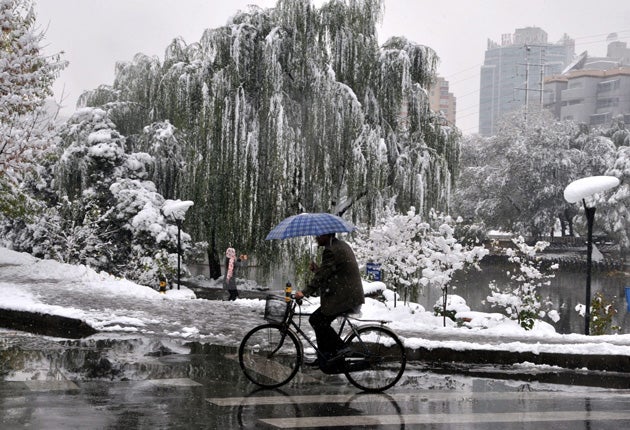
Beijingers are watching the sky apprehensively this weekend after an unexpected, artificially induced snowstorm last weekend caused havoc and led to an outraged response from citizens, who were given no warning.
More than 16 million tons of snow fell on the city, throwing the the power grid into tilt and delaying hundreds of flights at Beijing Capital International Airport. People are angry that the government seems to be able to control the weather – it cleared the clouds for the Olympics and made the sun shine for the 60th anniversary parade on 1 October – but is less smart about telling the population what's going on. The Beijing Weather Modification Office fired 186 capsules of silver iodide, the compound used in cloud seeding, into the clouds and hey presto – snow in November, a relative rarity in Beijing. It was the earliest first snow in the city for 22 years. The mean date for first snowfall over the past 50 years has been 29 November, according to the Beijing Meteorological Bureau.
An official from the Beijing Weather Modification Office said the boffins had "enhanced" the natural snowfall to ease drought conditions in the city. But more than 520 flights from Beijing were delayed, leaving hundreds of thousands of passengers stranded. "There is room to improve the weather manipulation warning system," a spokesman for the China Meteorological Administration (CMA) admitted.
Join our commenting forum
Join thought-provoking conversations, follow other Independent readers and see their replies
Comments
Bookmark popover
Removed from bookmarks