No end in sight to the sufferings of 'the world's most persecuted minority' - Burma's Rohingya Muslims
Nearly 75,000 of those made homeless during inter-communal conflict in June and transferred to temporary camps are living in conditions “worse than animals”, according to the Rohingya Human Rights Association in Bangkok
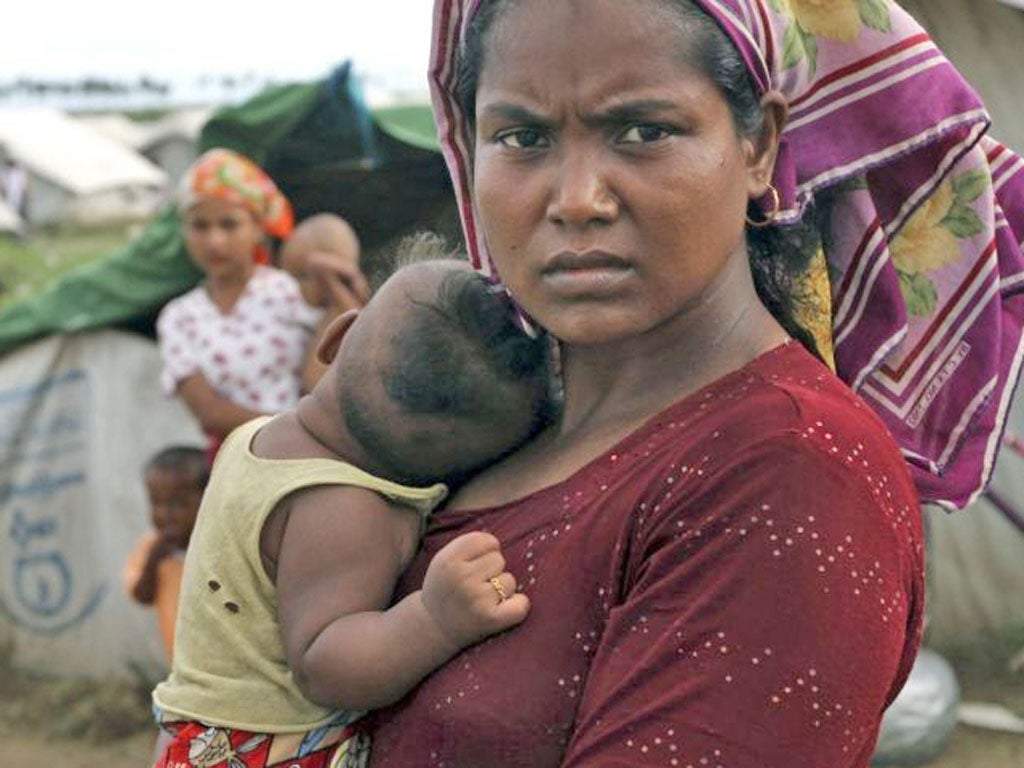
There is no end in sight to the sufferings of what the UN has called “the world's most persecuted minority” - the Rohingya Muslims of Arakan state, in the far west of Burma.
Nearly 75,000 of those made homeless during inter-communal conflict in June and transferred to temporary camps are living in conditions “worse than animals”, according to the Rohingya Human Rights Association in Bangkok. In some of the camps 100 people are sharing a single latrine, and many are reportedly falling ill with diarrhoea and fever.
But the camp-dwellers may be the lucky ones: according to Tun Khin, President of the Burmese Rohingya Organisation UK, hundreds of thousands more Rohingya in northern parts of Arakan state, where outsiders are not permitted to travel, are being deliberately bottled up in their homes by security forces and antagonistic locals. Meanwhile in Sittwe, the capital of Arakan state, fire broke out in the grounds of the centuries-old central mosque, allegedly started by the Muslim community’s enemies. The extent of the damage is disputed.
The ghost of General Ne Win still haunts the country he tyrannised for so long. Most of Burma’s 130-plus minorities have been brutalised at one time or another by the Burmese army during its half-century of domination, but the Rohingya is the only major one barred from citizenship in the Citizenship Law introduced in 1982.
For Ne Win, a Burman chauvinist who did everything he could to ensure that the majority community faced no serious challenges to its power, this was perhaps second best to expelling them en masse – the fate of 300,000 ethnic Indians settled, many for generations, in Rangoon and other cities, who were sent penniless to their “homes”. But the consequences of the Rohingya’s legal marginalisation continue to rumble on today: on 12 July Burma’s new strongman President Thein Sein, hailed in Washington in recent days as a courageous reformer, said he wanted the Rohingya removed. “We will send them away,” he said, “if any third country would accept them.”
The pogrom of Rohingyas in June, the killings and house burnings that drove 100,000 of them from their homes, caught the outside world on the hop, coinciding as it did with real breakthroughs in the country’s reform process. It occurred precisely as Aung San Suu Kyi started travelling for the first time since 1988, visiting Thailand, Norway, Britain and most recently the US, picking up medals and prizes awarded long ago for her humanitarian stand. Meanwhile the Potemkin-like parliament in Naypyidaw, mostly packed with military stooges elected in the grotesquely fixed polls of 2010, started behaving like a real legislative body, challenging the executive, holding vigorous debates. Democracy, it seemed, was beginning to find its feet.
Meanwhile a community whose roots in the country go back at least two centuries – the term “Rooinga” was first mentioned by a British historian in 1799 – and probably much further, was being targeted for the most cold-blooded attempt at ethnic cleansing since Radovan Karadzic and Ratko Mladic bombarded downtown Sarajevo.
The uncomfortable fact is that these two phenomena – the flourishing of Burmese democracy and the brutal crackdown on a community long stigmatised as alien – are closely related.
In the by-elections held in Burma in April, Ms Suu Kyi’s National League for Democracy won 43 of the 44 seats it contested. These were the first fair polls since the NLD won a landslide – ignored by the military – in 1990. The fact that they were relatively free and fair showed that President Thein Sein recognised that if Burma wished to continue to improve its ties with the rest of the world, it could not go on fixing elections as it had done in 2010.
His problem was that in April the party he leads, the Union Solidarity and Development Party, the military’s proxy, was trounced everywhere it stood. If this result was repeated in the general elections in 2015, it would be swept into the dustbin of history. Somehow the USDP must tear the support of the masses from the grip of Ms Suu Kyi and her colleagues.
It has tried to do so in a way that is as ugly as it is effective: by appealing to the strong chauvinistic vein in the majority population, manufacturing (Rohingyas claim) a local atrocity – the rape and murder of a non-Rohingya girl – then orchestrating the vicious reaction. Thein Sein is now reaping the reward: crowds greeting him as a hero, monks demonstrating in Mandalay demanding the Rohingyas’ expulsion.
Aung San Suu Kyi – who was persuaded to enter politics by a Muslim poet, Maung Thaw Ka – knows that if she speaks out against the persecution of the Rohingya she risks alienating at a stroke the millions who love and support her. Thein Sein knows it too. Negotiating this conundrum and emerging with both the support of the Burmese millions and the respect of the world may be the biggest challenge she has yet faced.
Join our commenting forum
Join thought-provoking conversations, follow other Independent readers and see their replies
Comments