Sri Lanka accused of war crimes in final onslaught
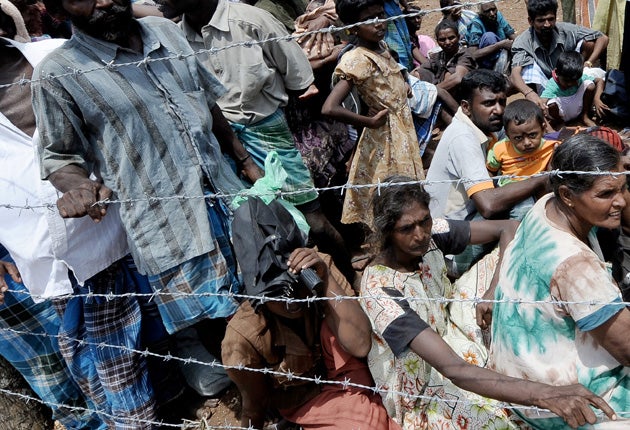
An investigation into the last months of Sri Lanka's bloody civil war released yesterday claims that government forces were responsible for the deaths of tens of thousands more civilians than previously estimated, and targeted hospitals and humanitarian operations as part of their final onslaught on the rebel Tamil Tigers.
According to the International Crisis Group study, many thousands more people may have died in the operation than UN figures have suggested, with as many as 75,000 citizens unaccounted for, and almost all of the deaths in the so-called "No-Fire Zone" due to government fire.
The study also claims that the government shelled hospitals where it knew international NGO staff and civilians to be working or receiving treatment. "The Sri Lankan government committed war crimes with top government and military leaders potentially responsible," it says. "An international inquiry into alleged crimes is essential."
The Sri Lankan government has refused to comment on the report, the most comprehensive account of the violence that ended a year ago today. Senior officials have insisted in the past that there were no civilian casualties in the last months of the war.
At the weekend the Sunday Observer newspaper, widely considered a government mouthpiece, claimed that the report was part of a plot to promote former army head Sarath Fonseka at the expense of President Mahinda Rajapaksa. Fonseka was imprisoned after he lost the post-war election to Rajapaksa, accused of participating in political activity while still in uniform.
Yesterday the government gave details of its own proposed 'reconciliation commission', which would suggest methods for promoting national unity and determine compensation for those affected by the war with the Tamil Tigers, or Liberation Tamil Tigers of Eelam (LTTE).
The proposals stop short of any investigation into violations of humanitarian law. "The only chance of credible scrutiny is by outsiders," said Alan Keenan, Crisis Group's Sri Lanka project director. "There has never been a credible internal process."
Although the US Permanent Representative to the UN, Susan Rice, last week welcomed Sri Lanka's planned reconciliation commission, she cautioned that it did need "to probe violations of international standards during the final stages of the conflict", and there has long been scepticism about the Colombo government's willingness to sanction a full investigation. One foreign diplomat based in Colombo is quoted in the Crisis Group report as saying in November last year: "The regime isn't going to disembowel itself."
The long-running civil war in Sri Lanka reached its zenith in the early months of 2009, when the government pinned the rebels down in an ever-shrinking "No-Fire Zone" (NFZ) on the country's northern coast. The death toll has always been murky because reporters and independent observers were barred from the area. The UN put the toll before the final period of fighting at around 7,000, while Crisis Group points out that around 365,000 civilians were known to be alive in the NFZ in February last year – and only 290,000 survivors registered in government-run camps three months later.
Slim hopes of a UN-led inquiry now rest with the Secretary-General Ban Ki-moon, since both the Security Council and Human Rights Council have declined opportunities to take Sri Lanka to task.
According to Crisis Group's president Louise Arbour, the lack of consequences for President Rajapaksa makes it more likely that other conflicts will be conducted in similar style in future, and provides no incentive for the draconian Sri Lankan regime to change its approach. "The means are so attractive," she said. "Why would you restrict yourself to doing it just once?"
Crisis Group also suggested that India and the United States failed to do enough to discourage Rajapaksa at the time of the conflict.
Join our commenting forum
Join thought-provoking conversations, follow other Independent readers and see their replies
Comments