Sri Lankan government 'settling scores' in media crackdown
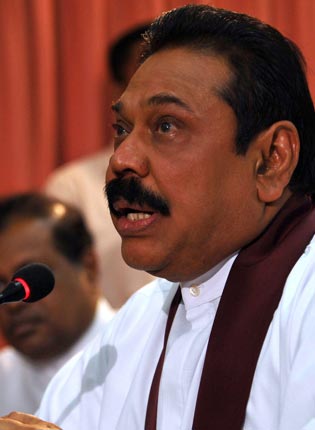
The newly re-elected government of Mahinda Rajapaksa has been accused of orchestrating a fresh crackdown on the media after a series of websites were blocked and at least one reporter detained after raising questions about the conduct of the election. One journalist is missing, one has been assaulted and others have received death threats.
In what campaigners claimed was a "settling of scores", around half-a-dozen websites has been blocked and the offices of one of them sealed. A foreign journalist who had been ordered from the country after asking a question about the president's brother was subsequently told she could stay after her case received international attention.
"Now that the president has been re-elected, there appears to be a settling of scores with critics of the government," said Brad Adams, Asia director at Human Rights Watch (HRW). "Just days after the election, some officials seem to be on a campaign to abuse their power."
While the Sri Lankan authorities have previously been accused of intimidating journalists, many observers have been surprised at the government's actions following an election it won by 17 points. In the aftermath of his victory, Mr Rajapaksa vowed to reach out to all sections of Sri Lankan society and work for reconciliation in a country where the traumas of a three-decade long civil war remain fresh.
The government insists it is not attacking the media, only preventing the spread of what it termed defamatory rumours. A senior spokesman said: "Which country allows absolute freedom to websites or any arm of the media which gives publicity to socially corrosive and personally defamatory rumours that can also tend to destabilise the state."
But HRW said it had detected a pattern of harassment. Five online media organisations have been blocked since the day before the election on January 26, while two days later, a group of armed men surrounded the offices of one of the outlets, Lanka e News, and sealed them. A regular contributor to the website, Prageeth Eknalogoda, who has a wife and child, has been missing since two days before the election.
A member of staff at Lanka e News said after their offices were sealed, staff received up to 40 phone calls in a hour "threatening us with death if we did not stop what we were doing".
The previous day detectives arrested and questioned Chandana Sirimalwatte, editor of the Iridia Lanka newspaper. He has been detained, reportedly because of an article published on election day about a senior government official.
State media workers have also suffered. Ravi Abeywickrama, an employee at Sri Lanka Rupavahini Corporation, was attacked after signing a joint statement with 60 other employees that raised questions about the misuse of state media by Mr Rajapaksa's campaign, an issue that was also raised by the country's independent election commissioner, Dayananda Dissanayake, who said it had been overwhelming biased in favour of the president.
"This wave of post-election violence could cast a lasting stain on the start of President Rajapaksa's second term and bodes ill for the political climate during the coming years," said the media freedom group, Reporters Without Borders. "It is quite normal for journalists and privately-owned media to side with a candidate before and during a democratic election but it is unacceptable for them to the victims of reprisals once the elections are over."
While it is Sri Lankan journalists who suffer the gravest dangers, international correspondents have also been harassed. Karin Wenger, a reporter with the Swiss Broadcasting Corporation (SBC) was ordered to leave the country after she asked a question about the role of Mr Rajapaksa's brother, Basil Rajapaksa, in the campaign. This order was subsequently revoked and Ms Wenger informed there had been "a huge blunder". Many foreign journalists were refused visas to cover the election.
Campaigners say in recent years at least 14 media workers have been killed and dozens more forced into exile. Among the most high profile cases was that of Lasantha Wickremetunge, editor of the Sunday Leader newspaper, which often criticised the government and who was murdered a year ago. No-one has been charged over his death. The government has denied any involvement in attacks on journalists.
Bob Dietz, of the Committee to Protect Journalists, based in New York, said: "Given the ugly history of attacks on journalists in Sri Lanka, we call on President Rajapaksa to ensure the safety of all journalists and to use his new mandate to reverse the repressive trends of the past several years."
Join our commenting forum
Join thought-provoking conversations, follow other Independent readers and see their replies
Comments