Strikes threaten China's status as the factory of the world
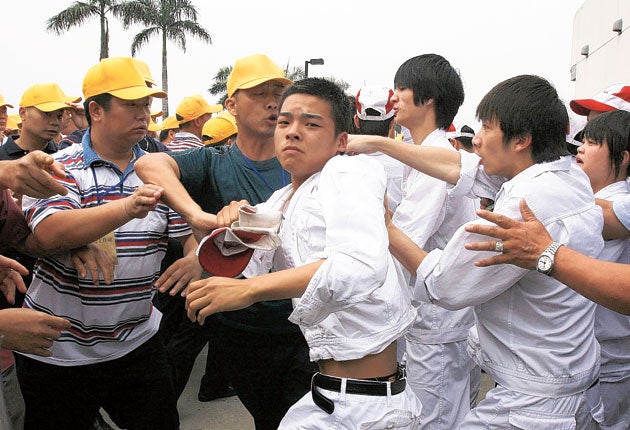
A rash of new strikes in China, in defiance of the country's long-standing aversion to industrial action, is posing an unprecedented threat to its reputation as an exporting powerhouse.
Chinese workers have long been banned from forming labour unions independent of the Communist Party. But yesterday, after one strike by employees of a Toyota supplier earlier this week, another group in the city of Tianjin took industrial action over wages.
In the southern city of Guangdong, meanwhile, negotiations between management and labour at a Honda manufacturing plant yielded little progress, raising the likelihood of strikes to secure a new pay deal. And in Chongqing city, workers at the Chongqing Brewery staged a strike that reportedly ended yesterday, according to the Danish brewery Carlsberg, which part-owns the brewery.
The government has been drawn into urgent attempts to placate angry workers, lest the strikes spin into a broader threat to economic stability.
Although reporting on the strikes in the Chinese media has been kept to a minimum, there has been discussion on the impact of rising wages, including an editorial in the People's Daily, the main government organ.
"In many developing countries with a rising economy, simultaneously we have seen a wave of rising salaries. Manual workers living at the bottom of society are more and more eager to get their share of their country's growing GDP," ran the commentary. "The challenge is to preserve the advantages of cheap labour and at the same time preserve the delicate balance between corporate profits and social harmony." Premier Wen Jiabao has also called for better treatment of workers.
The strikes at the Toyoda Gosei factory in Tianjin, which began on Thursday, drew the attention of police. A video obtained by the Reuters news agency showed workers in scuffles with police officers as others screamed: "The police are coming!" Employees at the Honda factory in Guangdong, meanwhile, were still weighing up the benefits of a strike after a promised rise in base wages fell far short of expectations. Under the new deal, base monthly pay would be raised about 200 yuan to 1,139 yuan (around £112).
Among people on the street, there is support for the workers' actions. One university teacher surnamed Ma said he thought the strikes were a good thing.
"Many Western countries have strikes from time to time. It is ordinary," he said.
"Chinese workers have been very low-paid for a long time. There are many rich people in China nowadays. They enjoy fabulous houses and get money easily. But there are also many poor people, working hard, earn very little."
China is wrestling with the implications of rising wages. The country's new prosperity is built on cheap labour, and the transition to the next stage of development could prove destabilising. Some companies are already moving to Vietnam and Cambodia. While wages in China account for only five per cent of the cost of manufacturing, other costs are also on the rise, such as electricity and water.
For decades, the country's army of tens of millions of migrant workers, by some estimates nearly 10 per cent of the total Chinese population, have formed the backbone of China's economic strength.
But rising prices have caused discontent. A recent spate of suicides at the Foxconn plant in Shenzhen, southern China, drew international attention to the working conditions found in some Chinese factories, and forced the management to double wages to stave off even more bad publicity, which would have affected the plant's fortunes. And just as in the late 19th century in Britain and America, workers are looking around at the rising wealth of the ruling classes and saying they want a piece.
"Yes, China has developed super fast. But many people still have to worry about so many things, health care, children's education and employment," said a telecoms company employee named Xin Junjie.
"I feel pity for our country's workers. They are good and hard-working people. To strike means they feel they have no way out."
Join our commenting forum
Join thought-provoking conversations, follow other Independent readers and see their replies
Comments