'Suicide squads' paid huge sums amid fresh fears for nuclear site
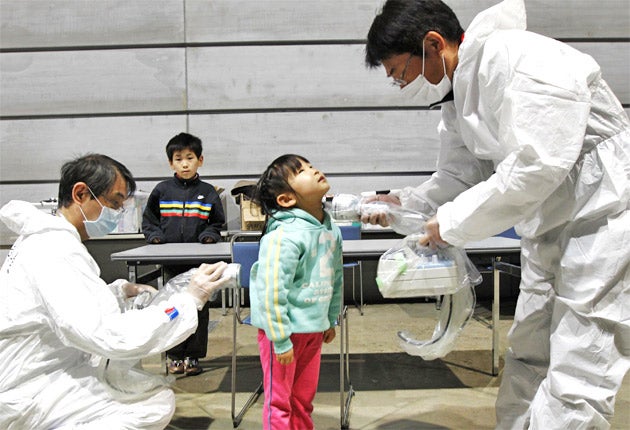
The radioactive core in one reactor at Fukushima's beleaguered nuclear power plant appeared to have melted through the bottom of its containment vessel, an expert warned yesterday, sparking fears that workers would not be able to save the reactor and that radioactive gases could soon be released into the atmosphere.
Richard Lahey, who was a head of reactor safety research at General Electric when the company installed the units at Fukushima, said the workers, who have been pumping water into the three reactors in an attempt to keep the fuel rods from melting, had effectively lost their battle. "The core has melted through the bottom of the pressure vessel in unit two, and at least some of it is down on the floor of the drywell," he said.
The damning analysis came as it emerged that workers at Japan's stricken nuclear plant are reportedly being offered huge sums to brave high radiation in an attempt to bring its overheated reactors under control. The plant's operator, the Tokyo Electric Power Company, is hoping to stop a spreading contamination crisis which could see another 130,000 people forced to leave their homes.
Radiation has already found its way into milk, vegetables and tap-water and is leaking into the sea around the complex. Government tests found yesterday that small quantities of plutonium, one of the world's most dangerous elements, have seeped into soil outside the plant.
State broadcaster NHK said underground tunnels linked to reactors 1, 2 and 3 are flooded with water containing radiation measured in some spots at a highly dangerous 1,000 millisieverts an hour. Workers in protective gear are shoring up the tunnel shafts with sandbags to stop the water – which reportedly contains concentrations of long-lived caesium-137 – from seeping into the sea about 55 to 70 metres away.
Japan's Nuclear Safety Agency said that the plutonium was "not at levels harmful to human health", but the government's top spokesman Yukio Edano called the situation "very grave", and confirmed fears that at least one reactor had suffered a partial meltdown.
The admission added to pressure on Prime Minister Naoto Kan to widen an exclusion zone around the plant, possibly forcing another 130,000 people to evacuate. Yesterday, a tired-looking Mr Kan faced withering criticism from opposition MPs, who called him "irresponsible" and "incompetent".
Engineers at the Fukushima Daiichi complex struggling to restart cooling systems for reactors are being hampered by the radiation and lack of electricity, forcing them to work in the dark and regularly withdraw.
Subcontractors to several companies connected to the plant have reportedly been offered 80,000 to 100,000 yen a day (£608 to £760) to join the operation, according to one former plant worker. The team of men inside the complex have been dubbed "samurai" and "suicide squads" in the popular press.
The company chief who disappeared from view
It has been a bad fortnight for Masataka Shimizu. Tepco's beleaguered president has watched the value of the utility giant plummet by $29 billion since 11 March after investors wiped over 70 per cent off its stock.
Its share price of 696 yen is the lowest it has been since 1977 as it battles to stop nuclear catastrophe in Fukushima. The company's problems have just turned existential now that the government has begun openly discussing nationalisation.
Mr Shimizu, 67, has been largely absent from public view since the crisis detonated, appearing briefly on 13 March to issue a boilerplate apology for "causing trouble", then disappearing totally on 16 March, reportedly suffering from overwork.
Rumours in the Japanese press suggest he has suffered a breakdown or even left the country. The Washington Post noted this week that he has been missing crucial appointments with leading politicians. Other reports say he has holed up in his office and refused to join a joint government-Tepco crisis management team.
According to the Asahi newspaper, prime minister Naoto Kan told Mr Shimizu in his office on 15 March that it was "ridiculous" for him to have left his post. In another now famous outburst, a frustrated Mr Kan shouted at Tepco executives demanding to know "what the hell is going on".
Most observers believe it is only a matter of time before Mr Shimizu steps down, leaving the company he took over two years ago a smouldering ruin.
David McNeill
Hamish McRae: The Fukushima effect
Viewspaper, page 4
Join our commenting forum
Join thought-provoking conversations, follow other Independent readers and see their replies
Comments
Bookmark popover
Removed from bookmarks