The Google war: China calls US an 'information imperialist'
Speech by Hillary Clinton on internet freedom provokes angry response
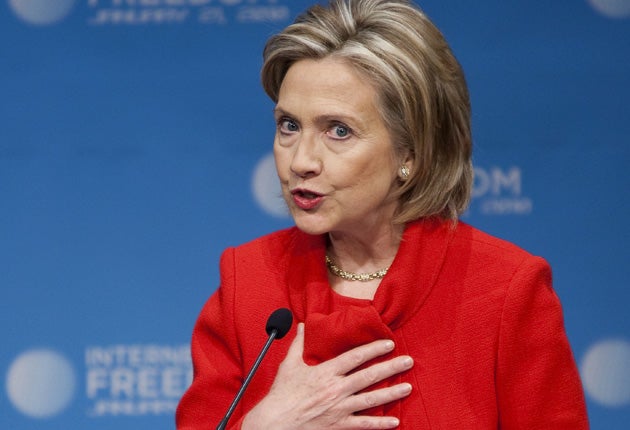
China responded with a fierce broadside yesterday after Hillary Clinton, the US Secretary of State, attacked its record on internet freedom. The country labelled Washington an "information imperialist" and said accusations that China was manipulating the internet for its own ends were false.
Web giant Google's threat to leave China over cyber attacks on rights activists and internet censorship, combined with Ms Clinton's strong denunciation of censorship, have caused the Google affair to escalate into a major row between Washington and Beijing.
The Chinese say the tension between the two superpowers is harming diplomatic ties, and Beijing officials told Ms Clinton to "stop finger-pointing".
"The US side had criticised China's policies on Internet administration, alluding that China restricts internet freedom. We firmly oppose such words and deeds, which are against the facts and harm the China-US relations," Foreign Ministry spokesman Ma Zhaoxu said on the government's website.
Many cyber experts suspect that the hacker attacks from China on Google and other targets were so sophisticated that official involvement was likely. The fact that human rights activists, journalists and dissidents were targeted also encouraged the suggestion that this might be the case.
Chinese hackers are famously patriotic and have been blamed for attacking the website of Tokyo's Yasukuni war shrine, seen by many Asian nations as a symbol of Japan's past war-time aggression, and the website of the Melbourne International Film Festival after it said it would show a film about the Uighur leader Rebiya Kadeer.
It's the latest sign of strain between China and the US, with the two countries already at loggerheads over trade issues, China's currency and the sale of weapons by the US to Taiwan.
"We urge the US side to respect facts and stop using the so-called freedom of the internet to make unjustified accusations against China," the statement said.
In her speech in Washington, Clinton cited China as among a number of countries where there has been "a spike in threats to the free flow of information" over the past year. She also named Tunisia, Uzbekistan, Egypt, Iran, Saudi Arabia and Vietnam. She said: "countries or individuals that engage in cyber attacks should face consequences and international condemnation."
Yesterday White House spokesman Bill Burton made clear that President Obama agreed with his secretary of state. "All we're looking for from China are some answers," he told reporters. He said that Obama "continues to be troubled by the cyber security breach".
Mr Ma insisted the internet was open and free in China. But such claims are at odds with the fact that the Chinese government heavily censors online activity and keeps a tight rein on the internet. Sites such as Facebook, Twitter and YouTube are blocked in China, which uses a filtering system known as "The Great Firewall of China" to block any sites that have content which runs counter to the Communist Party's interests. The government said that this kind of censorship was in keeping with China's "national conditions and cultural traditions".
After July's riots in Xinjiang province, in the far north west of the country, the authorities completely cut off all but the most rudimentary internet access to the region, and have only recently allowed it to resume.
Join our commenting forum
Join thought-provoking conversations, follow other Independent readers and see their replies
Comments