The warlords casting a shadow over Afghanistan
They are brutal, bloodthirsty – and becoming increasingly influential in Afghan politics.
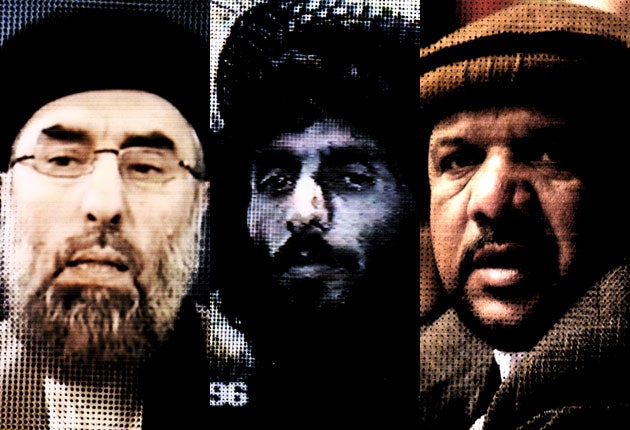
One of the most feared of the Afghan warlords, Faryadi Zardad, was notorious for robbing, raping, torturing and killing travellers on the road between Kabul and Jalalabad. He kept a savage assistant in a cave who would bite and rip the flesh of his victims; other captives were murdered or imprisoned until they died of their sufferings or bribes were paid for their release.
Uniquely among the warlords of Afghanistan, many guilty of actions similar to his own, Zardad is in prison for his crimes. In 1998, as the Taliban overran Afghanistan, he fled to Britain on a fake passport. He was running a pizza restaurant in south London in 2000 when he was unmasked by the BBC, and in 2005 he was sentenced to 20 years in prison in Britain.
Zardad must consider himself exceptionally unlucky. Other warlords, who were once his comrades in arms, are now part of the political elite in Kabul, prominent members of the government or multimillionaire owners of palatial houses in the capital.
At the time Zardad was torturing and killing at his much-feared checkpoint at Sarobi on the Kabul-Kandahar road in 1992-96, he was a valued military commander in the forces of Gulbuddin Hekmetyar, the leader of the fundamentalist Hizb-e-Islami party.
Rockets and shells fired into Kabul by Hekmetyar's soldiers devastated the city and killed thousands of people before it was captured by the Taliban. More recently, Hekmetyar's forces, who are particularly strong in Logar province just south of the capital, have been fighting as allies of the Taliban.
But in the latest twist in Afghan politics, in which leaders switch sides and betray each other as swiftly as any English duke in the Wars of the Roses, Hekmetyar is reportedly about to start negotiations to join the Afghan government of President Hamid Karzai. Under a power-sharing deal, his party would supposedly fill several ministerial posts and governorships in return for abandoning the Taliban. He himself would go into exile in Saudi Arabia for three years at the end of which the US would remove him from its list of "most wanted" terrorists.
A deal between Hekmetyar and President Karzai's government is not impossible, although a government spokesman has denied it. The Taliban have made plain in the past that they neither like nor trust him. It was in opposition to warlords such as him that the Taliban first arose in 1994.
If Hekmetyar's party does enter the government, its members will find themselves surrounded by many familiar faces. Just before Mr Karzai went to Washington to see President Barack Obama last week, he neatly divided the opposition, and almost certainly ensured his re-election as President, by selecting as his vice-presidential running-mate Mohammad Qasim Fahim, a powerful Tajik former warlord.
Human Rights Watch protested that General Fahim had the blood of many Afghans on his hands, but President Karzai stressed his courageous role in the war against the Soviet occupation.
Though Mr Karzai is increasingly unpopular because of failing security across Afghanistan and the extreme corruption of his government, he is likely to win re-election easily because he has co-opted the warlords who are Afghanistan's main power-brokers. Frequently denounced for being weak and indecisive, Mr Karzai, never a warlord himself, is again showing his skill in dancing between the rain-drops of Afghan politics.
US criticism of his rule, which reached high volume a few months ago, has died away because Washington sees nobody who can replace him. Unfortunately for Afghans, the political landscape of their country gelled at the time of the overthrow of the Taliban in 2001 and has not really changed since.
One reason the Taliban had been able to conquer most of Afghanistan in the 1990s, aside from the support of Pakistan, was by taking advantage of a popular reaction against warlords. Zardad ruled only a small area, but far more powerful rulers were just as cruel and corrupt as he was. Much of northern Afghanistan was ruled by the Uzbek general, Rashid Dostum, who had been part of the Communist regime and commanded a powerful army. The Pakistani journalist and author Ahmed Rashid once arrived to interview him in a fort overlooking his capital of Mazar-e-Sharif. Noticing bloodstains and scraps of flesh in the muddy courtyard he asked the guards if they had slaughtered a goat. They explained that an hour earlier General Dostum had punished a soldier for theft. "The man had been tied to the tracks of a Russian-made tank," records Mr Rashid, "which then drove around the courtyard crushing his body into mincemeat, while the garrison and Dostum watched."
At the time of the terrorist attacks on the US in 2001, warlords including General Dostum and General Fahim were fighting for their lives or were in exile. But within hours of 9/11, the US was looking for local allies to provide the ground troops which, backed by US airpower, advisers and money, would overthrow the Taliban in Kabul.
In a couple of months warlords, many from the main opposition grouping, the Northern Alliance, were the new rulers of Afghanistan. Few of them now wear uniform, but they have held power ever since. General Dostum has gone into luxurious exile in Istanbul after a murderous assault on a Turkoman leader, but he remains influential among his followers and owns a fine pink palace in the famously wealthy Kabul neighbourhood of Sherpur.
Aside from Hekmetyar, most of the other warlords no longer exercise power through their private armies, but through a mafia-like control of jobs, security services, money, contracts and land.
Mr Karzai has experience in keeping them divided by giving each a big enough cut of the cake to make sure that no credible replacement for himself as President ever emerges. Had Zardad played his cards a little differently, and chosen his place of exile more carefully, he might now be looking forward to profitable government employment in Kabul.
Gulbuddin Hekmetyar
*Nicknamed "Engineer" he is a former prime minister of Afghanistan and a rebel military commander in the anti-Soviet war. He is wanted by the US for his links to Bin Laden.
Rashid Dostum
*Born into a peasant family in 1954 the burly Uzbek and former plumber has a reputation for ferocious brutality. Changed sides numerous times and once backed the Taliban.
Faryadi Zardad
*Former Mujahedin leader, aged 45, ran a violent milita that robbed, abducted and killed travellers. He fled to Britain, ran a pizzeria and is now in prison.
Mohammad Qasim Fahim
*On America's "most wanted" list of terrorists, he is one of the most notorious warlords with, according to Human Rights Watch, "the blood of many Afghans on his hands".
Join our commenting forum
Join thought-provoking conversations, follow other Independent readers and see their replies
Comments
Bookmark popover
Removed from bookmarks