UK troops to hand control of Helmand 'hot spots' to Afghan army
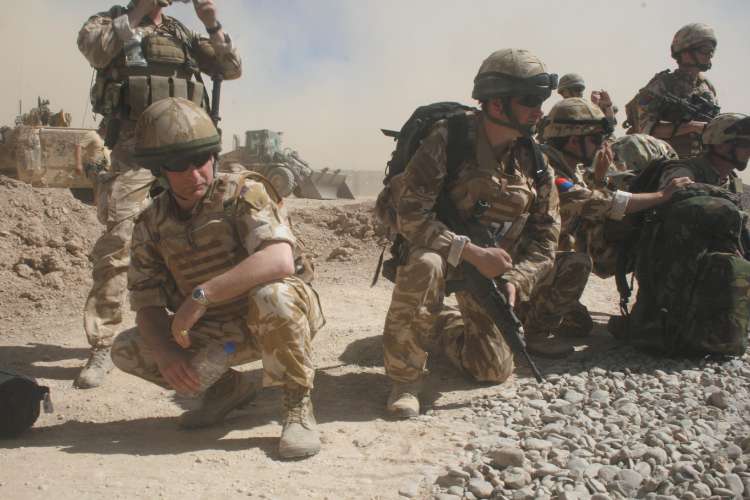
British troops in southern Afghanistan could hand control of key areas to Afghan forces within months, the commander of British forces said yesterday.
Brigadier Mark Carleton-Smith said he hoped the Afghan army would "deliver security" in the most dangerous parts of Helmand by the end of the year. He said the provincial governor was keen to see Afghan troops take over in three hotspot towns in "the heart of Helmand", and it was his job to help that happen.
"We may see, by the end of this year, or beginning of next, areas where security is delivered by the Afghan army," he said. "The priorities are Gereshk, Lashkar Gah and Sangin."
Fighting in all three towns have claimed British lives. Lashkar Gah is the provincial capital and home of the UK headquarters. Gereshk controls the main road which links Helmand to the rest of Afghanistan, and Sangin, in the heart of the opium belt, witnessed the bloodiest fighting between British troops and the Taliban.
Brigadier Carleton-Smith's strategy does not, however, mean an early exit for UK forces. Preparations are already under way for troops to be deployed beyond 2009, the projected time-frame for the end of the Helmand mission, which began in 2006.
Handing over security to Afghan security forces has its own risks. At Musa Qala, a town recently recovered from the Taliban, the Afghan police have been tasked with maintaining law and order while British forces stayed in the outskirts. A number of residents have complained bitterly about extortion by the police.
Brigadier Carleton-Smith arrived in Helmand last month. His troops have already suffered casualties at the hands of the insurgents, but he insisted beating the Taliban was not his top priority. "The Taliban have been clobbered," he said, referring to a series of successful strikes against its commanders. "The crux of the problem is [winning over] the people.
"Gereshk, Lashkar Gah, Sangin – it's the heart of Helmand. It's where the bulk of the population live."
Speaking at a joint British, Australian and Danish outpost, he said his objective for the next six months was to improve "human security", which he said included physical security from threats such as criminals and insurgents, as well as economic and social security. "To my mind, that is better delivered by their own agencies than by the British," he added.
"What we would like to see is the interface with the Afghan farmers conducted by Afghan soldiers, because they have got a much better rapport with their own people," he said.
The Afghan National Army has been one of the country's few success stories since 2001, especially when compared to the corrupt and inept police force. There are three battalions of Afghan troops based in Helmand, but they depend on help from the British for logistics, medical treatment and air support. That support will continue when they take control of the three key towns.
"In 2006 there was no Afghan army presence to speak of," Brigadier Carleton-Smith said. "The only people trying to stabilise [Helmand] were the British troops. Today you see a greatly increased Afghan army contribution."
Although the ferocity of fighting has diminished, Brigadier Carleton-Smith admitted there was still a long way to go. "When you are growing an army the currency is years," he said. "Think five to 10 years. We have only had a British battle group here since October 2006. Progress here is evolution, not revolution. People need to keep their nerve."
Part of that progress will include giving more responsibility to local communities for their own security, instead of relying on soldiers or police, he said.
Ultimately, Brigadier Carleton-Smith said, the solution in Helmand hinges on negotiation and finding "Afghan solutions to Afghan problems".
"How do wars end?" he asked. "It's not about military solutions, it is about political solutions. The solution here is about governance and rule of law and not the barrel of a gun."
Join our commenting forum
Join thought-provoking conversations, follow other Independent readers and see their replies
Comments