Western forces poised to halt Taliban tide
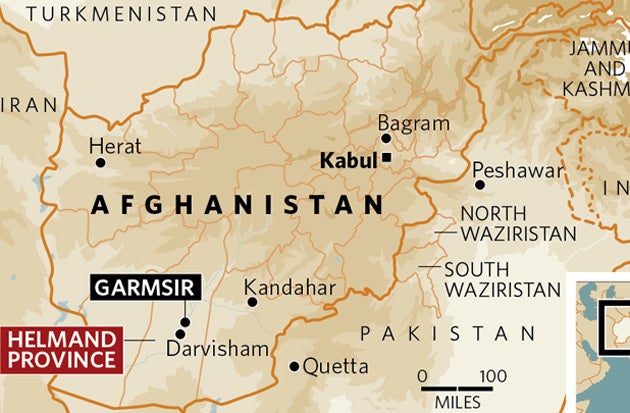
Western special forces are poised to increase their clandestine military operations in Pakistan to stop the flood of Taliban fighters pouring into Afghanistan, amid concerns that the militants are "winning the war".
As fears grow that the Taliban's strength has been underestimated and not enough is being done to stop militants crossing Afghanistan's porous border, Western forces are considering taking the controversial step of carrying out more missions in Pakistan.
In recent weeks, increased attacks by Taliban fighters on Western and Afghan targets, including the killing of 10 French soldiers and the attempted storming of an American base, have been linked by Nato officials to peace deals struck between the militants and Pakistan's government and an unwillingness in some parts of the Islamabad establishment to |confront extremists.
At the same time, the widespread condemnation by Afghans, including President Hamid Karzai, of a Nato-led air raid aimed at a Taliban commander which killed up to 90 civilians, including women and children, has added impetus to the need for more on-the-ground operations.
At the weekend, the de facto leader of Pakistan's government, Asif Ali Zardari, admitted: "The world is losing the war. I think at the moment, the Taliban definitely has the upper hand."
The resurgent Taliban has profited from the increased political turmoil in Pakistan, which saw Pervez Musharraf, considered by the West to be a stalwart ally, resign as president last week.
Earlier today, the chaos deepened as the former Pakistani prime minister, Nawaz Sharif, withdrew from the coalition government in a row over the reinstatement of sacked judges. While his resignation will be unlikely to trigger a snap election, it adds to the confusion and the belief by some analysts that militants have seized on a perceived power vacuum in Islamabad since February's elections, which installed the civilian government.
Meanwhile, under pressure from Washington, which has provided it with millions of dollars, Pakistan's government announced yesterday it was outlawing the main Taliban organisation in the country, the Tehrik-e-Taliban Pakistan, saying it would freeze its assets. Pakistan's Interior Minister, Rehman Malik, said: "This organisation is a terrorist organisation and has created mayhem against public life." The group has claimed responsibility for a wave of suicide bombings that have killed hundreds since the fragile civilian government took power.
American, British and Afghan officials claim there are up to 80 rudimentary Taliban and al-Qa'ida training camps in Pakistan, churning out insurgents often with the connivance of elements in the Pakistani military and the notorious ISI intelligence service. The cross-border flow of militants has resulted in a blurring of the distinction between Pakistan Taliban and the Taliban "proper". Mullah Omar, the Taliban leader, is believed to be living in Pakistan's tribal areas, as is Osama bin Laden.
But increasing the number of clandestine operations inside Pakistan would be a major step, with huge potential for serious repercussions. While it is generally recognised that the CIA and special forces operate covertly in the country, the subject is sensitive and not publicly discussed. Previously, Pakistan forces have publicly taken responsibility for missile attacks and other military strikes probably carried out by US forces.
To enable the clandestine operations, it is understood the US has established bases just inside Afghanistan's border with Pakistan. They include Lowara Mundi, facing North Waziristan, Mughalgai, across the border from the training camp of the Taliban commander Maulvi Jalaluddin Haqqani, and Gurbaz near Khost.
Yet the challenge presented is far from straightforward and, for all of the West's rhetoric about the so-called war on terror, there is no easy fix. Recent military operations in the tribal areas by Pakistani forces – carried out under pressure from the West – have caused a refugee crisis, with up to 300,000 civilians fleeing the Bajaur region alone.
Military operations have increasingly resulted in retaliatory suicide bomb attacks, the most recent at a weapons factory near Islamabad in which about 80 people were killed. While the West may criticise the civilian government's efforts to broker peace deals with the Taliban, Mr Musharraf – whom it supported for so long – did the same thing when it suited him.
Covert operations in Pakistan were curtailed after the country's election so as not to embarrass and antagonise the newly elected civilian government. But the exasperation felt at the seeming failure of the Pakistanis to control the Taliban was made clear to the new head of the Pakistani army General Ashfaq Kayani, during meetings in the Afghan capital with US General David McKiernan, head of the International Security Assistance Force (Isaf) and General Bismillah Khan, Afghanistan's chief of general staff.
Meanwhile, the US has also provided Pakistan with what it says is clear evidence that elements of the ISI were involved in the recent bomb attack on India's embassy in Kabul, resulting in 54 deaths.
One senior Western commander involved in the Afghan operations said: "The facts are pretty plain, the deals across the border have led to a significant rise in insurgent activities here in Afghanistan. We know where these guys are being trained and armed to be sent to Afghanistan to kill civilians and Afghan and coalition troops. This is obviously a political hot potato, but we would be failing in our duty if we did not seek to counter this."
Asked why operations against the Taliban were not being left to the Pakistanis, he said: "I can only echo what President Bush told the visiting Pakistanis the other day – that, in effect, information we share with them seems to end up with the bad guys."
Anthony Cordesman, of the Washington-based Centre for Strategic and International Studies said he believed a resurgent al-Qa'ida, harboured by the Taliban in the years before the suicide attacks of 11 September 2001, could be the result of failing to tackle the militants emanating from Pakistan's tribal areas. He added: "The US is now losing the war against the Taliban. Pakistan may officially be an ally but much of its conduct has made it a major threat to US strategic interests."
A number of Taliban leaders have been killed and captured in Pakistan by US-led forces engaged in a counter-terrorist operations. They are, however, formally considered a separate mission, which allows the Nato-led Isaf to say it is not involved.
In contrast to the Taliban, which has a steady source of recruits from Pakistan, Nato forces continue to be tightly stretched. The US is due to dispatch between 7,000 and 10,000 extra troops to Afghanistan, but other countries in the alliance have been less forthcoming.
Many of the member nations, including France, Canada and Germany, are already facing hostile public opinion by deploying soldiers in Afghanistan.
Join our commenting forum
Join thought-provoking conversations, follow other Independent readers and see their replies
Comments