Aborigines to block uranium mining after Japan disaster
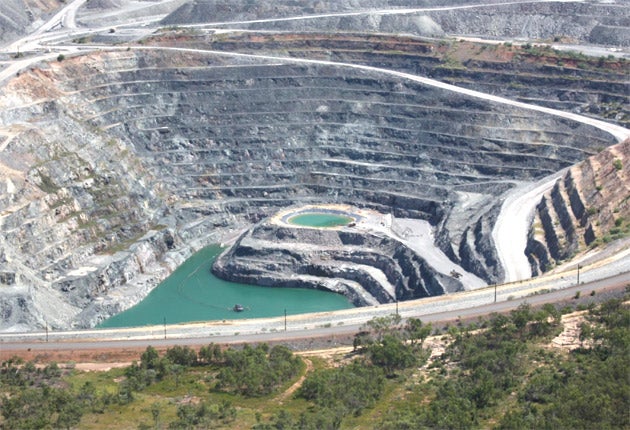
Since Japan's Fukushima nuclear plant began leaking radiation after last month's earthquake and tsunami, those watching with consternation have included the Mirarr Aboriginal people of Australia's Northern Territory, who are determined to limit uranium mining on their land despite the promise of vast riches.
The Mirarr are the traditional owners of land where uranium has been mined for more than 30 years and exported all over the world. Tepco, which operates the Fukushima plant, is a long-standing customer of Ranger, the principal mine.
The senior traditional elder in the area, Yvonne Margarula, has written to the UN Secretary-General, Ban Ki-moon, expressing her people's sorrow about Japan's suffering, and their concern about the nuclear emergency.
"Given the long history between Japanese nuclear companies and Australian uranium miners, it is likely that the radiation problems at Fukushima are, at least in part, being fuelled by uranium derived from our traditional lands," she said. "This makes us feel very sad."
Ms Margarula also told Mr Ban that events in Japan had strengthened the Mirarr's resolve to oppose work at a second mine, named Jabiluka – the world's largest known undeveloped uranium deposit. Instead, they want to see Jabiluka incorporated into Kakadu, the World Heritage-listed national park where Ranger is also located.
Uranium mining has a troubled history in the area. The Ranger deposit – now operated by Energy Resources of Australia (ERA), a subsidiary of the Anglo-Australian mining giant Rio Tinto – was developed against the Mirarr's wishes. Jabiluka, also leased by ERA, has been in limbo since 1998, when thousands of people staged an eight-month blockade there at the Mirarr's urging.
Although the traditional owners have received royalties of more than A$200m (£129m) from Ranger, Ms Margarula told a parliamentary inquiry in 2005 that mining had "completely upturned our lives, bringing greater access to alcohol and many arguments between Aboriginal people, mainly about money".
She added: "Uranium mining has also taken our country away from us and destroyed it – billabongs and creeks gone for ever. There are hills of poisonous rock and great holes in the ground with poisonous mud."
Situated within the boundaries of Kakadu, the Ranger and Jabiluka leases were excluded when the national park was World Heritage-listed. Although the 70 landowners would reap billions in royalties if Jabiluka went into operation, placing them among the ranks of Australia's richest people, they want the site protected for ever. They have held a veto over its development since 2005.
Ms Margarula told The Age newspaper that the Mirarr's ancient "Dreaming" stories warned that a lethal power named Djang would be unleashed if their lands were disturbed. Her late father, Toby Gangale, had warned the Australian government in the late 1970s, when mining began at Ranger, that Djang "might kill all over the world", she said, adding: "No one listened to him."
Australia has the world's largest reserves of uranium, with great quantities identified at a mine called Olympic Dam, in South Australia.
The Mirarr's willingness to forgo untold riches may seem hard to believe, but it has a precedent. Last year, Jeffrey Lee, the traditional owner of a uranium deposit at Koongarra in Kakadu, gave the land to the national park.
Join our commenting forum
Join thought-provoking conversations, follow other Independent readers and see their replies
Comments