Australia's cigarette war over shocking pack rules
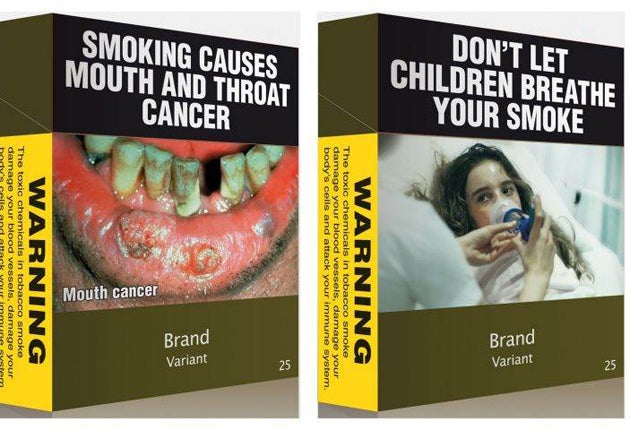
Australia has unveiled the world's toughest tobacco advertising legislation, which – if it survives a legal challenge by the industry – will force all cigarettes to be sold in plain, olive-green packs covered in health warnings.
Under the new law, which is about to go before parliament, cigarette packets will be stripped of all logos, colours, brand imagery and promotional text. Their only distinguishing feature will be the brand name, printed in a small, uniform font.
The aim is to deprive tobacco companies of the last remaining means of advertising their products, and to make cigarettes less appealing, particularly to young people. Drab olive-green was chosen because research suggested it was the least attractive colour to smokers. "We want to make sure that the glamour that might have been attached to smoking in the past is dead and gone," the Health Minister, Nicola Roxon, said yesterday. "Cigarette packs will now only show the death and disease that can come from smoking. The new packs have been designed to have the lowest appeal to smokers and to make clear the terrible effects that smoking can have on your health."
Plain packaging is also being contemplated by Britain, New Zealand, Canada and the European Union, which are closely watching Australia, particularly how it deals with the legal ramifications. British American Tobacco Australia (Bata), whose brands include Winfield, Dunhill and Benson & Hedges, claimed that the plan would infringe international trademark and intellectual property laws.
A Bata spokesman, Scott McIntyre, said: "The government could end up wasting millions of taxpayer dollars in legal fees trying to defend their decision, let alone the potential to pay billions to the tobacco industry for taking away our intellectual property."
But Ms Roxon said the government believed it was on very strong legal ground. Although smoking rates have almost halved over the past two decades, tobacco-related diseases still claim 15,000 lives in Australia every year, and cost the country about A$31.5bn (£20.3bn).The pared-down cigarette packs will feature lurid images showing the potential health impacts of smoking, with close-ups of rotting gums, blind eyes and sickly children.
Ian Olver, chief executive of Cancer Council Australia, said the move had "the potential to be one of the most significant public health measures in recent history". A spokesman for the Australian Council on Smoking and Health said: "This is a historic day for tobacco control globally. The tobacco industry's ferocious opposition to plain packaging shows that they know how effective it will be. They also know that once Australia has shown the way, other countries will follow."
But the industry claims there is "no credible evidence" that plain packaging reduced smoking. Imperial Tobacco denounced the legislation, and Philip Morris said it would fuel the trade in counterfeit cigarettes. "What company would stand for having its brands, which are worth billions, taken away from them?" asked Bata's Mr McIntyre. "A large brewing company or fast-food chain certainly wouldn't, and we're no different."
Depending on legal challenges, the law will be phased in over six months, beginning in January 2012. The government wants to cut the smoking rate to 10 per cent by 2018.
Join our commenting forum
Join thought-provoking conversations, follow other Independent readers and see their replies
Comments
Bookmark popover
Removed from bookmarks