Children found starving in rural Australia
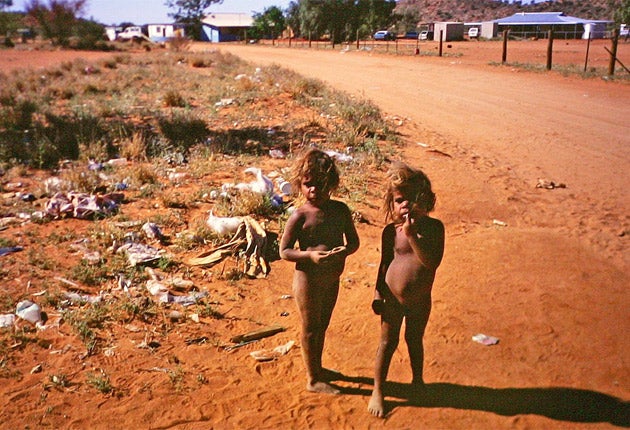
Aboriginal disadvantage has not rated a mention during the Australian election campaign – there are few votes in it. But as the party leaders criss-crossed the country this week, shocking evidence emerged at a government inquiry: children in remote indigenous communities are starving.
The claims were made by child protection workers, who said the situation was so dire that an international aid-style programme was needed – an extraordinary state of affairs in one of the world's most affluent nations. The workers called for essential food to be delivered by an organisation such as Oxfam or the Red Cross to ensure that children got enough to eat.
The inquiry was established by the Northern Territory government, with the aim of strengthening the child protection system. It has already heard a series of disturbing allegations, including that children in remote communities are left to wander unsupervised at night, or are abandoned when their parents go on drinking sessions.
It was the Northern Territory that was targeted by a federal government "intervention", initially aimed at tackling child sex abuse. The intervention, which began three years ago during the conservative reign of the then prime minister, John Howard, continued under his Labor successor Kevin Rudd, albeit in a slightly watered-down form. In 2008, when Mr Rudd apologised to Aboriginal people for historic injustices, he pledged to "close the gap" between black and white Australians – the yawning gulf relating to their health, life expectancy, education and employment opportunities.
Little has changed, however. Indigenous people are still dying up to 20 years earlier than their white counterparts, and the mortality rate of babies born to Aboriginal mothers is twice that of other Australian infants.
Claims that children are starving, or "failing to thrive", were contained in a submission to the inquiry in Darwin by child protection staff from the Northern Territory. They said resources allocated to indigenous communities were "grossly inadequate" and the spectacle of children who were failing to thrive was, to them, familiar.
The Darwin-based team covers a vast area and looks after 14,000 people, but has to make do with four welfare workers and four Aboriginal community workers. That level of staffing, combined with a "fly-in, fly-out approach", allows for "little more than superficial child protection responses", the inquiry submission said.
It called for specialised child protection officers to be placed in Aboriginal communities, and for more support for parents, including intensive parenting classes for schoolchildren from the age of 13. In these areas, a high number of young people aged between 15 and 24 have one or more children.
Demanding immediate help for the starving, the child protection workers said: "This could simply be a foreign aid (Red Cross, Oxfam, etc) type feeding programme that does nothing more than deliver essential food to starving children while other programmes address the underlying issues of poor parenting, poverty, overcrowding, violence, drug abuse, alcoholism, gambling etc."
Staff also complained about the "incredible" volume of paperwork they had to plough through, saying: "We spend more time sitting at a computer than we do with our clients and their families."
The inquiry, which is expected to report next month, has heard that it is "normal" for Aboriginal children to be left to wander alone at night, or to be placed in the care of "reluctant" extended family members.
Meanwhile, Alice Springs Hospital has told the inquiry it is used by child protection workers as a "storehouse" for children awaiting foster placement. "[We are] an acute care facility, we are not able to provide appropriate supervision of children and their families," the hospital's submission said.
Dan Baschiera, a veteran social worker, told the inquiry he had seen child protection staff fresh from years of study and training "burn up" after a few months working in Aboriginal welfare. He accused the Northern Territory government of starving the child protection system of funds.
Join our commenting forum
Join thought-provoking conversations, follow other Independent readers and see their replies
Comments