Coastal homes in Australia at risk from rising sea levels
Government report shocks country where 80 per cent of population lives on coast
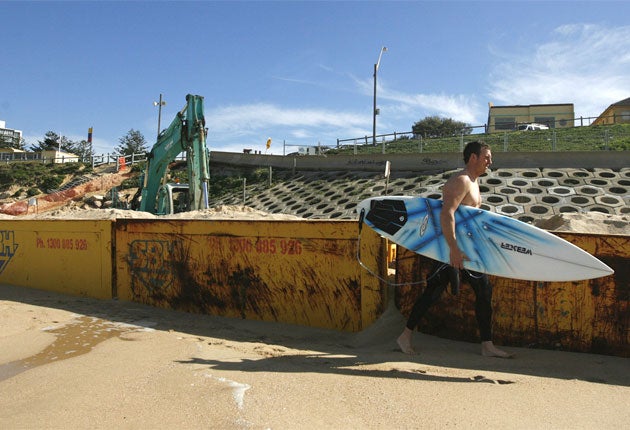
Australia's love affair with the beach is in danger of being rudely terminated. A parliamentary report released yesterday suggests that the government may have to force people to abandon prime oceanfront homes along thousands of miles of coastline vulnerable to rising sea levels.
The report, published in the run-up to the Copenhagen summit on climate change in December, sent a shiver through a country where 80 per cent of the population lives on the coast. With more than 700,000 homes within two miles of the ocean and less than 20ft above sea level, rising seas – together with more frequent storm surges and higher tides – are a serious threat.
A parliamentary committee spent 18 months investigating the state of Australia's coastline, and MPs were shocked by what they found. Mal Washer, deputy chairman of the Joint Standing Committee on Climate Change, said yesterday: "There's little in reality left of our coast. It's all breakwaters or sandbags... It's a disaster."
Mr Washer said that popular beaches, such as those lining the Queensland Gold Coast, a popular tourist destination, would not exist if sand was not pumped on to them artificially.
The report, entitled The Time to Act is Now, calls for national guidelines to govern development in sensitive coastal areas, replacing the current piecemeal approach by local councils. Mr Washer told ABC radio that a line should be drawn around the coast, "and beyond that there should not be development".
In one coastal town, Byron Bay, in northern New South Wales, where houses are already being assailed by the waves, the Greens-dominated council is trying to prevent homeowners from building sea walls to protect their properties. The council has adopted a policy of "planned retreat", which would allow nature to take its course. The parliamentary committee says that policy may have to be enforced more widely, especially given the fiendishly complex insurance and liability issues raised by climate change.
With increasing numbers of Australians moving to the coast in pursuit of the national dream of beachside living, none of this is welcome news. Mr Washer warned: "It's already presenting major problems, but in the future it's going to be a nightmare for us."
The Labor government is trying to establish an emissions trading scheme, in the face of bitter opposition from industry and conservative MPs. Yesterday's report was seized on by the Climate Change Minister, Penny Wong, as further evidence of the need for such a scheme, aimed at reducing Australia's carbon emissions.
The relevant legislation has already been rejected once by the Senate which Labour does not control. Next month it will make another effort to steer the bill through; if it fails again, that could, theoretically, trigger an early general election.
Alan Stokes, executive director of the Sydney-based National Seachange Taskforce, which represents coastal councils across Australia, yesterday echoed calls for a ban on development in certain areas. He said some spots were so vulnerable to the effects of climate change that "there can be no guarantee that people can live there in the future in a sense of security".
Join our commenting forum
Join thought-provoking conversations, follow other Independent readers and see their replies
Comments