How Tasmania's lady of the lake was silenced
New evidence backs claims that pioneering Tasmanian eco-warrior Brenda Hean's plane was sabotaged. Kathy Marks reports
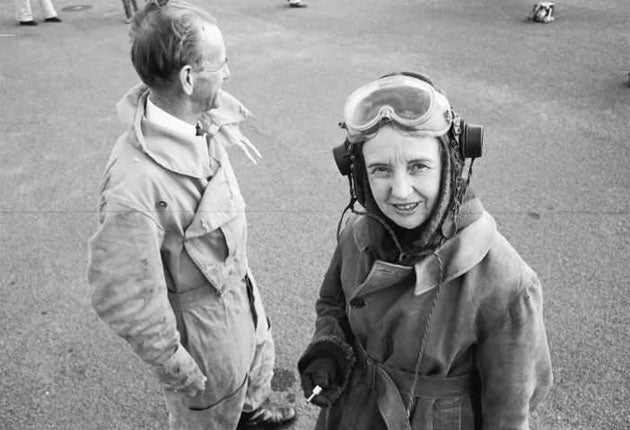
Brenda Hean was an unlikely activist. A wealthy dentist's widow, devout Christian and social conservative from a well-bred family, the very proper 62-year-old was part of the Tasmanian establishment. Yet when the state government announced plans to drown a pristine mountain lake in the south-west of the island in the late 1960s, Mrs Hean underwent an epiphany.
She was to become the public face of a campaign to prevent Lake Pedder from being flooded for a hydro-electric scheme. In 1972, she set off for Canberra in a 1930s Tiger Moth to lobby politicians and write "Save Lake Pedder" in the sky above Parliament House. The plane never arrived, and its wreckage was never found.
For the past 36 years, the mystery of what happened to Mrs Hean and her pilot, Max Price, has haunted Tasmania. Now the writer and film-maker, Scott Millwood, has uncovered new evidence supporting the theory that the aircraft was sabotaged in order to silence her. The vintage two-seater was last seen off Tasmania's north-east coast. Before Mrs Hean left Hobart, an anonymous caller telephoned her with a sinister question: "How would you like to go for a swim?" The plane's hangar was broken into the night before the flight, and its emergency beacon was later found hidden behind fuel drums. Yet police dismissed the possibility of foul play, and only a cursory search was made for the Tiger Moth. With no bodies recovered, there was no inquest. The state government, an enthusiastic proponent of hydro-electricity, resisted calls for a public inquiry.
Millwood, who has produced a new book and documentary, both entitled Whatever Happened to Brenda Hean, said the failure to investigate the plane's disappearance properly was "quite incredible". He believes the Tasmanian state premier of the time, Eric Reece, "did not want answers to be found". The film-maker embarked on his own quest for the truth after an unidentified source passed him the police files on the case, with the instruction to "use them for good". He set up a telephone hotline and appealed to the public for information, offering a $100,000 (£41,000) reward. Millwood received 150 calls, all of them genuine, he believes. Ten people said they had reported seeing the Tiger Moth fly overhead on its journey north, but that the police had not interviewed them. A search aircraft had spotted wreckage in the water, but been ordered to return to base, and a police boat did not follow up the report until three days later.
Scallop fishermen in the Banks Strait, where the Tiger Moth vanished, claimed to have dredged up a plane's wings, tail and fuselage parts during the 1980s, throwing them back because, "they didn't want to get involved with the cops". One fisherman said he pulled up a dress and a bottle of champagne. (Mrs Hean had packed such a bottle for the trip.)
Wreckage was also said to have washed up on a beach, where it was supposedly buried on the orders of "a person of very high standing in Hobart", according to the police files.
When the threat to Lake Pedder – "a place of ethereal beauty", according to Mrs Hean's sister, Barbara Ditcham – emerged, the global environmental movement was still in its infancy. The decision to inundate the lake, together with its mile-long quartzite beach, galvanised Australians and led to the creation of the world's first green party, the United Tasmania Group. Mrs Hean, one of its candidates at the 1971 state election, had for most of her life shown no interest in political causes. A church organist, she was "an establishment matron who decided to speak against the establishment and was hated for it by her own class", said Millwood. "She was a very courageous person with a fierceness of character. She had a deep Christian faith and a sense of righteousness, and she believed there was no reason for Lake Pedder to be destroyed in the name of progress."
Ranged against her were powerful political and commercial interests. The hydro-electric scheme was worth $100m. Mrs Hean camped out by the lake, maintaining a vigil as the dammed waters slowly rose. Before the Tiger Moth set off on its 11th-hour attempt to stem the tide, Mr Reece, the premier, reportedly ordered his aides: "Stop that damn plane." He also demanded: "Who will rid me of this troublesome priest?" – echoing Henry II's words about Thomas Becket, the 12th-century archbishop of Canterbury, who was murdered. Like Mrs Hean, Max Price, the pilot, received death threats before the flight. One caller told him: "Don't get involved in this, you may not make it." Mrs Ditcham, 85, has no doubt her elder sister was murdered, and the crime covered up. "Brenda was trying to save this magnificent place, and the powers that be were adamant that they were going to flood it," she said. "So to them, she was an irritation." The sister said the family felt "very much abandoned" by the authorities.
The loss of Lake Pedder hardened the resolve of environmentalists, who blockaded Tasmania's Franklin river 10 years later, determined to prevent it from being dammed. This time they won the battle. Bob Brown, who led the Franklin blockade and is now leader of the Australian Greens, is sure that Mrs Hean's plane was sabotaged. After it disappeared, he says, other activists, "were frightened about who would be next". Mr Brown said: "The attitude was: they deserved what they got."
Lake Pedder remains an emblem of the green movement. There are hopes that the lake will be drained and restored to its original state. Brenda Hean, who died fighting to save it, inspired a whole generation of environmentalists. "We felt she must have had a calling," said Mrs Ditcham. "She was a person of great fortitude, more or less like a Joan of Arc."
Scott Millwood, who shed light on the mystery but did not solve it, agrees. "We may never know the truth of what happened," he said. "But the greater truth is that Brenda Hean stood for something. She was a martyr to her cause."
Lake Pedder: The fight goes on*The lake was named after Sir John Pedder, the first Chief Justice of Tasmania. But many opponents of the flooding do not accept that this name has been retained as its official title, and prefer instead to call the new body of water the Huon-Serpentine Impoundment.
Join our commenting forum
Join thought-provoking conversations, follow other Independent readers and see their replies
Comments