Scientists unlock secrets of Australia's giant 30kg koalas
New fossil study sheds light on extinction, 50,000 years ago, of the continent's 'megafauna' species
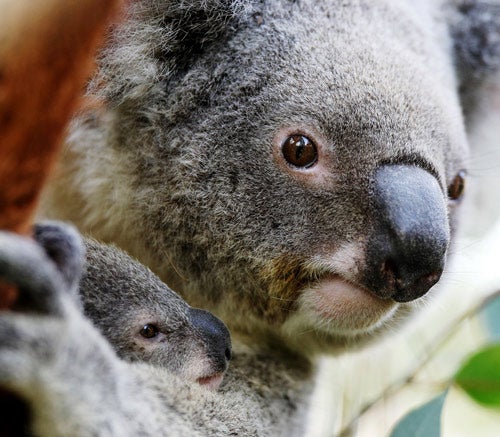
Hundreds of thousands of years ago, giant versions of Australia's unique wildlife stalked the continent. There were kangaroos up to 3m tall and enormous wallabies, wombats and echidnas. There were also koalas: larger and weightier than the creatures sometimes seen today in eucalyptus trees.
Giant koalas died out about 50,000 years ago, along with most of Australia's "megafauna". For a long time, modern koalas were assumed to be dwarf descendants of those prehistoric animals. But now an Australian palaeontologist has established that the two koalas lived side by side – a finding that may throw new light on why the megafauna disappeared.
Gilbert Price, of the University of Queensland, used improved dating techniques to analyse fossils of both types of koala, and found that the two species co-existed in Australian trees for hundreds of thousands of years. He told the Australian Broadcasting Corporation: "The big question is why one koala species survived past 50,000 years ago and the other didn't make it."
The causes of the Australian megafauna's extinction have been hotly debated by scientists for decades. Some attribute it to climate-induced changes in habitat and food supply, while others blame the hunting by humans of larger animals. The "dwarfing" hypothesis, based on similarities between extinct megafauna and smaller, modern animals, has been used to support both arguments. But Dr Price's conclusions, published in the Quaternary Science Reviews journal, cast doubt on the hypothesis.
As well as reigniting debate, his research may help conservationists to save the modern koala. While not officially endangered, koalas are at risk through loss of habitat, while increased levels of carbon dioxide in the atmosphere are reducing nutrients in eucalyptus leaves, their sole food source.
Dr Price, from the university's Centre for Microscopy and Microanalysis, said: "It's fascinating that up until fairly recently, in geological terms, we did have two types of koala kicking around. The fossil records do suggest that they lived in the same place at the same time. Perhaps there is something about their sizes that allowed them to fill a slightly different ecological niche."
While modern koalas weigh about 10kg, the giant species – the largest tree-dwelling marsupial that ever lived – was two to three times heavier. According to Dr Price, there were clear differences in their appearances.
He said his study left questions unanswered about the koala's evolution. "The results raise the question: where on earth did the modern koala come from?" he said, adding that a lack of well-dated fossil records make it difficult to establish its true ancestor.
As to why one species survived and the other did not, Dr Price said: "It's absolutely critical that we can find the answers to such questions, and that we find them soon, as it will go a long way in the planning of management strategies to conserve the modern koala well into the future."
Join our commenting forum
Join thought-provoking conversations, follow other Independent readers and see their replies
Comments