Vioxx ruling gives hope for payouts to British ‘victims’
Court says painkiller that doubles risk of heart attack is ‘not fit to be on market'
The popular painkiller Vioxx doubled the risk of a heart attack and was not fit to be on the market, a court ruled yesterday. In the world's first successful class action against the makers of the drug, judges found the subsidiary of the US pharmaceutical giant Merck had failed in its duty of care by not warning doctors about health risks.
The case raises awkward questions about why hundreds of British victims remain without compensation six years after health problems associated with Vioxx were uncovered. Yesterday's ruling in the Australian court follows a £2bn settlement in America over claims brought by 44,000 claimants who blamed the drug for cardiovascular problems.
Norman Lamb, the Liberal Democrat MP who has been campaigning for the British victims, said: "This is a very important and significant development. We have been trying to convince the company that it is ethically right and in their self-interests to do the decent thing and secure a settlement so British victims get a deal [similar to that] given to US victims."
But he said the company continued to deny liability. Mr Lamb also accused the UK government of failing to negotiate a settlement. "Ministers made promising noises then after a meeting between the Government and the company they weakened their position. I believe that the ministers came under pressure from the company and their own civil servants to shut up."
The ruling by the Federal Court in Melbourne is a major breakthrough for hundreds of Australians. The court ordered the company to pay £172,300 to Graeme Peterson, 59, who has been unable to work since a heart attack in 2003. At least 600 other Australians will now lodge compensation claims against Merck Sharpe and Dohme, which faces a bill of up to $300m, according to Peter Gordon, Mr Peterson's lawyer, whose law firm, Slater & Gordon, took on Mr Peterson's case for no fee.
Even more serious for Merck are the global implications: Vioxx was taken by more than 80 million people worldwide before it was recalled in 2004, and lawyers in several countries were awaiting the outcome of the Australian litigation. Mr Gordon said: "This ruling opens up an enormous liability in the UK and elsewhere. It's of enormous importance to potential victims in the UK. As long as people are able to demonstrate that had they known the full extent of the risks of taking Vioxx, they would have taken another painkiller, they should succeed in negligence cases."
Vioxx was hailed as a wonder drug for arthritis patients because, unlike traditional anti-inflammatories, it did not cause stomach problems. Merck mounted the biggest and most expensive recall in pharmaceutical history after a clinical study showed it increased heart attacks and strokes.
Mr Peterson, an occupational health and safety consultant, took Vioxx for more than four years. Yesterday, outside court, he produced a capsule, which he said he had kept as a reminder of a drug that had almost killed him. He said that while he welcomed the judgment, he would continue fighting for other victims. "There are people dying," he said. "I am one of the lucky ones. Sure it has affected my life, but I've still got my life. How many other people out there haven't?"
The 48-day trial heard colourful evidence about the lengths to which Merck went to promote Vioxx in Australia before it was launched in 2000. Scores of doctors were wined and dined by sales representatives at the country's most expensive restaurants, entertaining them at Sydney's Taronga Zoo and the Melbourne Aquarium.
Merck also drew up a "hit list" of doctors and academics who needed to be "neutralised" or "discredited", according to company emails, because they had criticised the drug. It paid nurses to rifle patient records for potential candidates for Vioxx, and it persuaded the world's largest medical publisher, Elsevier, to produce several issues of what appeared to be an independent scientific journal, without disclosing that it was funded by Merck. The company, which plans to appeal against yesterday's ruling, settled with thousands of US litigants in 2007, at a cost of nearly US$5bn. It made no admission of guilt, and has indicated it will fight legal action everywhere else.
In Britain, a legal aid application by potential litigants has been turned down, reportedly after Merck lobbied government ministers, including the former health minister, Ivan Lewis, who had promised in parliament to assist them.
The Federal Court judge, Christopher Jessup, said Vioxx had "about doubled the risk of heart attack" and "was not reasonably fit for the purpose of being used for the relief of arthritic pain". He said the Australian subsidiary had failed in its duty of care in not warning Mr Peterson's GP about the risks, and in the emphasis its sales representatives had placed on Vioxx's safety. But the judge ruled that Merck had not been negligent in development, scientific study and sale of the drug.
In a statement, Merck said it believed the evidence showed it had acted responsibly "right up through the decision to voluntarily withdraw the medicine in September 2004".
The British case never got off the ground because the solicitors said they could not secure legal aid. Mr Lamb said: "The legal system in this country acts in a pernicious way and stops claims being aired in court. The company should now make a global settlement to bring an end to this very sorry saga."
A Department of Health spokesperson said: "While the Government sympathises with those UK patients who have been adversely affected by Vioxx, there is no sanction the Government could impose on the company in the UK to force them to deliver a compensation deal."
Case study: 'I think Vioxx certainly contributed to my wife's death'
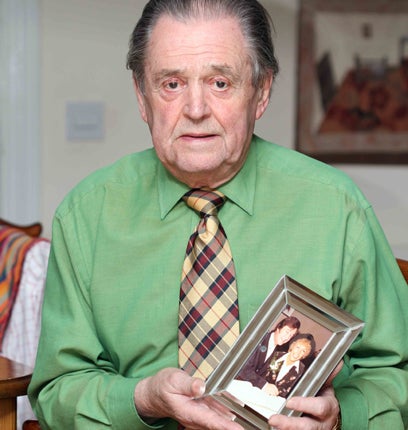
*On 20 January this year Raymond Eaton lost his wife to complications arising from a severe heart condition. He buried her a week later at St Mary's Church in Stody. Mr Eaton is convinced that Vioxx, the now-banned drug prescribed to alleviate arthritic pain, was to blame for her condition and premature death at the age of 74.
Mrs Eaton had suffered for more than 40 years from a debilitating form of rheumatoid arthritis, which eventually confined her to a wheelchair. When the much-hyped "blockbuster" drug Vioxx was approved she seemed a perfect candidate and was swiftly prescribed it through the local NHS in North Norfolk. But after four years on the drug, which was effective in relieving her pain, she suffered a coronary, now known to be one of the drug's serious side-effects. She survived the attack, but her health never recovered. "I think Vioxx certainly contributed to my wife's eventual death," Mr Eaton said. "During the 40 years my wife had rheumatoid arthritis, she had never ever had a problem with her heart or high blood pressure."
Mrs Eaton had spoken out against the way people in the UK had been unfairly treated by Vioxx's manufacturers, the pharmaceutical giant Merck & Co. "She didn't want anything for herself, but if it could help other people she said she would support it. It got to the point when it was completely draining her and her health," Mr Eaton said. "My wife was a wonderful person, and I miss her to bits."
The loss of his wife has galvanised Mr Eaton to pursue the case through the Cardiff-based solicitors Hugh James, which also represents more than 200 other former Vioxx users. However, he is aware that the current system is skewed in favour of corporations and the rich; he is not a very wealthy man and can't afford to lose what would be an expensive case.
Join our commenting forum
Join thought-provoking conversations, follow other Independent readers and see their replies
Comments