A close call for Europe... then Greek voters finally decide to accept austerity
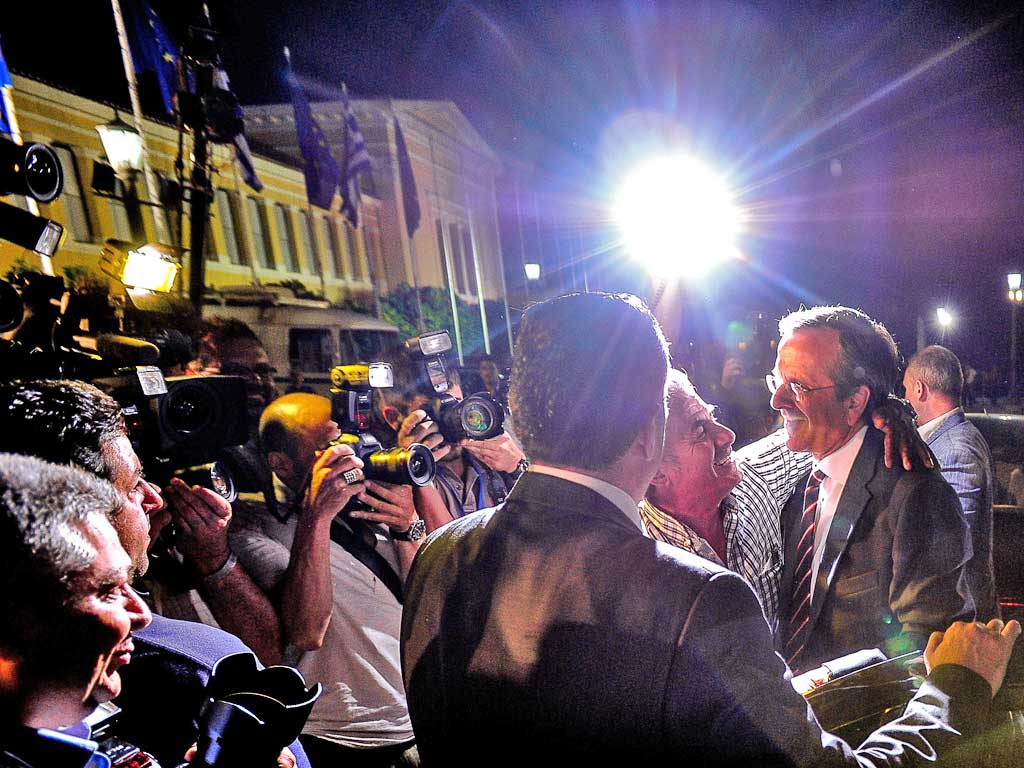
The Greek election produced a knife-edge result yesterday, with the establishment parties snatching victory in a narrow race.
“The Greek people voted today to stay on the European course and remain in the eurozone ... there will be no more adventures, Greece's place in Europe will not be put in doubt,” said the leader of New Democracy, Antonis Samaras, who is likely to become the new Prime Minister. The result may enable it to form a coalition government but it is likely to face strong opposition inside and outside parliament.
With more than 99% of votes counted, interior ministry results showed the conservative New Democracy party securing 29.7 per cent of the vote. Its nearest rival, the radical-left Syriza, was only just behind on 26.9 per cent.
New Democracy is likely to form a coalition with the socialist Pasok party, which was in government until late last year and received 12.3 per cent of the vote, according to the results projections after 99 per cent of the ballots had been counted.
New Democracy is likely to have about 129 parliamentary seats, Syriza will have 71 and Pasok 33.
That outcome would, for the moment, allay fears that Greece will abandon the euro and spark a global financial crisis, as might have happened if the parties rejecting Greece's austerity measures - accepted in return for €240bn in EU loans - had won a majority. But the neck-and-neck nature of the result means that uncertainty will continue.
In a poll crucial in Greek history, voters were asked to choose primarily between the establishment New Democracy party, which formally accepts the EU terms, and Syriza, which has said it would renegotiate them.
The surprise success of Alexis Tsipras, the inspirational Syriza leader, on 6 May had made him the subject of intense international scrutiny. Rivals feared that Syriza, which won 16.8 per cent in the first vote, increased its share substantially by winning support from people under 50 and from cities and towns. Many Syriza voters formerly voted for Pasok or the communist KKE party.
New Democracy voters tend to be better-off, older and often live in the countryside. Mr Samaras sought with some success to cast the election in terms of Greeks choosing to stay in the eurozone and continuing to receive EU funding, or leaving it and risking an economic calamity.
The Greek business community and international investors were shocked by the rise of a radical alternative in the shape of the self-confident and fluent Mr Tsipras, though he steadily moderated his stance during the campaign. Some businesses, such as ship owners, threatened to leave the country, though one ship-broker asked: "Does it matter if we go broke in drachmas or euros?"
"I am driven by indignation against the political establishment and by hope for change," said Chryssa Milona, a young mother clasping the hand of her daughter, after voting near Syntagma Square in central Athens. She said she voted Syriza "because people are suffering so much from unemployment and the fall in wages". She would not reveal what her job was but said her salary had been cut by 15 per cent and she expected it to fall further. She was not sure Syriza would get anywhere but "at least it is different".
The five-year-long crisis has polarised Greeks between left and right as old political fissures, stemming from the civil war and military dictatorship, have widened. Julia Oikeiadis, a retired travel agent, said she was voting for New Democracy because the most important thing was "to have a government and stabilise the country".
She thought a victory for Mr Tsipras would be a calamity because he was young, inexperienced and making promises he could not fulfil. An allegation levelled by Mr Tsipras's opponents was that he had pledged the impossible in promising to tear up the austerity memorandum signed last year with the EU "troika" (the EU, the International Monetary Fund and the European Central Bank) and negotiate a better deal for Greece.
Mr Samaras had also suggested strongly in every speech that he would renegotiate after the poll. Even a traditional conservative voter like Ms Oikeiades said a government headed by New Democracy could implement part of the austerity programme "but not all of it - to do all of it is absolutely impossible".
Opinion polls show 80 per cent of Greeks want to stay in the euro but will not accept more austerity measures that have already seen taxes rise and wages, jobs, pensions and government expenditure cut.
Many people also argue that it is absurd for the other EU states to expect those whom many Greeks see as the corrupt and incompetent architects of their country's ruin – the traditional leaders of New Democracy and its coalition partner Pasok – to clean up the mess they created. There is widespread anger that politicians notorious for their corruption and high living have escaped punishment.
Yesterday, some voters expressed worry that Greeks were not showing greater national solidarity. Yevgenia Perendiou, an unemployed nursery teacher now earning €400 a month as a babysitter, said: "I voted for the Democratic Left [which split from Syriza] because its leader, Fotis Kouvelis, said all parties should co-operate – something I didn't hear from other leaders."
The near dead-heat in the election does not bode well for decisive government in Greece. Pasok and the coalition with New Democracy implemented tax rises and wage and pension cuts but stalled over reforms such as privatisation or dismantling the system of Tammany Hall-type cronyism and jobs for votes that had previously been at the heart of the political system.
Many of the beneficiaries of the old regime were prominent in electoral campaigns, suggesting that they had not lost their political strength.
Join our commenting forum
Join thought-provoking conversations, follow other Independent readers and see their replies
Comments